


We’re just one week into the 44th general election campaign and the Liberals have already started digging to the bottom of their big red bag of clichés. After what can best be described as a failure to launch in the first few days of the campaign, dogged by the growing Afghanistan crisis and questions like “Why are we having this election?” the Liberals needed a reliable pivot.
And so, their campaign message devolved into what you’d expect.
Evil, scary social conservatives!
They’re just like Stephen Harper!
Cuts!
They’re going to privatize healthcare!
Normally the moral panic surrounding Conservatives during election campaigns is palpable in media coverage, though it seems this time around even the media hasn’t been (thus far, anyway) buying it. This is in large part because Erin O’Toole is a political moderate with a platform no one could, in good faith, describe as extreme.
O’Toole has never been a social conservative, and has been as unequivocal as one can be in avowing his pro-choice bona fides. When he’s repeated in the past week how he is and always has been pro-choice, the Liberals’ only real retort is “No you’re not!”
But he is. They fear-mongering about his supposed secret social conservative agenda comes from one paragraph in the Conservatives’ 160-page platform in which the party commits to defending conscience rights for healthcare practitioners. Hardly a radical position, but that didn’t stop the Liberals from trying to paint it as one.
Anyone who’s heard O’Toole speak about social issues though isn’t going to be duped. While it may frustrate many members of his party, he simply isn’t a social conservative. He’s also not a Stephen Harper clone, though the Liberals love their mythology of every Conservative leader being a mere host for Harper’s spirit.
The more absurd – and disingenuous – attack of the week was the one accusing O’Toole of readying himself to sell of Canada’s healthcare system to the highest bidder. The Liberals took aim at his pro-healthcare privatization stance, despite, erm, no such stance existing.
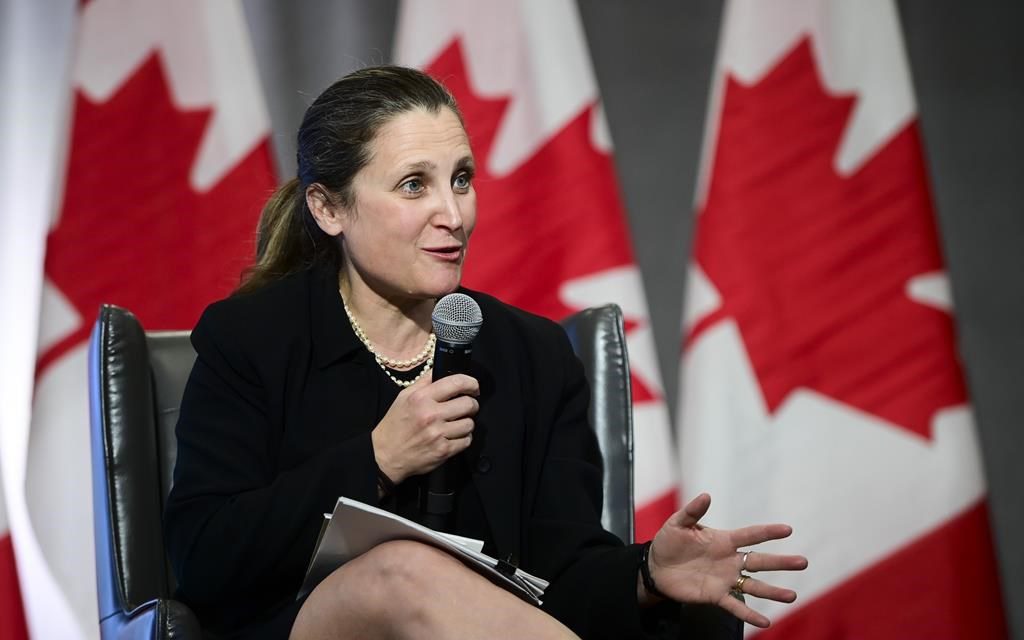
The primary instigator was the deputy prime minister, Chrystia Freeland, who tweeted out a 2020 video of O’Toole saying “Yes” to a question about allowing provinces to reform healthcare to incorporate private and for-profit healthcare delivery within a universal system.
The problem is that the video was significantly edited from its original state, so much so that Twitter put up a warning that viewers were watching “manipulated media.” Talk about fake news, right?
O’Toole actually said – though it didn’t make it into Freeland’s version – that Canada must “make sure that universal access remains paramount.” His calls for reform were really about allowing for private capital to drive efficiency in a system no one can say is optimal with a straight face.
The spectacularly brazen editing and splicing of individual lines of tape from a longer, thoughtful answer about healthcare policy is why this attack backfired. “Manipulated media” was trending on Twitter Sunday night, with Freeland’s tweet being given the lambasting it deserved.
This should not be taken as an endorsement of the Conservatives or even a prediction that O’Toole is coated in the same Teflon Justin Trudeau has managed to cover himself in for six years. Rather, this does suggest that the shine may be coming off Trudeau and that O’Toole isn’t as scary to voters as the Liberals want him to be.
O’Toole is an unknown to Canadians, so much of the campaign will be a race between the Liberals and the Conservatives for who can define him first to a population that tends to tune in at the last possible moment before voting.
All of this messaging suggests a healthy portion of Liberal desperation. If you think you’re doing a bang-up job, your message to voters should be that the country needs to “stay the course.” That they’re going this negative at all is noteworthy, but especially so early in the campaign.
Perhaps the Liberals have four more weeks of these sorts of criticisms, but from the outside it looks as though they’ve used up their favourite clichés in just a few days, with little left to get them through to Sept. 20. Except for, perhaps, their own politics.