


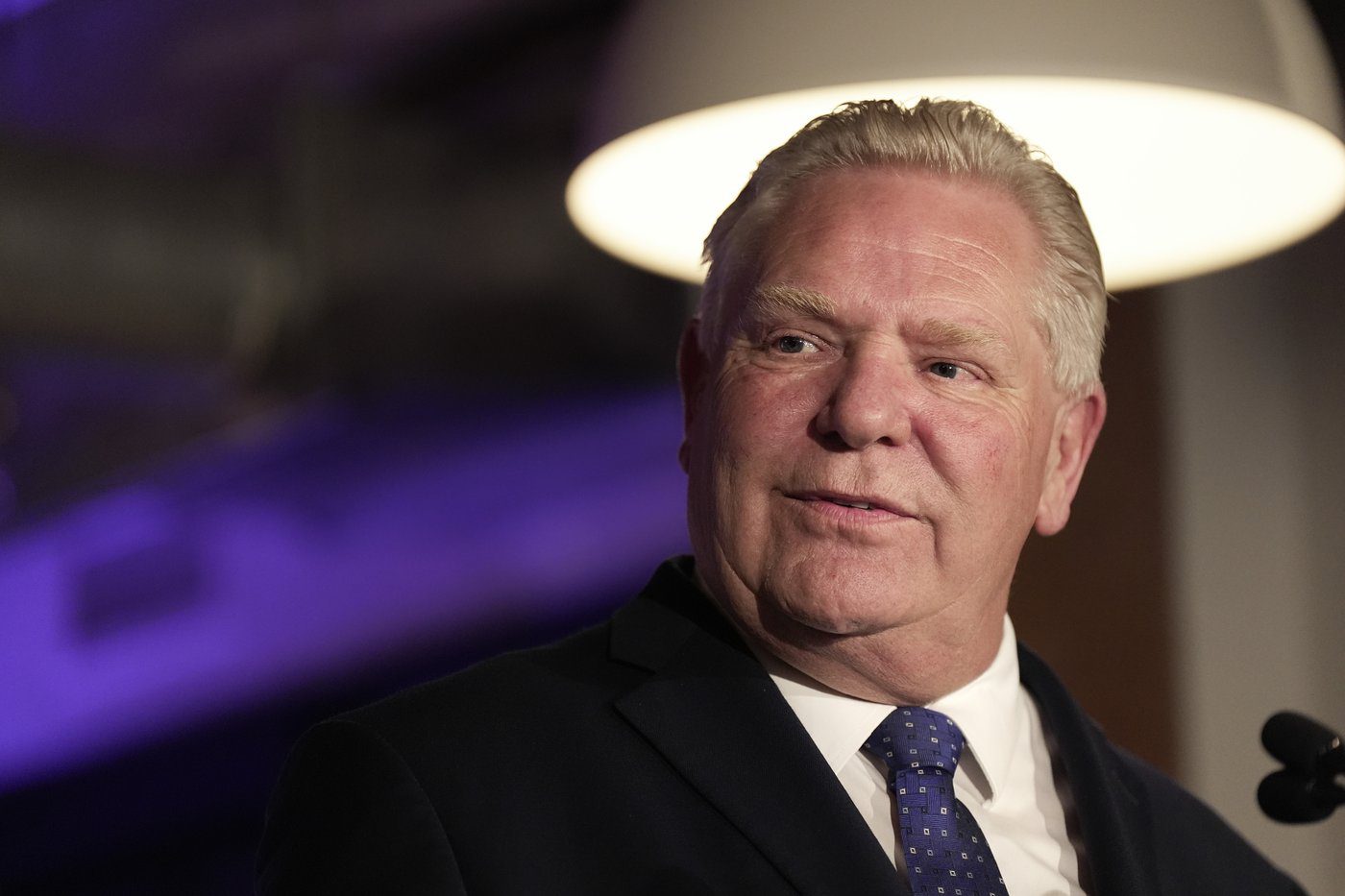
Ontario Premier Doug Ford has often touted the importance of fiscal prudence in politics. “I always have to be a prudent fiscal manager with the taxpayers’ money,” he stated at a Jan. 2023 press conference. “We just can’t be out there spending willy-nilly as people are working their backs off. They’re taxed to the brink right now.” He also said at an Oct. 2024 press conference, “We’re just prudent fiscal managers and I have to remind everyone it’s not the government’s money, it’s the taxpayers’ money.”
There’s a big difference between touting fiscal prudence and being fiscally prudent, however. Ford has been a prudent fiscal manager at certain points as Premier of Ontario, but it’s hardly been a consistent theme since he assumed office on June 29, 2018.
Here’s a recent example of his fiscal irresponsibility.
Rob Flack, Ontario’s Minister of Municipal Affairs and Housing, announced the appointment of eight new regional chairs and heads of council on Nov. 10. These individuals will be “equipped with powers to streamline decision-making, improve efficiency, strengthen alignment with provincial priorities, including housing and infrastructure, and introduce upper-tier budgets.” The news release also noted they bring “a range of experience and expertise to their new roles, including municipal governance and administration, infrastructure delivery and finance.”
The list includes two sitting mayors, Pickering’s Kevin Ashe (Durham) and Vaughan’s Steven Del Duca (York). Former Conservative MP Scott Aitchison was named Muskoka’s district chair. Former Oakville mayor Ann Mulvale became Halton’s regional chair, former Welland mayor Frank Campion became Niagara’s regional chair – and former Orillia mayor Don McIsaac is Simcoe’s county chair. Nando Iannicca, a former Mississauga city councillor, was reappointed as Peel’s regional chair while Kitchener city councillor Scott Davey became Waterloo’s regional chair.
It should be noted that most of the new appointments were either Conservatives or have publicly supported the Ford government in some capacity. There were a few exceptions to the rule. Del Duca is a former Ontario Liberal leader and MPP who ran unsuccessfully against Ford in 2022. Iannicca and Davey are both regarded as non-partisan.
There’s nothing wrong with any of Ford’s choices. They’re all fine individuals in their own right.
The issue was the Premier’s decision to maintain regional chairs and heads of council with “strong mayor” powers – or, as the province called them, “strong chair powers” – that serve very little purpose. The Ontario PC government’s suggestion that they would be able to “speed up decision-making, reduce costs and expedite housing and infrastructure” was highly questionable, too. It’s an extra layer of government that not only creates more bureaucracy and red tape, but has the potential to slow down the entire process to a crawl. Everything could have been properly managed by the current crop of mayors and city councillors. There would have been some additional work, meetings and discussion and debate involved, to be sure. The additional time would have been far from overwhelming, and pertinent issues could have been dealt with in a timely fashion.
Here’s something else to consider. If Ford is so determined to keep regional chairs and heads of council in place, why would he appoint two sitting mayors, Del Duca and Ashe, to serve in this role? The Premier should have picked someone else with municipal experience who doesn’t currently have a role in a local government. Having two powerful politicians hold another powerful political role at the same time isn’t a wise strategy by the Premier, no matter how honourable the mayors may be.
Finally, there’s the cost to taxpayers that simply can’t be ignored.
Ontario regional chairs and heads of council currently earn between $175,000 and $278,000 per year. “The chairs of Peel, Durham, York and Halton all made salaries north of $225,000 in 2025, according to the Ontario public sector salary disclosure,” CTV News reported on Nov. 10. “Iannicca was the highest paid chair, earning 278,203.48, with more than $15,000 in taxable benefits.” (The two mayors won’t receive a double salary, but will “get whichever is the higher of the two salaries between the positions.”)
What was the Premier’s salary in 2025? It was $269,567, according to CTV.
Considering the fact that Ford reduced the size of Toronto city council from 47 to 25 in 2018 to help reduce costs and speed up the decision-making process, this recent decision with regional chairs and heads of council flies in the face of both principles.
It goes without saying that the Ontario government will spin this very differently. How so? Ford and his senior advisors may argue that maintaining regional chairs and heads of council will improve the overall political process rather than hinder it. There’s absolutely no proof of this, but it could convince some party supporters to look the other way. The Ford government may even claim a small victory because they saved two high salaries by picking a couple of mayors. That’s hardly a reason to celebrate, because they could have saved more taxpayer dollars if they had eliminated all of these positions at once.
A small “c” conservative politician and consistently prudent fiscal manager would have realized these things in a heartbeat.
Michael Taube, a longtime newspaper columnist and political commentator, was a speechwriter for former Canadian prime minister Stephen Harper.