


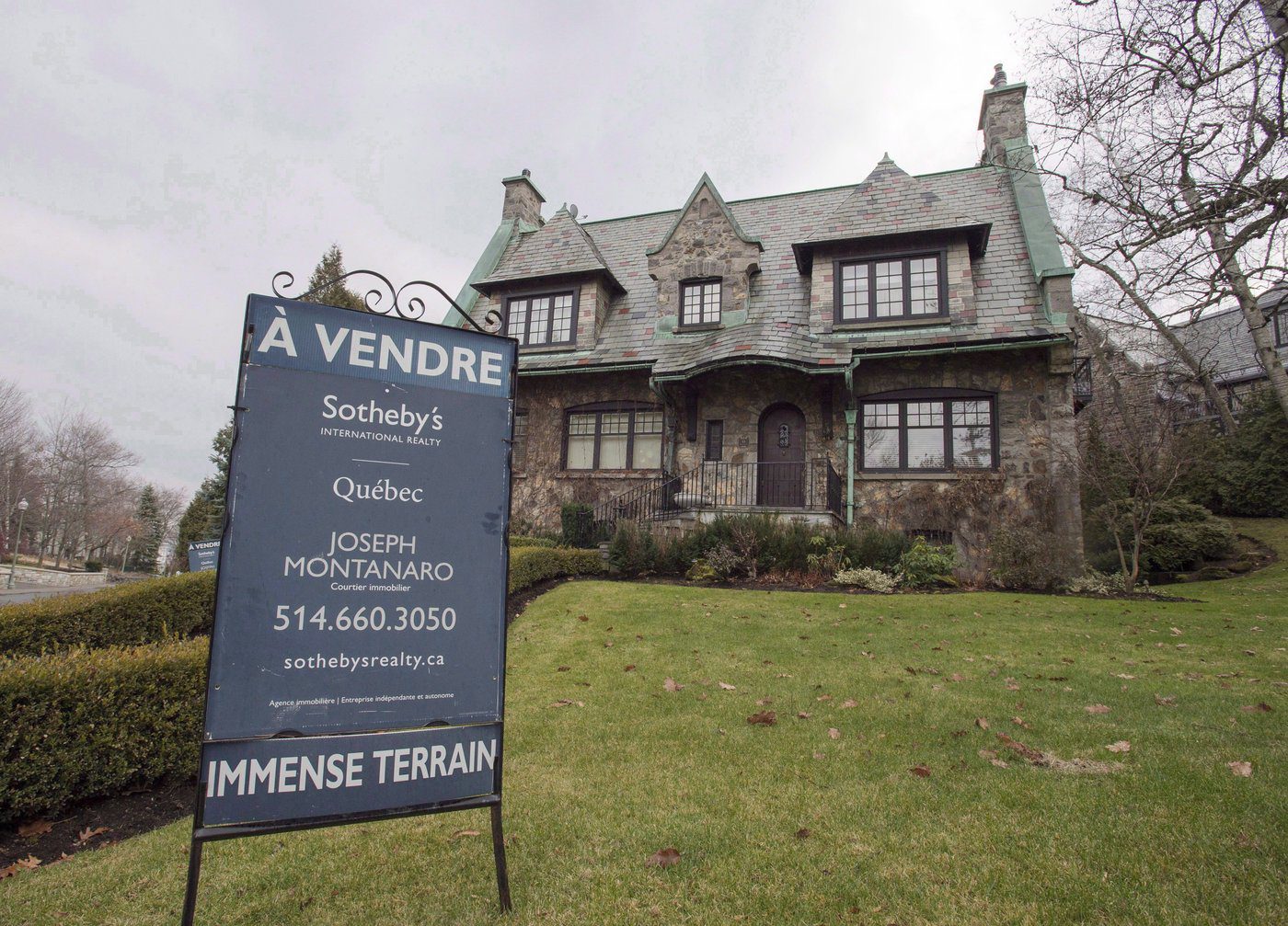
TORONTO — It’s been a challenging year for real estate markets across the country, and experts say even typically sought-after high-end properties haven’t been exempt from buyer caution driven by high inflation, trade war anxieties and borrowing cost uncertainties.
But there’s hope that 2027 could unleash pent-up demand as wealthy buyers look to absorb valuable inventory.
Real estate brokers say a common dynamic emerged in luxury markets throughout Canada in 2026: buyers had room to negotiate, but sellers who could afford to wait still held the upper hand, as they were prepared to stay put until their price was met, according to a new report from real estate agency Engel & Volkers.
“Sellers know what they’re holding onto,” said Andrew Carros, managing broker and chief operating officer for Engel & Volkers Vancouver.
He described a “stubborn” market that has seen sales volumes decrease considerably since 2022.
“We are seeing way less luxury inventory, but the inventory that’s selling is still selling within 10 per cent of its asking price,” he said.
“That shows you that it’s a stable market when it comes to pricing, because people are holding until they get the value they believe is there.”
In Vancouver, homes priced at $4 million and above saw the slowest pace of sales relative to new listings from January to October, according to the agency’s data. There were 17 sales for every 100 new listings in that bracket, compared with 29 in the $2 million to $4 million bracket.
Carros said it’s not just a sales slowdown. He said luxury listings account for just over 15 per cent of new inventory in the region he covers. Back when the market was red hot, it was common for 35 to 40 per cent of new listings to be priced at over $4 million.
He likened the luxury market to an engine that can’t run “because there’s not enough gas.”
“The luxury market is really determined by people that are getting value from somewhere else as well, meaning that they are getting family money or they’re getting equity from a property they’ve owned for a long time, it could be downsizers, it could be lots of other things,” said Carros.
“But it’s limited now. There’s less people able to move in the market because of the economy, and because of all the taxes and everything else that they keep lopping down and adding to these properties, making them more and more expensive.”
In Toronto, a higher municipal land transfer tax on residential property purchases over $3 million kicked in on April 1, leading to speculation that high-end buyers would rush to close ahead of the changes.
A Re/Max Canada report said challenging market dynamics have had the greatest effect on the traditional luxury hubs of Toronto and Vancouver, despite more inventory and greater negotiating flexibility.
Data from Re/Max shows that during the first nine months of this year, there were close to 850 transactions in the Greater Toronto Area involving properties sold for more than $3 million — down 9.4 per cent year-over-year.
In the Vancouver area, there were just under 600 homes sold in that price range, down 17 per cent from the same time last year.
However, smaller and resource-driven markets led year-over-year sales growth, such as Burlington, Ont., at 26.3 per cent for homes priced above $2.4 million and Calgary at 20.6 per cent for homes at $1.5 million and up. (Luxury price points vary throughout the country given regional differences.)
But the upper-end of Toronto’s luxury housing market has bucked that trend, with 15 properties sold for over $10 million through the first nine months of the year — the most activity at that price point in a decade.
“There’s pent-up demand. I think a lot of wealthy people … have been sitting on the fence waiting for better economic conditions,” said Barry Cohen, a Re/Max luxury broker who was involved in four of those “uber-luxury” transactions.
He said there was initially a brief “revolt” when the city’s tax hike on luxury purchases kicked in as buyers were hesitant to pay higher rates. But clients soon came to realize that “it’s not going to change, and I need to get on with my life.”
Cohen said while those able to afford the most expensive homes are a “little more immune” to global factors affecting inflation, the job market and borrowing costs, he said a buyer of a $3 million property — lower down on the luxury ladder — is “more susceptible.”
Carros said those variables affect “every single demographic.”
“If the economy isn’t good, it doesn’t matter how much money you have, you’re still going to be more cautious about what you’re doing and how you’re doing it,” he said.
“Economies have changed. The world is changing. Technologies are different so people don’t even know if their companies are going to be viable in five to 10 years, so the uncertainty of the world has affected the real estate market globally.”
Cohen and Carros also both cited ongoing restrictions on foreign buyers as factors limiting luxury sales. The federal government proposed in the 2026 budget to extend its ban on non-citizens or permanent residents from purchasing existing residential properties until 2029, while B.C. has a 20 per cent tax on properties purchased by foreign nationals.
The Re/Max report said that in the current climate, the foreign buyers’ ban “has sidelined affluent international buyers, such as corporate executives, international athletes and high-net-worth professionals from investing in top-tier markets,” which is compounding already soft activity overall.
“At the end of the day, I think the government needs to look at ways that we can try to make sure that we get the investors coming in,” said Carros.
“We need to see what problems will be solved before we can see real optimism in the market.”
This report by The Canadian Press was first published Nov. 22, 2026.
Sammy Hudes, The Canadian Press