



The Doug Ford government’s management of alleged financial abuses by a handful of private career colleges has been a total failure.
It ignored warnings about the problem, ultimately suspended six colleges but kept its actions secret, then over-reacted by suspending student support for every private career college, even though the government cited no evidence of a broader problem. That leaves thousands of students unsure about how they will pay for their education.
The money involved is far from trivial. Grants sent to students at seven private career colleges in 2024-25 totalled $385 million, according to reporting by The Canadian Press. That’s the same amount that went to students in the entire public college system.
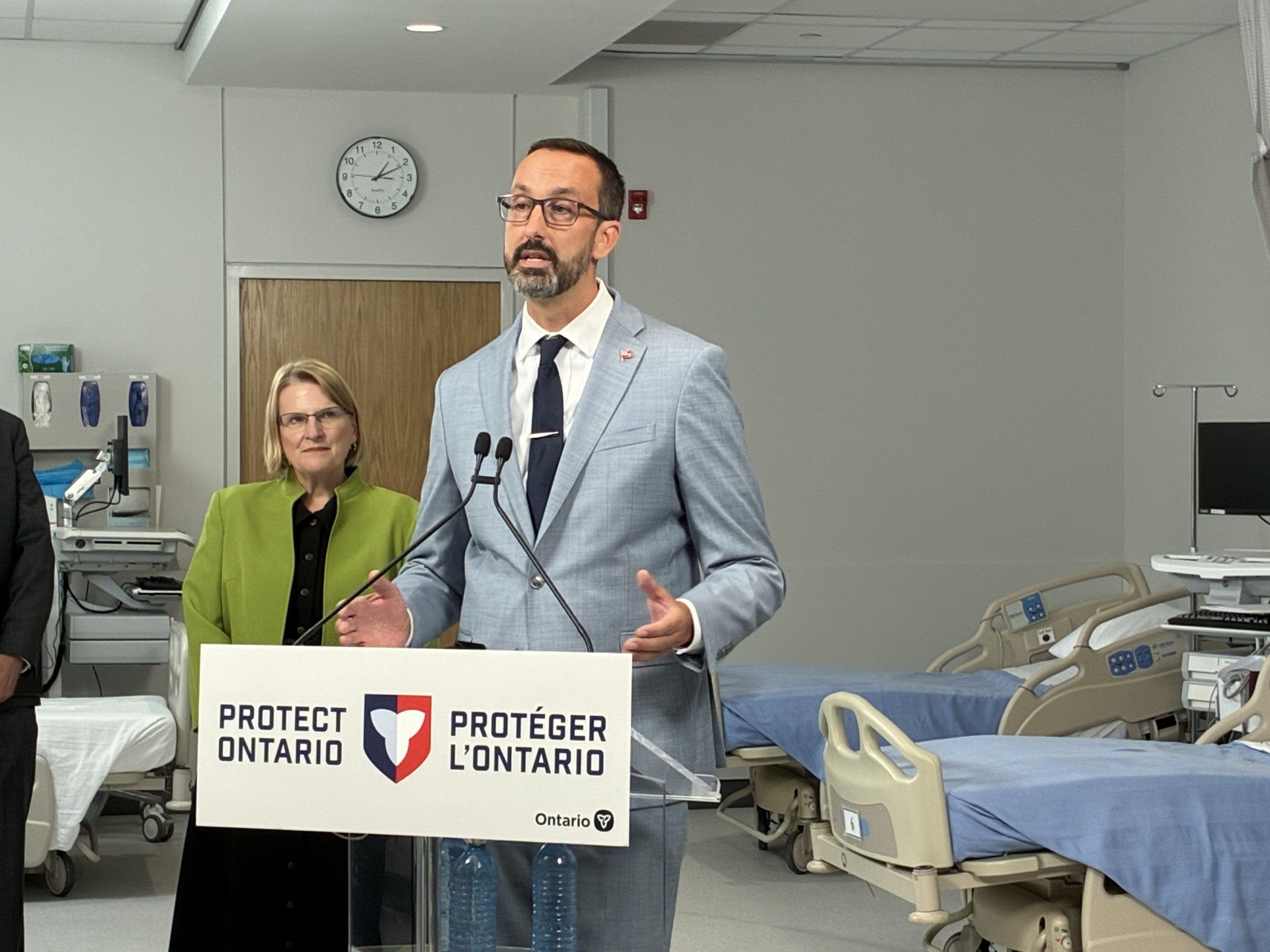
Colleges and Universities Minister Nolan Quinn described the problems with the private colleges, Tuesday.
“These include common ownership, the involvement of immigration services firms and co-location between private career colleges and immigration recruitment or immigration services firms, inadequate student validation and verification of course enrolment and outcomes, and unusually high concentrations of OSAP (Ontario Student Assistance Program) applications submitted from the same geographic locations,” Quinn said.
Quinn’s presentation was clearly intended to create the impression that he is a man of action. But the timeline of government action raises concerns about transparency and the lack of urgency the government displayed in addressing the problem.
According to court documents, Career Colleges Ontario, the association representing private sector colleges, started warning the government about suspicious OSAP activity in January 2023.
The colleges group held four meetings with the government in 2023, and in 2024 requested the police be brought in.
Quinn, who became minister in August 2024, starts the government’s clock running much later. He says his ministry received “an increasing number of complaints” about the volume of OSAP applications at private career colleges in late 2024. He says Career Colleges Ontario raised the issue in January 2025.
Quinn says the ministry started a review in May 2025, partly based on information from the federal government. In July of that year, it launched targeted investigations, and in December it called in the government’s forensic investigation team.
In May of this year, the provincial government suspended student assistance eligibility for six colleges but made no public announcement of its move, even though the investigation and its outcome is clearly a matter of public interest.
Thanks to dogged reporting by The Canadian Press, the story came out anyway. The suspensions were revealed in July of this year. More details about the problem followed in stories this month.
A government spokesperson said the career college problem couldn’t have been made public while the investigation was under way. OK, but now the government has now made it public, called in the OPP and alerted the auditor general. This despite the fact that the government’s own investigation is not complete.
A reasonable person might suspect that the government only made the problem public after the volume of media coverage had made it impossible to keep it secret any longer. The government denies a connection between the coverage and the minister’s statement this week.
It also denies a connection between the money spent on dubious career colleges and the need to reduce grants for Ontario students. The government blamed an unsustainable increase in demand for student aid when it cut grants from 85 per cent of support to 25 per cent .
In 2024–25, student grant spending jumped by $465 million, but the rise was driven largely by the career college problem. The Ford government’s new grant percentage is still in the middle of the pack nationally, but it would be natural for Ontario students to think they are paying the price for a career college problem the government should have fixed.
The lesson from the debacle is that a problem can snowball if not dealt with promptly and openly. Only an optimist would think that’s a lesson this government will learn.
This is not the first problem the Ford government has had with skills training. Last year, the province’s auditor general found that the distribution of money under the government’s $2.5-billion skills development fund was not fair, not transparent and lacked accountability. The program continues, with a promise to do better.
The underlying question is why the government is spending a fortune on private career colleges and one-off skills-training programs when it has an extensive public college system whose very reason for existence is training people for work.
It’s time to ask what value the public gets from this burgeoning skills-training industry.
National Post
randalldenley1@gmail.com