



The College of Physicians and Surgeons of Ontario ( CPSO ), one of the province’s main medical regulators, is considering severe restrictions on the availability of so-called “safer supply” drugs. Their proposed reforms are long-overdue and must be implemented if the regulatory body wants to maintain its credibility as a guarantor of responsible health care.
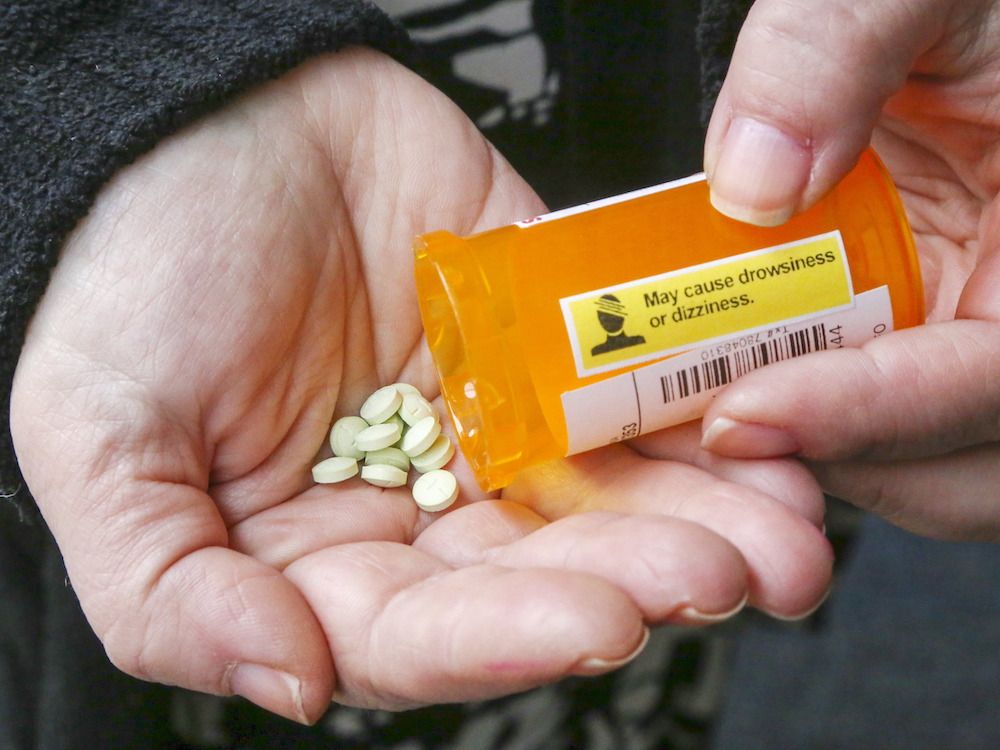
“Safer supply” refers to the experimental practice of prescribing addicts free recreational drugs — typically hydromorphone, a heroin-strength opioid — with minimal supervision under the assumption that this dissuades use of riskier street substances.
There is currently no credible evidence that safer supply reduces overdoses and deaths. Supporting research predominantly consists of interviews with participating addicts, whose glowing reviews are inexplicably treated as objective evidence of success. A small number of studies use higher-quality research methodologies, but have faced serious criticisms from addiction experts .
However, there is ample evidence that a significant portion of safer supply hydromorphone is diverted to the black market, where it subsequently floods into surrounding communities, spurring new addictions and enriching organized crime .
For years , addiction physicians throughout Canada have warned that, based on their clinical experiences, safer supply diversion is rampant and has caused the street price of an 8-mg hydromorphone pill to collapse from $15-20 to just $1-5, making the opioid comparable in price to a can of beer.
Their observations are corroborated by police testimonials and drug seizure data. Between 2020 and 2023, for example, the volume of annual hydromorphone seizures exploded by 1,090 per cent in the Waterloo region, 1,577 per cent in the Niagara region and roughly 3,000 per cent in London, Ont. Local police have explicitly connected these increases to safer supply and gang activity.
In British Columbia, a secret provincial investigation, whose existence was leaked to the public in early 2025, confirmed at the time that “significant” quantities of diverted safer supply hydromorphone were being trafficked provincially, nationally and internationally.
The federal Liberals and B.C. NDP initially championed safer supply, going so far as to gaslight Canadians about diversion, but eventually withdrew support amid a public backlash. Last year, the Liberals quietly defunded their safer supply programs while B.C. mandated that these drugs be consumed only under medical supervision.
This has led many people to believe that access to safer supply has also been restricted in Ontario, but that isn’t the case.
Health care is a provincial matter, so, even if the federal government no longer financially incentivizes safer supply, it is up to provincial governments — or their arms length regulators — to impose restrictions. Without their intervention, any prescriber, including family doctors, can provide safer supply drugs just as they would with any off-label medication.
Although the Ford government has publicly claimed to oppose safer supply, it has done nothing to restrict access. The CPSO has also been missing in action — something which addiction doctors in the province have privately complained to me about for years.
Thanks to this complacency, Ontario’s regulations are so relaxed that addiction experts have characterized the province as the “wild west” of safer supply prescribing . The situation is so dire that doctors can remotely prescribe safer supply opioids using video terminals installed in partnering pharmacies.
But it seems that this system of abuse may finally be coming to an end, because the CPSO, after years of inaction, may finally be adjusting its prescribing guidelines. On Oct. 13, the medical regulator will be convening a special board meeting to review a series of proposed amendments that, if implemented, would effectively address the diversion crisis and other safer supply-related harms.
The most important change would be the requirement that safer supply drugs only be consumed under medical supervision. This would immediately make diversion far more difficult, stemming the flood of pharmaceutical opioids inundating Canadian cities.
Under the proposed amendments, safer supply could also only be given to addicts for up to eight weeks, and solely for the purpose of helping them transition to traditional, evidence-based addiction treatments, such as methadone and Suboxone. This is a dramatic departure from the status quo, where safer supply is given indefinitely.
Some addiction doctors say that indefinite access to safer supply dissuades addicts from seeking recovery-oriented treatment, locking them in perpetual suffering. However, this new model could actually incentivize treatment uptake while easing the early stages of recovery.
On the whole, the proposed amendments could conceivably transform safer supply from a practice that entrenches addiction to one that supports recovery. That being said, caution is still warranted given how catastrophic the current model turned out to be. The new system would also have to be rigorously studied through high-quality studies.
Dr. Lori Regenstrief, a Hamilton-based addiction physician, supports the new guidelines but says that the CPSO’s actions are “too little, too late,” and that the organization’s years of inaction have left Ontarians “in a much deeper swamp.”
It’s hard to disagree.
If the CPSO cares about saving addicts from their suffering — let alone protecting communities from diverted opioids — it ought to accept these commonsensical amendments. For too long, the organization has neglected proper regulation of this health care niche, but it is never too late to save lives and salvage credibility.
National Post

