


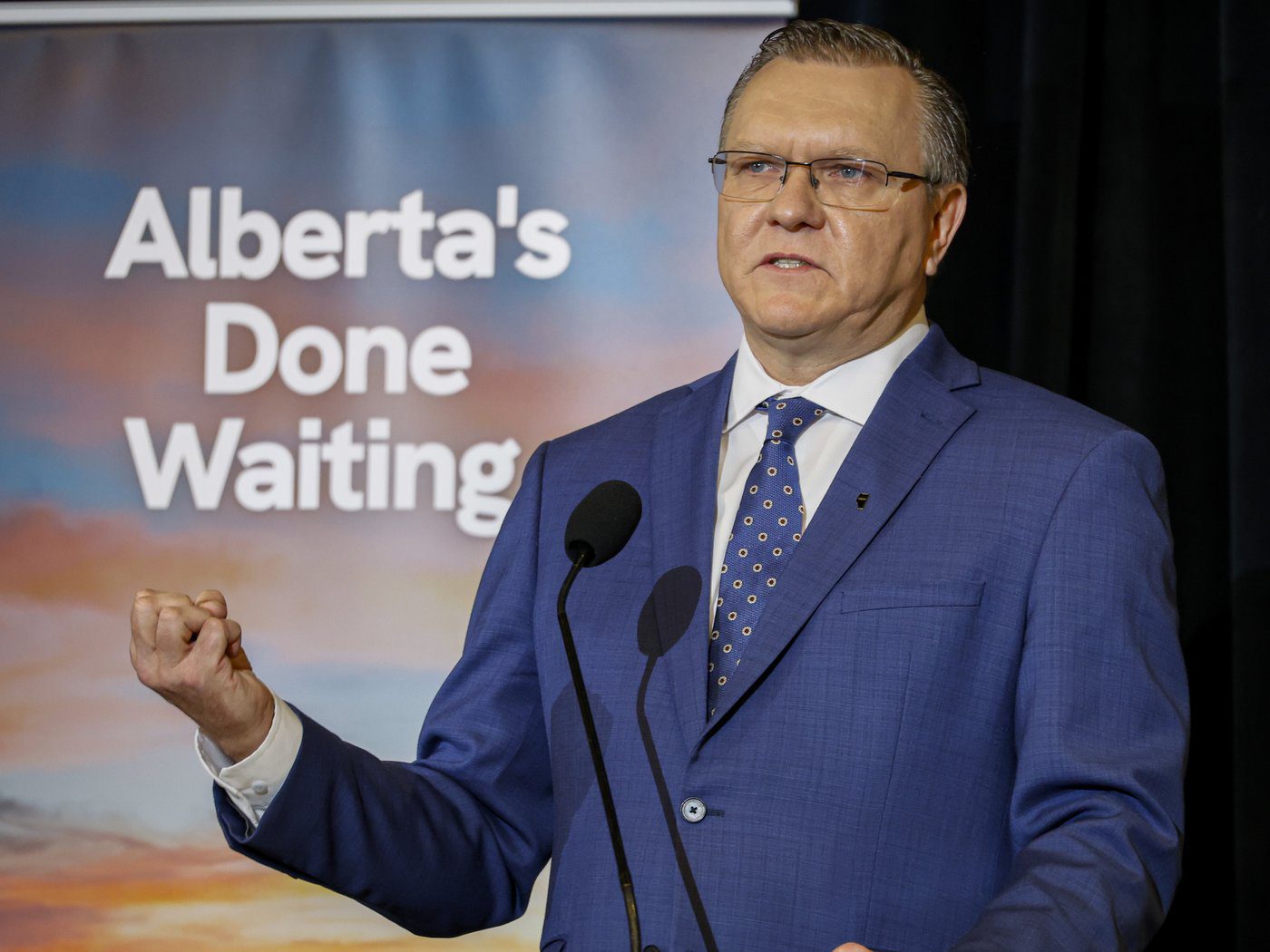
CALGARY — Premier Danielle Smith and her government expect next month’s separation referendum to be the last word on the subject – but those fighting for an independent Alberta say no matter the outcome, the fight goes on.
“We’re never giving up,” Jeff Rath, the lawyer for a group that helped organize an independence petition, said Wednesday in an interview.
“The logic of independence is such that we’re not going home when this is all over.
“Do you think we’re just going to stop advocating for a free and independent Alberta?”
Cory Morgan, an organizer with the Pathway to Independence group campaigning for separation, agreed: “That’s a very significant movement on something that’s looking for some very serious change.”
Morgan said the grievances motivating advocates are still going to be there after the referendum.
“The issue doesn’t go away, but it’ll change its approach,” he said.
Voters head to the polls next month to answer 10 referendum questions. Nine of them focus on giving Alberta more elbow room on immigration and constitutional issues. The final one asks if Alberta should stay in Canada or whether it’s time to hold a second, binding referendum on leaving the country.
The issue has roiled the province. Polls suggest a majority of Albertans want to stay in the country.
Smith has promised to vote to stay in Canada.
She has said she called the vote because of competing citizen-led petitions over whether to remain in Canada or leave.
Critics, including the NDP, say Smith has no mandate to roll the dice on Canada’s future and that she is only doing so to mollify separatist hardliners in her United Conservative Party.
Keith Wilson, leader of the pro-independence group Let Alberta Decide, said a vote for separation is technically not a vote for separation, but a vote to hold another vote.
That means, he said, that regardless of the outcome, Alberta’s intolerably subservient status in Canada continues. Central Canada has the majority of the population, he said, and therefore will continue to call the shots in Parliament.
“This vote won’t resolve what’s broken in Canada and won’t fix how Albertans are treated poorly by Ottawa, so demands for fairness will continue,” Wilson said.
Smith has said she expects the Oct. 19 vote to settle the matter.
As recently as this week, her office reiterated that in a statement following a surprising byelection loss by Smith’s candidate to the Opposition NDP in what is normally a safe Calgary seat for her UCP.
“In five weeks, the referendum vote will be over, and we’re confident Albertans will be ready to move forward and fight for a stronger Alberta within a united Canada,” spokesperson Sam Blackett said in an emailed statement.
Commentators on both sides of the political spectrum say disillusionment and dismay over Smith calling the referendum played a role in Calgary-Shaw voters punishing her party at the ballot box.
Smith’s office disagrees, blaming right-centre vote splitting for the NDP win.
The loss could signal larger challenges down the road for the UCP given Calgary is viewed as critical to victory in the looming October 2027 general election.
Morgan said it’s not just voters, but also UCP members that Smith needs to watch out for. He said Smith’s embrace of citizen initiative petitions has activated a group of activists who hold significant sway over Smith’s party.
“She’s going to have to give them something to sink their teeth into or they’re going to come after her,” he said.
This report by The Canadian Press was first published Sept. 17, 2026.
— With files from Lisa Johnson in Edmonton
Dayne Patterson, The Canadian Press

