


OTTAWA — A trio of federal byelections are set for Monday in Quebec, Ontario and British Columbia.
Two of the ridings are considered fairly safe Liberal seats, both of which were vacated by former cabinet ministers. In Quebec, where voters had elected a Conservative four consecutive times, the Tories may have a difficult time holding their ground.
Here’s a closer look at the three races.
North Vancouver-Capilano
Former Trudeau-era cabinet minister Jonathan Wilkinson resigned his seat in June, leaving federal politics for a diplomatic posting in Europe. He secured close to 60 per cent of the vote in April 2025.
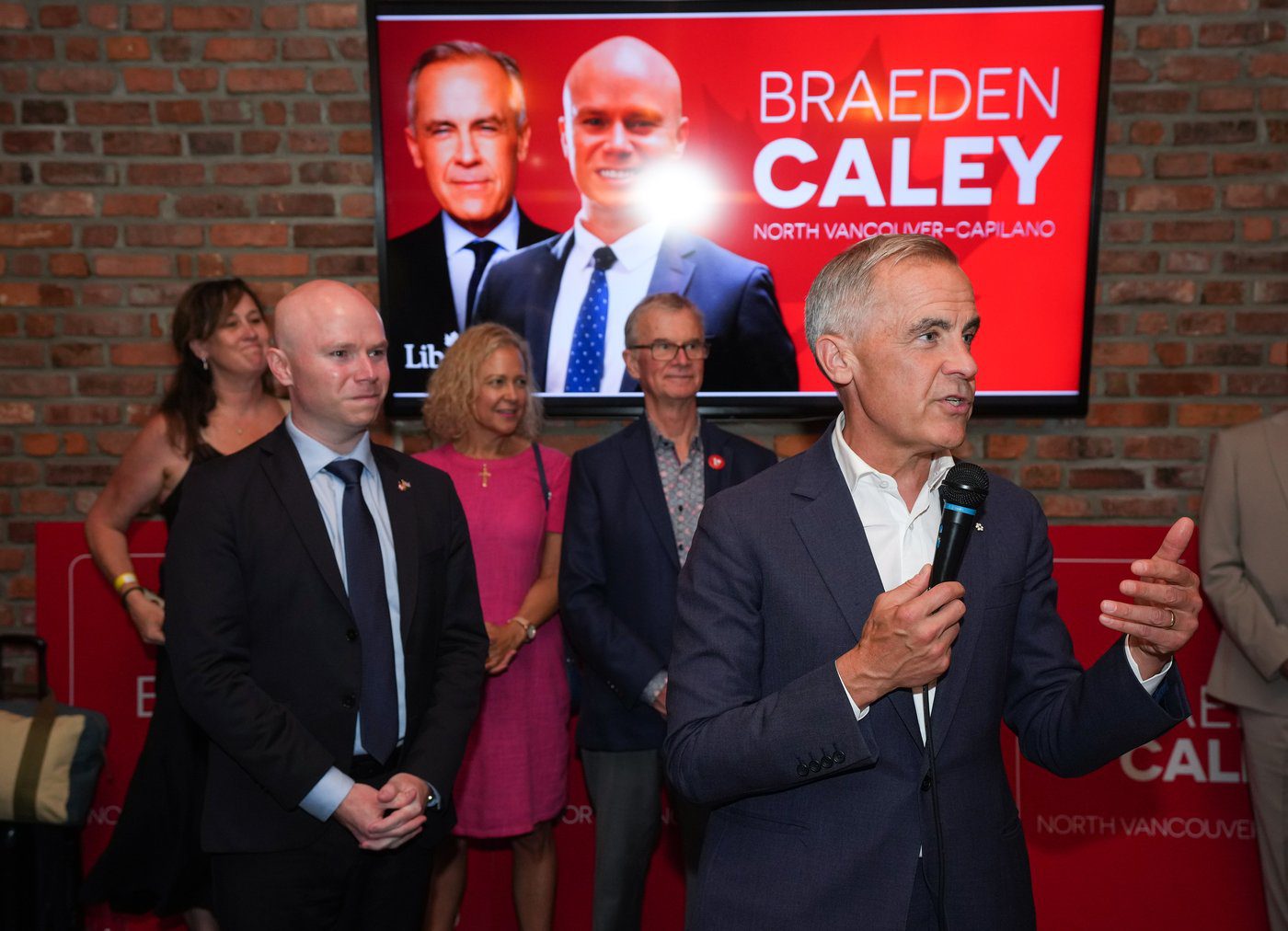
The Liberals have chosen a former top-level staffer in the Prime Minister’s Office as their candidate: Braeden Caley was Mark Carney’s deputy chief of staff and a senior staff member on Carney’s election campaign who’s returning to his home province to run for a seat in Ottawa.
The Conservative candidate is Stephen Curran, a commercial lawyer who came second to Wilkinson in 2025, with just over 33 per cent of the votes. He has run attack ads on social media challenging Caley’s connection to the community.
In the most recent election, where NDP support across the country flagged as voters considered the implications of a trade war with the U.S., the New Democrats finished a very distant third, with just over four per cent of the vote. Stephen Tweedale, a party staffer for the local MLA, is carrying the NDP banner in this byelection.
Beaches-East York
Nate Erskine-Smith’s political future remains uncertain, but he has ruled out representing this Toronto-area seat in Ottawa. First elected in 2015, the frequently outspoken Erskine-Smith was a cabinet minister briefly during his time in Parliament, but stepped down after deciding to run for the provincial party leadership — a job he’s no longer pursuing after losing a provincial Liberal seat nomination contest earlier this year.
His former constituency office manager, Tanveer Shahnawaz, is running for the Liberals in this byelection.
Erskine-Smith won with more than 67 per cent of the vote in 2025, a full 23 points ahead of the Conservative candidate.
Shannon Devine, a labour leader and activist who came in a distant third in the riding in 2025, is the NDP candidate once again. Jim Sybros is running for the Conservatives.
Chicoutimi-Le Fjord
The rural Quebec riding, about 200 kilometres north of Quebec City, was a tight race in April 2025.
Incumbent Richard Martel, a former junior hockey coach who won four straight elections for the Conservatives in the area, narrowly edged out candidates from the Bloc Québécois and the Liberals.
This spring, Martel was the fifth Conservative MP to leave Pierre Poilievre’s caucus after Carney nominated him for a seat in the Senate.
Daniel Gobeil, a dairy farmer and former president of a provincial dairy association, is running for the Liberals.
Trade, Trump and the wider implications
Daniel Béland, a professor of political science at McGill University, said Chicoutimi-Le Fjord is the race to watch on Monday.
The Saguenay region of Quebec has been hit particularly hard by U.S. President Donald Trump’s tariffs: it’s a major producer of aluminum and forestry, and home to a significant number of dairy farmers who’ve found themselves in the crosshairs during this trade war because of the Americans’ irritation with Canada’s supply management system.
And yet it seems Carney’s decision to walk away from negotiations has not hurt the federal government in Quebec.
“Donald Trump is extremely unpopular in Quebec, and I think that most Quebecers believe Mark Carney’s explanation that the Americans were asking for too much,” Béland said.
A poll by the Angus Reid Institute after the trade talks ended last weekend suggests three-quarters of Canadians think the government made the right decision in walking away — and that number in Quebec was 85 per cent.
Shachi Kurl, the president of Angus Reid Institute, said that could impact the byelection results.
“If there is to be an impact, which there may well be, that impact is more likely to be advantageous (for the Liberals) than disadvantageous,” she said.
Béland said if the Bloc or the Liberals win in Chicoutimi-Le Fjord, it will be more bad news for Conservative Leader Pierre Poilievre.
“If they really finish in a, say, distant third place in that riding, it will reinforce the narrative that Pierre Poilievre’s leadership is not helping the party,” he said, though he added that Martel’s personal popularity likely helped him win a tight race in the last election.
Kurl said her data shows why the issue of Trump’s tariffs continues to be a difficult one for the Tory leader.
“Conservatives are evenly divided as to whether they think that what Mr. Carney and his negotiators did was the right thing to do or the wrong thing,” she said.
Kurl warned that byelections at the tail end of summer are unpredictable, with turnouts typically low. An added complication for voters in Quebec is the provincial election campaign that is now in full swing.
The stakes are also lower than in previous byelections. In April, the Liberals secured their 174-seat majority in the House of Commons by winning three byelections, as well as courting five opposition MPs to cross the floor.
As of Sunday, there are six vacant seats in the House. The Liberals still have a majority, at 171 members, while the Conservatives sit at 139, the Bloc at 21 and the NDP at five. Green Party Leader Elizabeth May remains her party’s only representative.
Monday will fill three of those six seats, with byelections still to be called in a further three ridings in the upcoming months.
This report by The Canadian Press was first published Aug. 30, 2026.
Sarah Ritchie, The Canadian Press