


Canada’s trade war with the U.S. is bad for Ontario, but not for Doug Ford.
For the premier, the trade war is a godsend, a chance to rise above the minor-league missteps and general lack of direction that have dogged his government for most of this year.
For months, Ford has sat quietly on the sidelines as Prime Minister Mark Carney worked on the trade issue in his calm and quiet way. It seemed as if Ford’s stint as Captain Canada had come to an end.
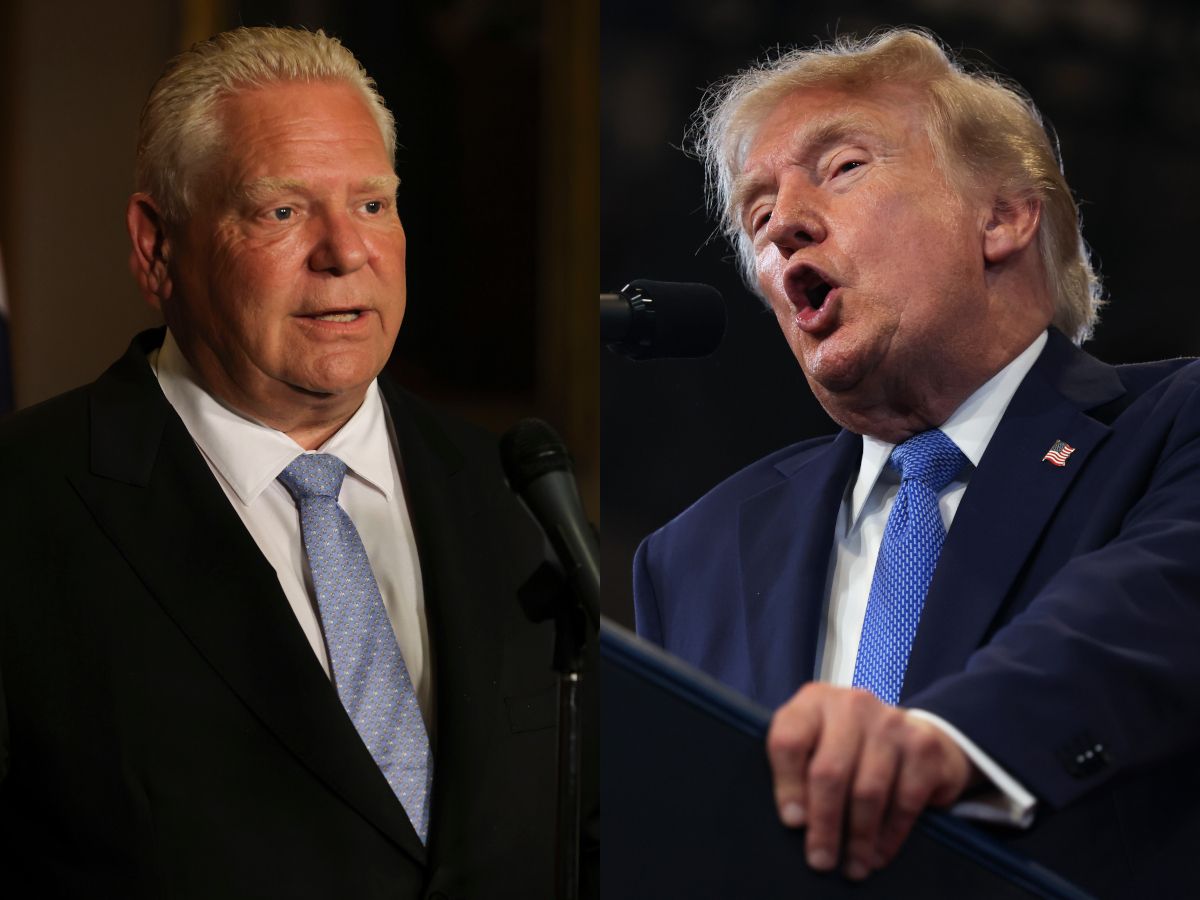
Then, with one classic Ford outburst, the premier was back. When Trump threatened even more tariff punishment, Ford invited the president to “kiss my ass. ” One would have to be a hardcore Ford hater not to say, “right on!”
By the time the war of words was done, Trump had said Ford was “”less charismatic, intelligent, and overall unimpressive,” compared to his late brother, Rob. Trump also called the premier a “flunky” and threatened to rename Lake Ontario to Lake America because “we don’t expect to be doing much business with Ontario any longer.”
In a second volley, Ford called Trump “a loser,” the “king of bankruptcies” and a “dictator.”
Then Ford started to work the U.S media circuit, toning down his message for that audience and admitting that things had gotten “a little heated.” The premier was back in the spotlight. Well played.
A Liaison Strategies’ poll this week suggested quick political dividends for Ford. His personal approval rating climbed from 24 per cent in July to 36 per cent now. Still not great but heading in the right direction.
The same poll said 85 per cent of Ontarians polled favoured keeping American booze out of retail stores. This is Ford’s best weapon in the trade fight. The booze ban by provinces took on surprising importance in the failed trade talks, apparently a precondition to the deal going through.
After the talks collapsed, Ford said he wouldn’t have supported a deal that would hurt Ontario workers, one Carney seemed ready to make. Ford also said he wouldn’t allow American booze to be sold in Ontario as part of such a bad deal.
In effect, the relatively trivial liquor issue gave Ford a near-veto on trade talks, one he still has if the same approach is taken in future talks. That leverage makes Ford more of a player on trade issues than he has been.
The trade war flareup was ideally timed for Ford. He hasn’t had a great year. His eight-year-old government has lost momentum, bogged down by self-inflicted problems like the controversy over buying a jet for the premier’s use, cabinet ministers soaking the public for the use of hotel rooms, and the PC Party sending someone to snoop on the Liberal leader in Jamaica.
Now Ford’s shortcomings have been pushed out of the news by the trade issue, just like they were in last year’s snap election. Ford might not like Trump, but he does come in handy.
Some dismiss Ford’s war of words with Trump as political theatre that distracts from the real trade issues, but the whole affair is political theatre. Trump’s tariffs have always been more about putting on a show of dominance and making others bend to his will. Trade itself is incidental.
Think of the Ford-Trump tussle as like a hockey fight. It won’t determine the final score, but it pleases some fans in the moment.
Ford knows how to deliver a political punch. That’s not really Carney’s style. About the closest Carney came to a shot was noting that the Americans’ trade deals were sometimes signed in pencil . Good line, but Trump’s communications on trade are more like ransom notes scrawled in crayon by a 12-year-old.
Trump is an easy target, a man who is little more than a cartoon villain. The tougher task for Ford is getting super-popular Carney to stand up for Ontario. Carney is being hailed as a hero for not giving the Americans everything they want, but the deal he was reportedly prepared to accept would have been a serious blow to Canada’s largest province.
It seems that Carney would have agreed to permanent high tariffs on steel, auto manufacturing and forestry, three critical Ontario industries. Tariffs that are less than Trump’s threatened maximum number are not a win if they are still high enough to cripple those industries.
Ontarians ought to be concerned by Carney’s record of making concessions to Trump and getting nothing in return. The PM’s impending counter-tariffs offer some hope that he has a spine, but history suggests otherwise.
For Ford, managing Carney is the biggest challenge. It will require some subtlety. Unfortunately, that’s not the premier’s strong suit.
National Post
Randall Denley is an Ottawa journalist and author. Contact him at randalldenley1@gmail.com

