



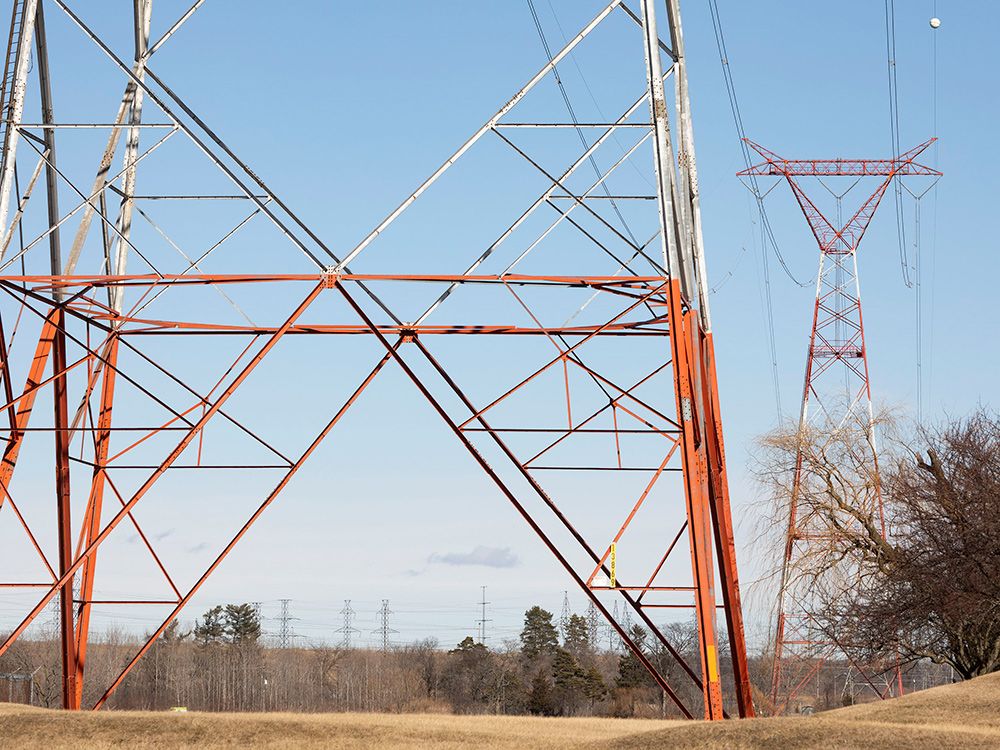
In the face of a new wave of tariffs from U.S. President Donald Trump, both Ontario Premier Doug Ford and Toronto Mayor Olivia Chow have publicly threatened to cut off Canadian electricity exports to the U.S.
Ford told a Monday press conference that cutting off electricity could be used to “put pain on the U.S.”
Chow has no jurisdiction over the electricity grid, but when asked about suspending electricity exports in a CNN interview, she said she would do “whatever it takes.”
Shutting off cross-border power was also entertained by Quebec Premier Christine Fréchette. “For the moment, I don’t want to exclude anything in terms of measures,” she told reporters.
There’s just one problem: Canada is no longer a critical supplier of electricity to the United States.
In fact, starting in 2024, Canada has begun experiencing the unprecedented phenomenon of buying more American electricity than it exports.
In February 2024, data from the Canada Energy Regulator show that, for the first time, Canadians had become net consumers of U.S.-generated electricity.
In that month, Canadian utilities sent 2.6 terawatt-hours to the U.S., while American utilities sent 2.7 terawatt-hours to Canada.
Although the disparity was blamed at the time on poor hydroelectricity generation caused by drought, it has since become a normal condition of the Canadian electricity grid.
In the two and a half years since, there have been seven additional months in which Canada was more dependent on U.S. power than the other way around.
The most recent example was December 2025. In that month, Canadians bought $330 million worth of U.S. electricity, but sold just $220 million of power in the other direction.
According to a 2024 analysis by the C.D. Howe Institute , this has all signalled the end of a “long-standing pattern of Canada exporting significantly more electricity to the United States than it imports.”
The Americans noticed as well. A 2024 briefing note by the U.S. Energy Information Administration similarly noted that the amount of Canadian electricity keeping American lights on had reached generational lows.
“Electricity exchanges across the United States and Canada — historically each other’s largest electricity trading partners — remain relatively small, representing less than 1% of their respective total generation,” it read.
New York State is typically among the most dependent on Canadian electricity imports. But even when power demand spiked to near-record highs during last month’s heat wave, 91 per cent of statewide energy generation was continuing to come from U.S.-based power plants (with the remaining nine per cent mostly coming from Quebec ).
Cutting off electricity to the U.S. would have been a much more dire threat 40 years ago.
Following a flurry of cross-border power lines being built in the 1970s, by 1982 nearly 10 per cent of all electricity generated in Canada was being sold at a profit to the U.S.
According to a 1985 report by the Economic Council of Canada, in that decade Canadian exports of electricity became 1,000 per cent higher than imports.
In 2025, by contrast, Canadian electricity exports were a mere 25 per cent higher than its U.S. imports.
Even as recently as 10 years ago, a threat of suspended Canadian electricity exports might have been enough to spark panic in select border states.
In 2016, 11 per cent of all power in the New York State grid (known as the New York Independent System Operator) came from Canada. But as of the most recent count in 2025, this has dropped to just two per cent .
The reasons for this are two-fold: Canada increasingly has less surplus electricity available to sell, while at the same time U.S. electricity production is hitting all-time highs.
Particularly over the last 10 years, any expansions to the Canadian electrical grid have mostly come in the form of small-scale wind and solar projects, with the bulk of electricity generation coming from legacy nuclear and hydroelectric plants that were predominantly built in the mid-20th century.
As a result, electricity production has been almost entirely stagnant in Canada for at least the last 25 years, even as Canada has massively expanded both its population and its demands on the existing grid.
In 2000, Canada generated 606,377 gigawatt-hours of electricity . At the time, the population was 30 million and there were effectively no electric vehicles on the road.
In 2024, Canada generated 619,762 gigawatt-hours of electricity, but for a country that now had 40 million people, and more than 1 million registered EVs .
In the U.S., by contrast, electricity production has been soaring in recent years, largely as a result of cheap, domestically produced supplies of natural gas. “U.S. electricity generation in 2025 hit a record, again,” announced the U.S. Energy Information Administration just last May.
What this means is if Canada were to suddenly power down its cross-border transmission lines, the U.S. power grid would likely be able to pick up the slack without even a temporary brownout.
The impact wouldn’t be blackouts, but higher utility bills as a result of Canadian hydro power being replaced with slightly more expensive U.S. natural gas power.

