



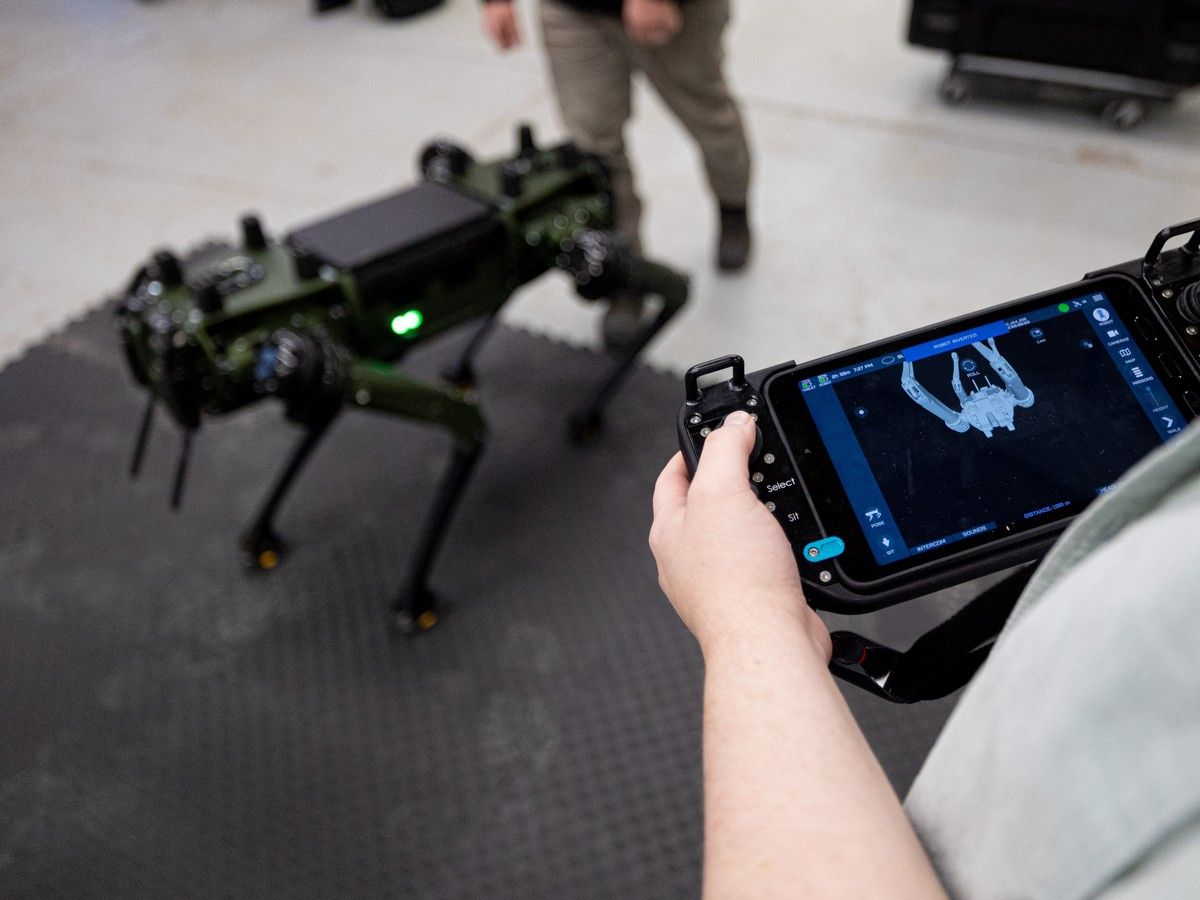
Chinese robot dogs on sale in Canada still cannot do much without a person driving them. Security researchers have found flaws that could let someone else take control.
In Beijing this week, organizers say more than 2,000 humanoid robots are competing in running, table tennis and soccer at the second World Humanoid Robot Games , inside the oval built for the 2022 Winter Olympics.
The displays show real capability, said Jason Peng, an assistant professor of computing science at Simon Fraser University. But the software running each robot is trained for one narrow task, he told National Post in an email. A machine built to dance or play table tennis can do little else.
The machine on sale here is the Unitree Go2, built by a Chinese company that makes both four-legged robots, which the field calls quadrupeds, and two-legged humanoids. An Alberta dealer markets them for fire and rescue crews. In Canada, they start at around $6,000.
Michiel van de Panne has worked with four-legged and humanoid robots for years at the University of British Columbia, where he is a professor emeritus of computer science. Humanoid robots once ran anywhere from $200,000 to a million dollars, he said, and the price of the hardware has plummeted over the past three to 10 years.
The hardware is no longer the hard part, van de Panne said. The software is.
“If someone gives you 100,000 quadrupeds or 100,000 humanoids, okay, now what are they actually good for so far,” van de Panne said. The short-term uses tend to be entertainment, he told National Post in an interview, and the machines are a novelty.
A robot can do a backflip because the move is the same every time, Peng wrote, and software trained to do it can do almost nothing else. Folding a shirt is harder, because the robot has to adjust to how the shirt sits each time.
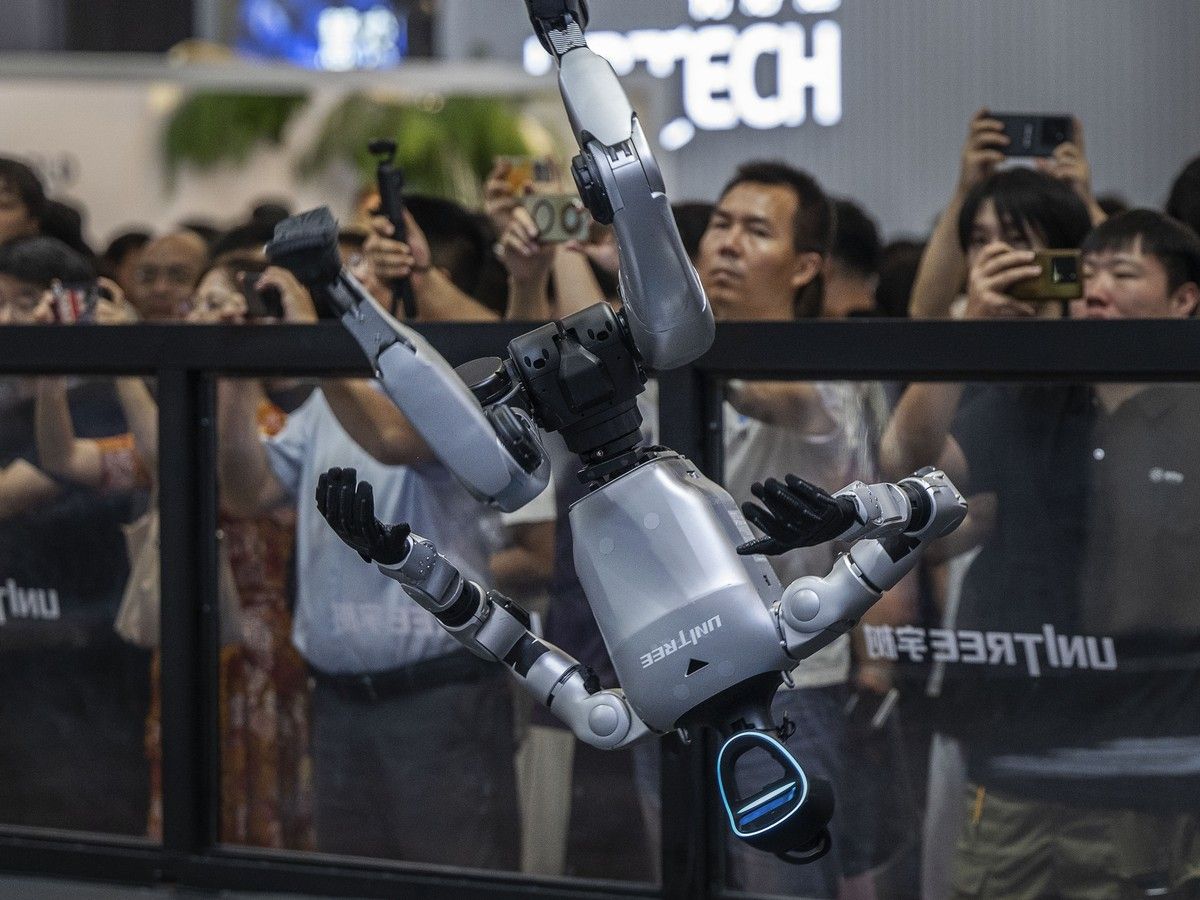
The one real job emerging for these machines is search and rescue. A robot steered by joystick can be sent into a burning building a firefighter cannot access, feeding back live video, van de Panne said. He co-supervises a PhD student at ETH Zurich working on exactly that. A person driving the robot can finish tasks no robot can do alone.
Drone Dynamics , an Alberta company that sells Unitree robots in Canada, lists 14 products and runs a page marketing them to fire and rescue services. Most listings read sold out or special order. Peng said he believes research labs at SFU, UBC, the University of Toronto and Université de Montréal run Unitree machines.
On July 28, the U.S. Federal Communications Commission banned new foreign-made robots from the American market unless the Department of War clears them one by one, after security agencies found the machines posed risks to supply chains and critical infrastructure. Models already approved can still be sold. Canada has no equivalent measure.
A report published in March by Andreas Makris and a group of security researchers found an earlier Unitree robot dog shipped with a hidden connection to an outside network that owners were never told about. The University of Waterloo was among the institutions whose connections appeared in the data, alongside MIT, Princeton and Carnegie Mellon. The education version of that robot, sold at about $8,500, was marketed to universities.
Olivier Laflamme , a Quebec security researcher, bought a Go2 and spent months taking it apart. He and a collaborator published two flaws this year that could give an attacker full control of the robot, one through the network it sits on and one through the phone app that controls it.
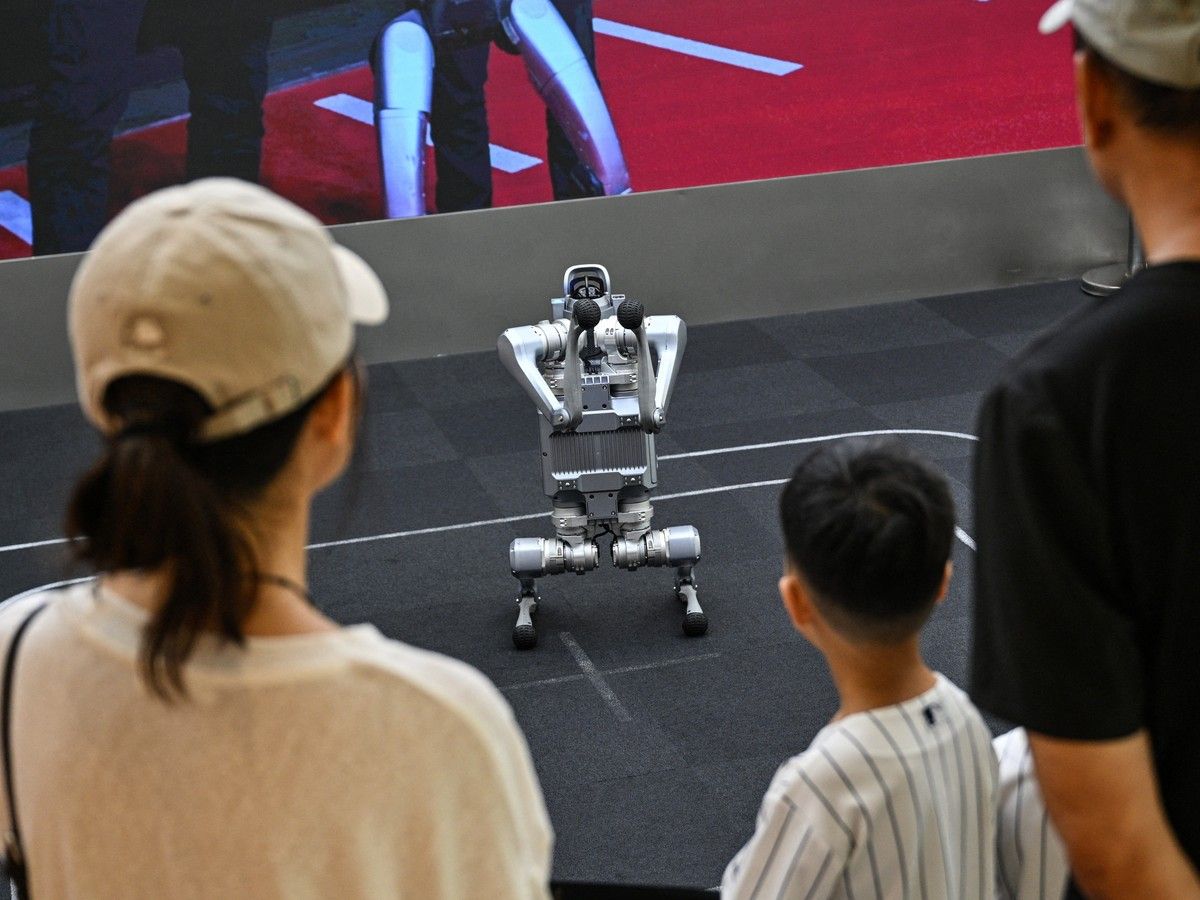
Makris and his colleagues found another way in. Setting these robots up on Wi-Fi is done over Bluetooth, and that step accepts whatever text it is given without checking, so commands can be smuggled in through the password field. The encryption protecting the exchange uses a single key, hardcoded and identical on every machine Unitree ships. Anyone who knows it and stands within Bluetooth range gets full control. The flaw covers the company’s humanoids and its robot dogs, including the model sold in Canada.
The known flaws are patched in current firmware, Makris said in an email. But a buyer cannot tell which version ships in the box, he wrote, and updating is left to the owner.
Unitree said in a September 2025 statement that its robots are offline by default. If an owner connects one, the company said, basic information such as the serial number and health status may be sent to servers in Singapore or to local servers in the owner’s country, similar to how a smartphone works. There are many exaggerated rumours online, it said.
Makris and his colleagues documented the opposite in their September paper, with the humanoid they tested sending data every few minutes to servers they identified as sitting on Chinese infrastructure.
None of the researchers is calling for a ban, and they rated the security on the machine they tested more mature than the industry average. Unitree has patched what they reported and now runs a program inviting researchers to submit flaws , though Makris wrote it did not exist when his team was trying to reach the company.
The problem is not unique to robots, van de Panne said. The same risk exists with cars, computers and Wi-Fi routers, he said, and the attack surface grows with anything connected to the internet.
Public Safety Canada referred questions to Innovation, Science and Economic Development Canada, which did not respond by deadline. Unitree did not respond to a request for comment.
Van de Panne suspects it will prove harder than people expect. He compared it to self-driving cars, where full autonomy has been a year away for 10 years running.

