



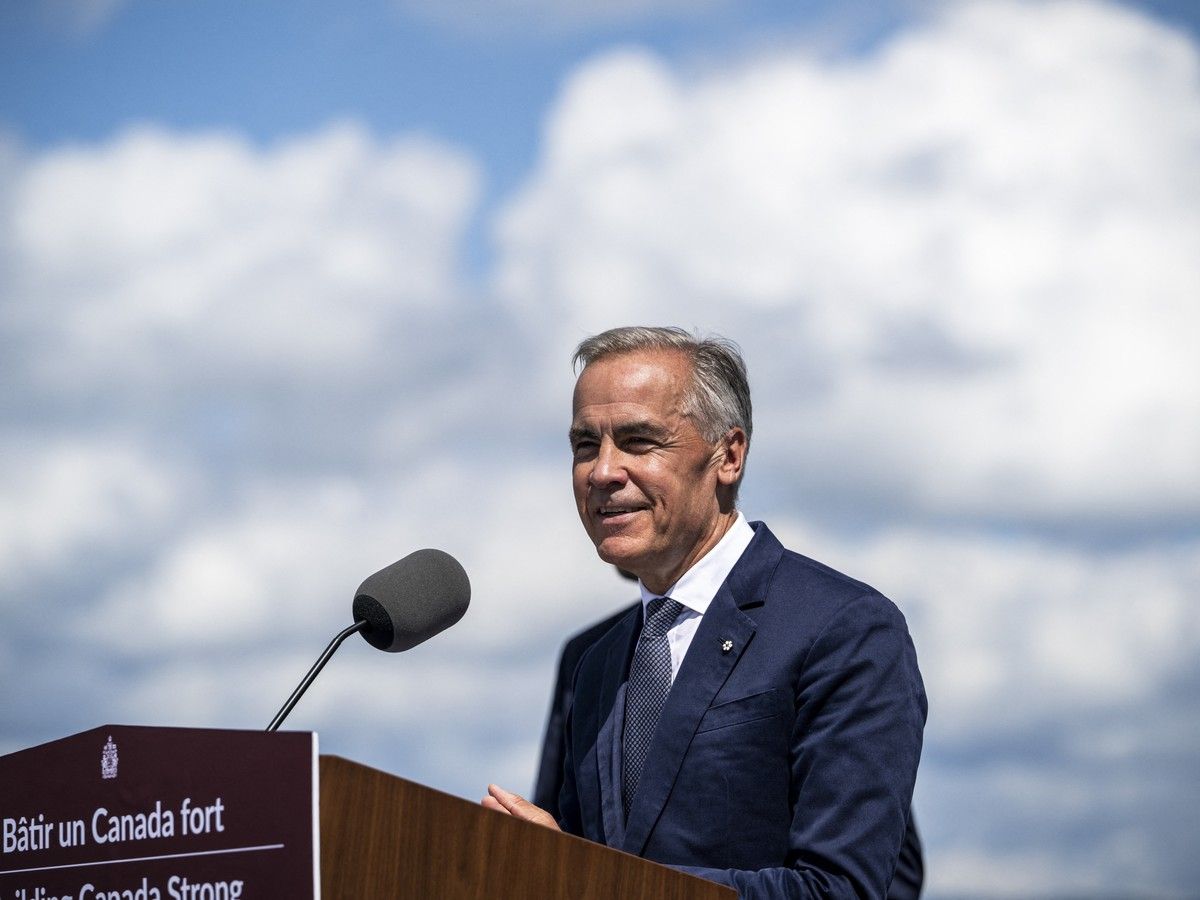
Prime Minister Mark Carney has been evasive and unreliable, if not blatantly self-serving, when it comes to discussing his negotiations with Washington. We learned that when his government lied about the reworked Gordie Howe Bridge negotiations earlier this summer.
However, the federal government’s own disregard for the truth does not automatically validate the version of events put forward by the Americans. Taking what Donald Trump’s officials say at face value is crass credulity at the worst possible time.
Let there be no question about whether Carney was right to walk away from the latest eleventh-hour revisions to the Canada-U.S. trade deal. The White House wanted Canada to agree to permanent, supposedly favourable, tariffs while effectively ceding our own freedom to strike deals abroad.
Alan Beattie of the Financial Times wrote , “There were reports that the U.S. wanted exclusive access to Canada’s critical minerals … and that the US wanted to pull Canada more tightly into its trade orbit by restricting Ottawa’s right to sign deals with other countries.”
Canada is a trading nation, and accepting economic vassalage would end that status, as would giving the Americans more power over our natural resources. Therefore, no deal was absolutely better than a very, very bad deal.
It is old news at this point, but Carney still bears responsibility for trying to conceal the true extent of the mess that was the Gordie Howe Bridge renegotiation in July. The original agreement involved Canada financing the $6.4 billion cost of the bridge between Michigan and Ontario, with Canadian governments being permitted to recover those costs before dividing revenues.
Then, at the last second, before the bridge was due to open, U.S. Commerce Secretary Howard Lutnick blocked its opening and demanded a richer American share.
Carney claimed that the original bargain had been preserved, saying , “We are sharing after Canada is paid back.” He later insisted that “any sharing of toll revenue won’t happen until all of the debt is repaid.”
The released agreement revealed a vastly different story: net revenues would be divided for 15 years before Canada had recovered the construction debt, while Washington gained leverage over major toll changes.
Carney gave a false account of a concession muscled out of him by a foreign government. Even if it was merely the result of gross ignorance of his own agreement, it is a black mark on Carney’s record. However, this apparent dishonesty does not make Howard Lutnick or any of his compatriots into honest men.
Rather, the bridge deal is the clearest evidence that the current American administration is not, and has never been, a good-faith actor. Washington waited until the project was finished and ready to open before turning the opening into a hostage situation, demanding new concessions and offering nothing to Canada in return.
Now, the same strategy has been used in trade negotiations. Both sides agreed that they had a tentative deal in place, with industry groups kept informed and President Trump even announcing that the agreement was ready for final review.
Then, in the final hours of negotiations on deadline day, it fell apart due to a combination of differences over automobiles, French-language provisions, and, most critically, Canada’s sovereign ability to negotiate trade with other countries.
Washington claimed that it was Canadian demands for lower tariffs on trucks that sank the deal, which Carney acknowledges was part of the disagreement, if not the decisive factor. Politico has reported clashes within the Trump administration and said that U.S. Trade Representative Jamieson Greer disagreed with Lutnick on policy issues related to the failed trade agreement.
Carney does not need to be given a free pass for Canadians to understand a very clear pattern of predatory renegotiations, in which a deal is nearly complete, only for Lutnick to demand ridiculous or impossible terms that Canada is then expected to accept.
Saskatchewan Premier Scott Moe responded to the breakdown by getting right to the point:
“Saskatchewan has also been clear that any attempt by the United States to influence or place conditions on Canada’s trade relationships with other nations is a non-starter. Decisions about who Canada trades with must be made by Canada. Saskatchewan, more than any other province, is diversifying its trade to other countries, and that will not be compromised.”
At an absolute minimum, a sovereign country requires the ability to freely conduct commerce with others around the world. Anything less is genuine vassalage. Canada is already dependent enough on trade with the U.S., and accepting that deal would have locked us into that dependency in a vise grip.
National Post Managing Editor Carson Jerema correctly wrote , “(W)alking away from negotiations, even if it leads to a protracted trade war, was the right thing to do. It may have been the most important moment for Canadian sovereignty in generations, and much credit to the prime minister for having the nerve to stand up.”
It would be a terrible mistake to simply make the best of this rupture. Saying no to a terrible agreement is the bare minimum of governance, but it is not an economic strategy.
This country remains bogged down in internal trade barriers between provinces, protected industrial oligopolies, and other minefields of overregulation.
Canada should be using this emergency to rapidly fix everything that has dogged and degraded its economy from the inside for too long. Capital should be able to deploy without a decade of supplication to Ottawa, the courts, and bloated regulatory boards.
Carney has pledged to unlock the domestic side of Canada’s economy, but failing to introduce internal shock therapy during this critical period will mean missing the mark once again, and Canadians will suffer even more for it.
Two things can be true at once: Carney has proven to be a slippery fellow, and the current American administration cannot be trusted either.
Right now, we should be building an economy so strong that neither opacity from Ottawa nor thuggery from Washington can put us in the position in which we currently find ourselves. Nor does anyone need to pledge loyalty to the Liberal government to back their country at this time.
National Post

