



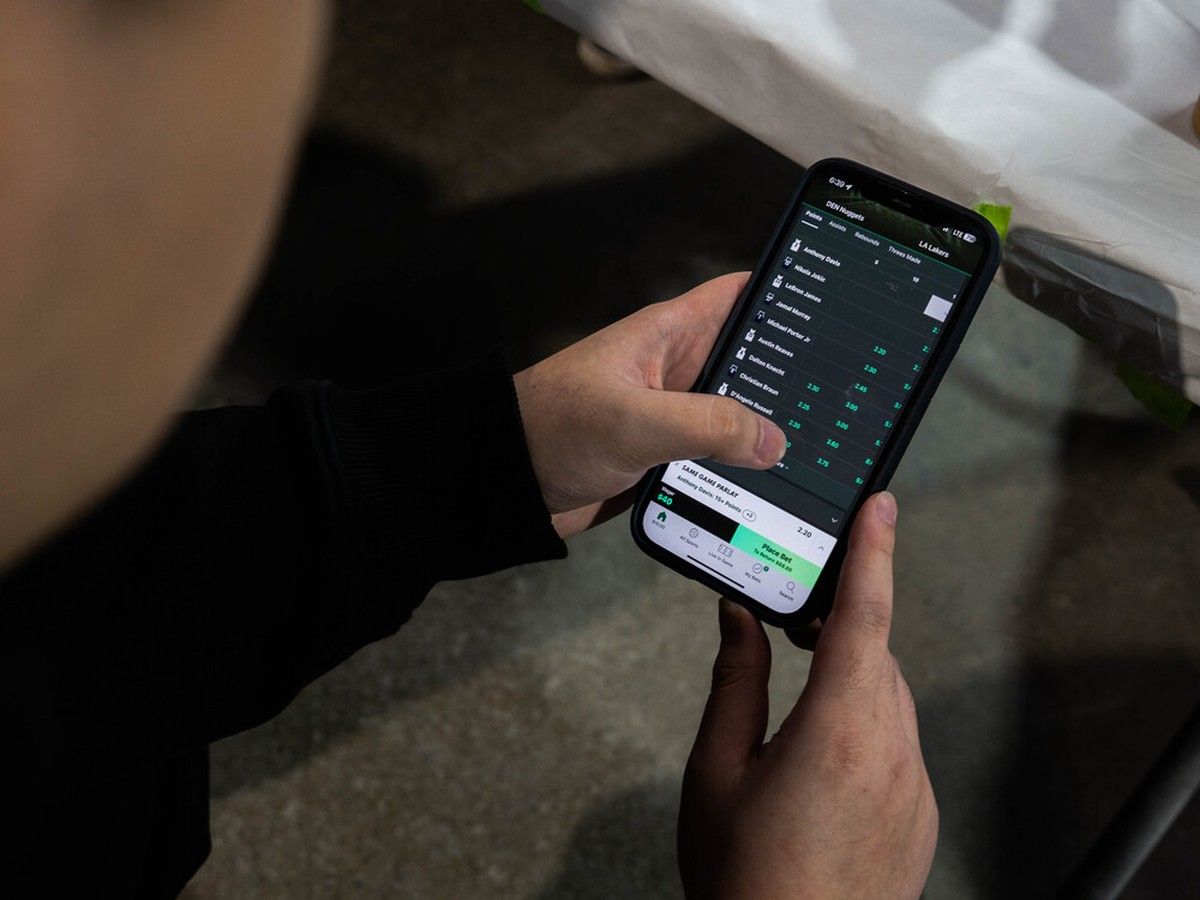
Kath says she and her husband tried their best to resist, but finally did something they never imagined would be part of the parenting experience.
The Toronto woman used her own credentials to set up an account for her 16-year-old son on a government-regulated gambling app, allowing him to skirt rules that ban anyone under 19 using the sites.
“He would bug us and for the longest time we said ‘Absolutely not. It’s illegal and blah blah blah,” recalls Kath, who asked that her full name not be published. But “every single kid is betting, like everybody … Eventually, I was just worn down … Eventually he used my ID — which I’m not proud of — and opened an account.”
As surprising as her decision might be to many parents, it seems far from unique.
Two other parents told the National Post they too facilitated their own minor children’s online gambling and said many families are doing the same. Harley Redlick, a lawyer and responsible-gambling activist, said he’s heard from numerous parents who have opened accounts for their teenage kids, often citing an “epidemic” of Internet betting among adolescents they feel is hard to resist.
Kids are gambling on sports and casino games in social groups, at home and even while at school, they say.
Ontario’s decision to legalize commercial gambling apps — a policy mirrored by Alberta last month — has always been controversial , with over $100 billion bet in the last year and spikes in gambling addiction, gambling-related bankruptcies and possibly even gambling-linked suicides
But officials have insisted that at least young people would be kept off the sites, thanks to strict rules that require players to upload government-issued identification and photographs to register accounts.
Interviews with parents, a teenage gambler and gambling experts suggest the safeguard is having less impact than might be expected.
“I would say every single one of my son’s (high school) friends has an account,” said Kath.
The hard data about the prevalence of underage betting is limited, even as the market grows by leaps and bounds. The Ontario Student Drug Use and Health Survey concluded that 12.4 per cent of the male high school students and three per cent of females had gambled online in 2023, but that was just a year after the province set up its commercial gambling program — and the overall volume of bets placed since then has exploded .
“It’s definitely widespread,” says David, a father who set up a betting account for his sons, then shut it down when he saw some concerning behaviour. “And it’s a problem because you’re getting kids … addicted to a behaviour that has real-life consequences as they get older.”
Like the other parents interviewed — all of them professionals in the Toronto area — David asked that his full name not be published, partly because he knew that what he did was illegal.
Robin, a third parent, said her son’s private school brought in a gambling counsellor to address the students because of concerns about widespread betting. Even during that assembly, she heard, teenagers were on their phones gambling.
“My son knows kids who have lost thousands of dollars,” she said. “One kid won $6,000 on slots at (school) lunch.”
Redlick, who teaches a professional-development course on gaming law at the Law Society of Ontario and is executive director of the Canadian Addiction Recovery Association, said he has sympathy for parents, especially given that marketing for Internet betting inundates sports broadcasts and other media. Ontario did ban sports celebrities from those ads, but it still allows them to appear in so-called “responsible-gaming” spots that are produced by the same companies and present the topic in a generally upbeat way, he noted. Redlick cited a BetWay commercial featuring Vladimir Guerrero Jr., the Toronto Blue Jays superstar.
“It seems like the government has offloaded this to the families and parents,” he said about underage gambling. “It’s giving lip service to responsible gambling.”

Yet it’s not always a conscious decision by parents to let their teenagers use the apps. Some kids anxious to open accounts will borrow IDs without permission and even take pictures of their parents to upload, claiming they’re for some legitimate use like “Christmas photos,” said Redlick.
And the guardrails the sites have put in place are not totally foolproof, suggests a recent prosecution by the Alcohol and Gaming Commission of Ontario. The regulator fined Betty Gaming Ltd. $120,000 for “failures” that let at least nine people under 19 years old create accounts, deposit money and gamble and another 14 set up accounts without depositing money.
The age restriction is “one of the most basic and important safeguards” in Ontario’s regulated system, said AGCO CEO Karin Schnarr about the case. Like Alberta’s new initiative, Ontario’s policy licences gambling companies to set up sites and advertise.
It is illegal to facilitate access to underage online gambling in Ontario, confirmed Ontario Provincial Police spokeswoman Tracey Mellersh. But the force has yet to lay any charges, preferring a harm-reduction, education-based approach, warning parents and guardians about the law and the risks of young people betting, she said.
Meanwhile, unregulated gambling apps also operate online, often making little or no attempt to bar minors. The Ontario Provincial Police charged one person in 2024 in a scheme involving a site called TopBets, after several underage teenagers in Orillia, Ont., were allegedly lured into gambling, then threatened with violence when they racked up debts.
Similar to the other parents, Kath said her son made the case that his friends were already doing it. It seems to be a highly social activity, groups of boys gathering to bet on a sports event or casino games, she said.
Kath likened her approach to that of parents who let underage children consume alcohol under their supervision rather than take a hard, no-drinking line, knowing the kids will imbibe regardless. What’s more, she says her son Matt is a highly disciplined boy and accomplished athlete whom she knew would not become addicted.
In fact, Matt, now 17, said in an interview that he eventually realized “this is not good for me” and deleted the app on his phone. But he’ll still get together with friends and contribute to a group bet on someone else’s account.
“I have very, very, very few friends who have actually made money (on gambling apps),” he said. “I know many people who are down by a significant amount of money.”
He said he knows of people who “have gambled during school and have won big and … also lost.”
David said he agreed to set up an account for his teenage sons and provided a deposit of $50. But then he noticed they were making a string of small, $2 bets in what looked like compulsive behaviour, and decided to put an end to it.
“Kids are not going into personal bankruptcy,” David said. “It’s feeding this addictive personality.”
Robin said her husband was dead-set against allowing their son to gamble online, but they eventually compromised by letting him use an app on her phone, which she loaded with $35.
As well as being a serious sports fan, the boy is a numbers whiz and thought he’d outwit the site, she said. But he soon discovered a time-worn truth about gambling — the odds are tilted squarely against the players. He’s since given up on online betting, but makes thousands of dollars trading sports and other cards, said Robin.
Mina Hazar, who runs a youth gambling awareness program for the YMCA, said she doesn’t want to judge parents who set up gambling accounts for their children, but suggested they consider the long-term consequences – such as the risk of developing a gambling addiction.
And, she said, “something they do not know is that actually it’s a crime.”
Matthew Young of the GREO gambling research organization said the undeveloped brains of kids that age are rich soil for growing addictions. Simply trying to monitor their Internet gambling — which looks no different than any other activity on a smartphone — might not work.
“I get the sentiment of these parents – this idea that ‘I’d rather my kids drink in my basement because they’re going to do it anyway,’ ” he said. “(But) online gambling is very, very easy to hide. … How do you keep an eye on it is the question?”
Our website is the place for the latest breaking news, exclusive scoops, longreads and provocative commentary. Please bookmark nationalpost.com and sign up for our daily newsletter, Posted, here.