



To tariff, or not to tariff? That is the question…and the answer may be found in Canada’s dairy industry.
With apologies to William Shakespeare, many Canadians are waiting to see whether we will suffer the slings and arrows of outrageous fortune. This pertains specifically to U.S. President Donald Trump’s 50% tariffs on a wide variety of Canadian goods like down feathers, beer, wine, milk, vacuums, toys and, of all things, hockey sticks.
These important goods were previously exempt under the terms and conditions of the Canada-United States-Mexico Agreement. Now that this once-stable trade pact has shifted to an annual review until July 1, 2036, virtually nothing is safe or secure from the threat of additional taxes and tariffs.
Until Trump’s second presidential term ends, that is.
As I write this column, the clock is ticking and has almost reached the Aug. 19 deadline. Canadian Prime Minister Mark Carney has spoken with Trump, but nothing has been arranged or finalized. Time is of the essence, but the essence is nearly out of time.
If the two sides can’t make a last-minute agreement, it could turn into a huge financial disaster for both countries. Canadian exporters have suggested they could lose half their revenue, according to a recent survey conducted by the Canadian Federation of Independent Business, with 77 percent of respondents believing they’ll lose some amount of revenue due to the tariffs. Meanwhile, an Oxford Economics report for the Canadian American Business Council noted the possibility of hundreds of thousands of jobs lost in both countries, along with a significant financial impact and decline in GDP.
Could one or both of these scenarios be avoided? Yes, but the likelihood of something this miraculous happening is exceedingly slim. Why? “Nearly $3.6 billion (US$2.6 billion) worth of goods and services crossed the border each day in 2024,” according to the Government of Canada’s web page on Canada-United States relations. Moreover, the U.S. is “Canada’s largest trading partner in goods and services, while Canada is the U.S.’ second-largest trading partner.”
While this situation would be a mess for the U.S., it’s something the Canadian economy wouldn’t be able to withstand. No matter how many trade deals and agreements in principle that Carney and his Liberal government arrange and sign, it can’t and won’t make up for the forthcoming economic loss that our country would suffer.
Canada needs to either make a last-minute arrangement with the U.S., or stave off this tariff threat until a new round of negotiations can be held. There’s simply no ands, ifs or buts about it.
This isn’t a form of surrender, capitulation or anything else that critics of the Trump administration have regularly suggested. It’s part of the political and economic reality that Ottawa has been either ignoring or disregarding because of their long-term frustrations with the current occupant of the White House.
What’s one way to do it? The reform or removal of supply management in Canada.
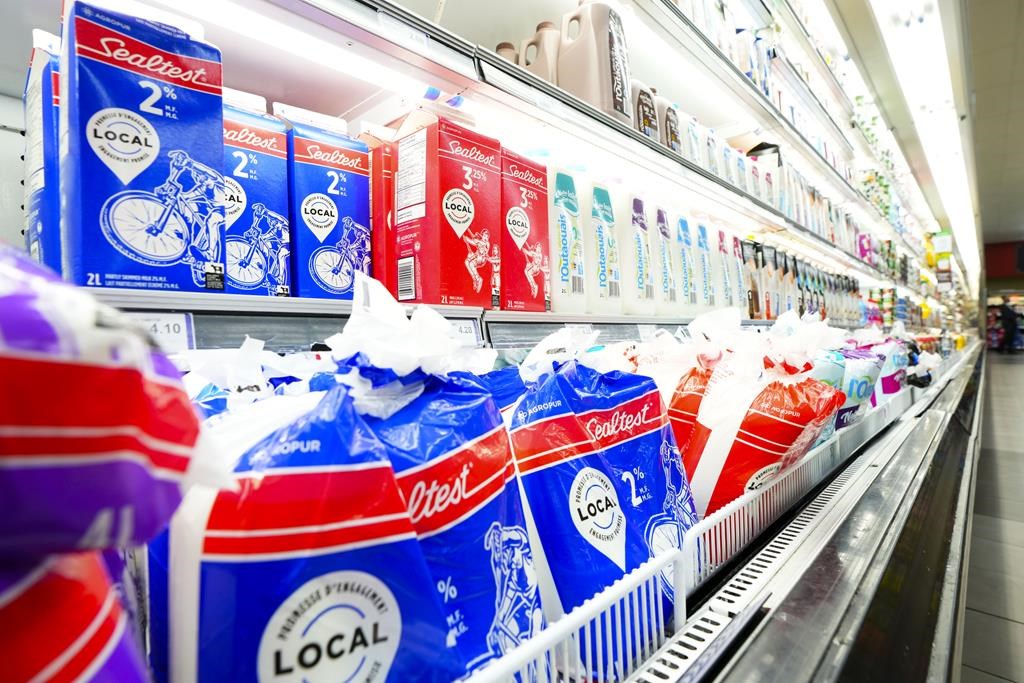
Supply management has long been one of Trump’s greatest frustrations with our country. I can’t blame him for this. Canada’s dairy industry has long operated in a restrictive market that’s governed by the anti-free market principle of supply management. This has enabled the Canadian state to control the supply and demand of milk, cheese, eggs and other products with an iron fist.
Doing something – anything – to establish some semblance of free market principles in our dairy industry would be a huge and positive start to this discussion. It would likely be viewed by Trump and his senior advisers as an act of good faith, if nothing else.
What about Canada’s dairy farmers? They would have to figure out better ways to compete in the marketplace instead of relying solely on government handouts for survival. More to the point, they would have to take a hard look in the mirror and realize that they’ve made some serious mistakes in managing this industry.
Sylvain Charlebois, a columnist and Senior Director of the Agri-Foods Analytics Lab at Dalhousie University, recently wrote about ten myths about the dairy industry that Canadians should “stop believing.” For instance, he pointed out that dairy farmers “can be cash-constrained, but…are generally asset-rich.” There were “more than 90,000 dairy farms when supply management began,” Charlebois noted, but “fewer than 10,000 remain.” As he astutely observed, “the system has stabilized revenues for surviving producers, but it has not stopped consolidation. It protects farm income more effectively than it protects family farms.”
What about the dramatic shift in reforming supply management in this country? It doesn’t have to be that way. “Canada does not have to choose between preserving supply management unchanged and eliminating it tomorrow,” Charlebois wrote. “A 15-year transition could lower industrial milk costs, help new farmers enter, strengthen processing and address quota values gradually. Farmers invested under government-created rules and deserve predictability, but fairness does not require permanent paralysis.”
Will Trump impose his 50% tariffs on Aug. 19? We’ll know shortly. One thing seems clear: long overdue changes to supply management in Canada could be the antidote to this forthcoming round of American slings and arrows.
Michael Taube, a longtime newspaper columnist and political commentator, was a speechwriter for former Canadian prime minister Stephen Harper.