



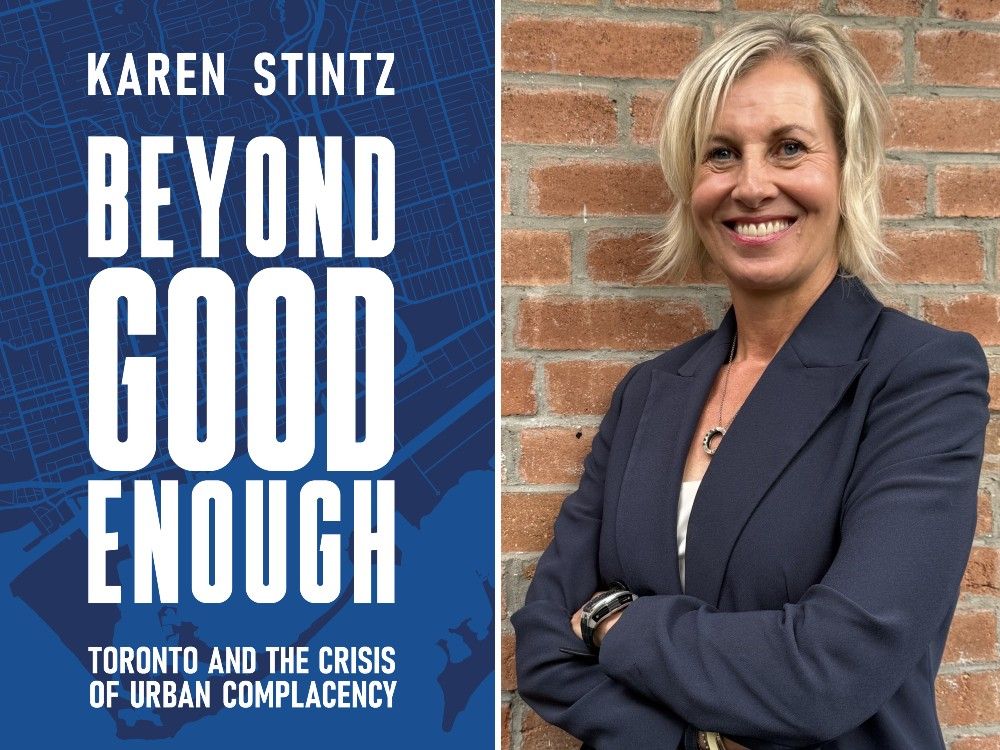
Former Toronto councillor Karen Stintz believes that in Toronto, there’s “an endless forgiveness for incompetence” that is “leading us to apathy and nonchalance.”
Her new book, Beyond Good Enough: Toronto and the Crisis of Urban Complacency (Sutherland House Experts), is an argument that Canada’s largest city is “teetering on the edge of inexorable decay.” She says 35,000 families exited the Greater Toronto Area in 2024, at a time when basic expectations cannot be met.
She writes: “Our downtown is shabby, our public parks are unkempt, our snow doesn’t get cleared, our taxes keep going up.” She rails in the book against housing prices, an ill-equipped judicial system, rising crime, congestion, unemployment, “and a City Hall that increasingly seems like a bystander instead of a competent management team.” Only a third of Canadian-led “high-potential” startups launched in 2024 were present a year later, according to the book. She described a “hostile takeover of our streets by terrorist sympathizers” that are “creating conditions ripe for further violence.”
Karen Stintz served as Toronto city councillor from 2003 to 2014 and chaired the Toronto Transit Commission from 2010 to 2014. The interview with Dave Gordon has been edited for clarity and brevity:
Why this book, and why now?
With my political career over, I wanted to keep contributing to the public conversation about the city’s problems and possible solutions. I wanted the book out before the next municipal election, so those conversations could become part of it.
You argue that Toronto must move “beyond good enough.” If there was a single decision or a single omission that best captures the civic failure you are describing, what is it?
The way we approach housing development in the city created unaffordable housing. The investor model that we relied on to build new homes in Toronto created an affordability crisis that has caused a generation to think that they will be priced out of homes. It happened in plain sight for all kinds of reasons. One of the prevailing views is that density is good, and we need density in order to build our city. The assumption about density was that home ownership would be more affordable with more density. The opposite turned out to be true.
You are in favour of party-aligned councillors. Why?
Municipal politics is built around ward representation and consensus. You elect people locally, largely based on name recognition. Councillors understandably focus on local development, parking and constituent concerns, while the mayor is only one vote and must build coalitions. That leaves no one clearly accountable for citywide problems such as housing affordability or congestion.
I would elect some councillors-at-large, with a mandate to take that broader view, and give more consideration to party affiliation. Organizations such as Progress Toronto already operate like political parties, but without the normal transparency around fundraising, platforms and candidate recruitment. So they’re operating in this very grey zone, but they’re very impactful.
What are your proposals for parking and traffic congestion?
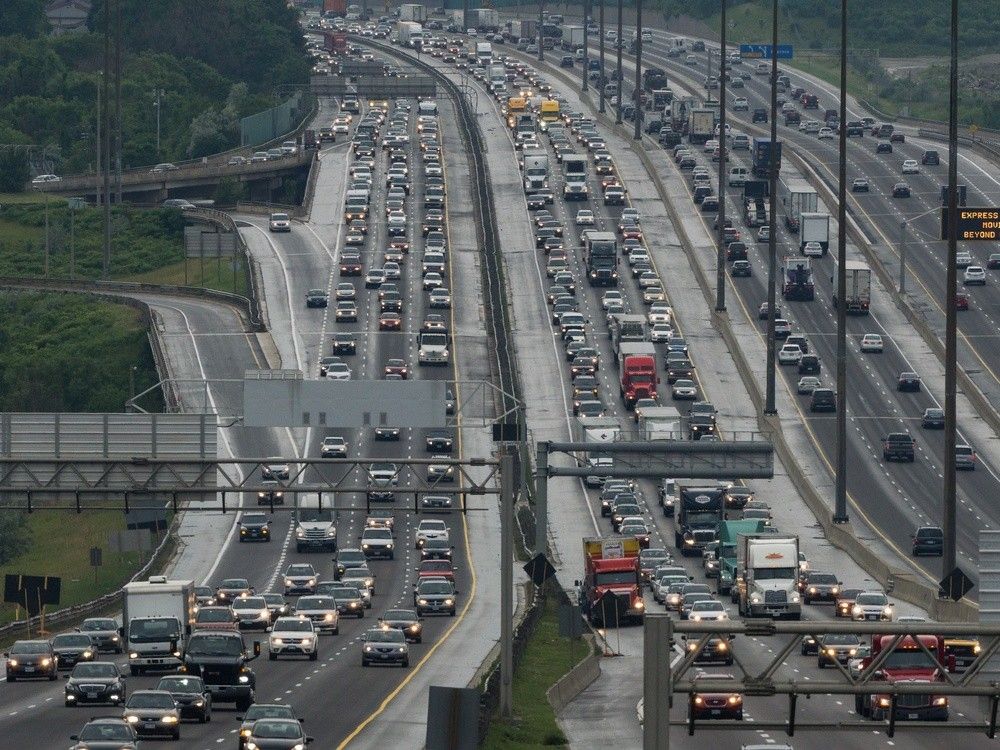
One is where we should not allow parking on arterial roads. Because when you have two or three cars blocking a lane that is an arterial lane, it significantly reduces the ability of traffic to flow.
We have to figure out where are people going to park. But you can’t do that on a ward-by-ward basis. It has to be a citywide initiative.
The other thing is that there needs to be, from my perspective, alternate pickup and drop-off for Ubers in the downtown core. You can’t just stop your car, and let someone on or off, especially when we’ve got bike lanes.
The third thing, it seems like it’s trivial, but it’s not, is how we manage our scramble intersections.
The city should redesign scramble intersections so pedestrians cross during dedicated phases rather than at all times, which restricts vehicle movement at intersections such as Yonge and Bloor and Yonge and Dundas. Those are the things that can’t be done with ward councillors. They need to be done with a view of the entire city.
What is the “complacent,” as in the title of your book?
My armchair analysis is that people want to believe very strongly that Toronto is a good, safe, welcoming, culturally diverse city that people want to come to.
That narrative and that self-identification means a lot to people. So they’re willing to put up with a lot in order to maintain the image that we’ve created about our city.
My argument is that we don’t need perfection, but we need a commitment to excellence. It’s not OK to do drugs on the TTC. It’s not OK for parks to have encampments as a way to solve homelessness.
It’s not OK to march in the streets (without permits). It’s not OK that the pools don’t open in the summer. It’s not OK that the parks don’t get maintained.
It’s not OK that the snow doesn’t get cleared. We need to be able to say that we want more from our politicians. And yet these things happen again and again.
During FIFA preparations, the city cleaned transit, Union Station and parks, and enforced parking rules. The city moved and worked.
But when I talk to people, they’re like, “oh, we don’t have enough money to keep doing this.”
And my argument is “yes, we do.” We just need to keep the intention, the will.
You make the case that federal and provincial governments have underfunded the responsibilities downloaded to Toronto. What is the strongest argument against giving City Hall substantially more revenue?
One is, where does the money go when it goes to City Hall? And the strategy of various mayors has been “give us more money.” And quite frankly, why would any level of government give City Hall money when they don’t know where it’s going, how it’s being used?
What’s something that Toronto’s public transit needs?
The city has spent decades debating transit rather than building it, which is why Metrolinx eventually took over major projects. That makes me wary of City Hall retaking transit planning and construction for the Lakeshore line. Every mayor that gets elected wants to undo the decision of the mayor before.
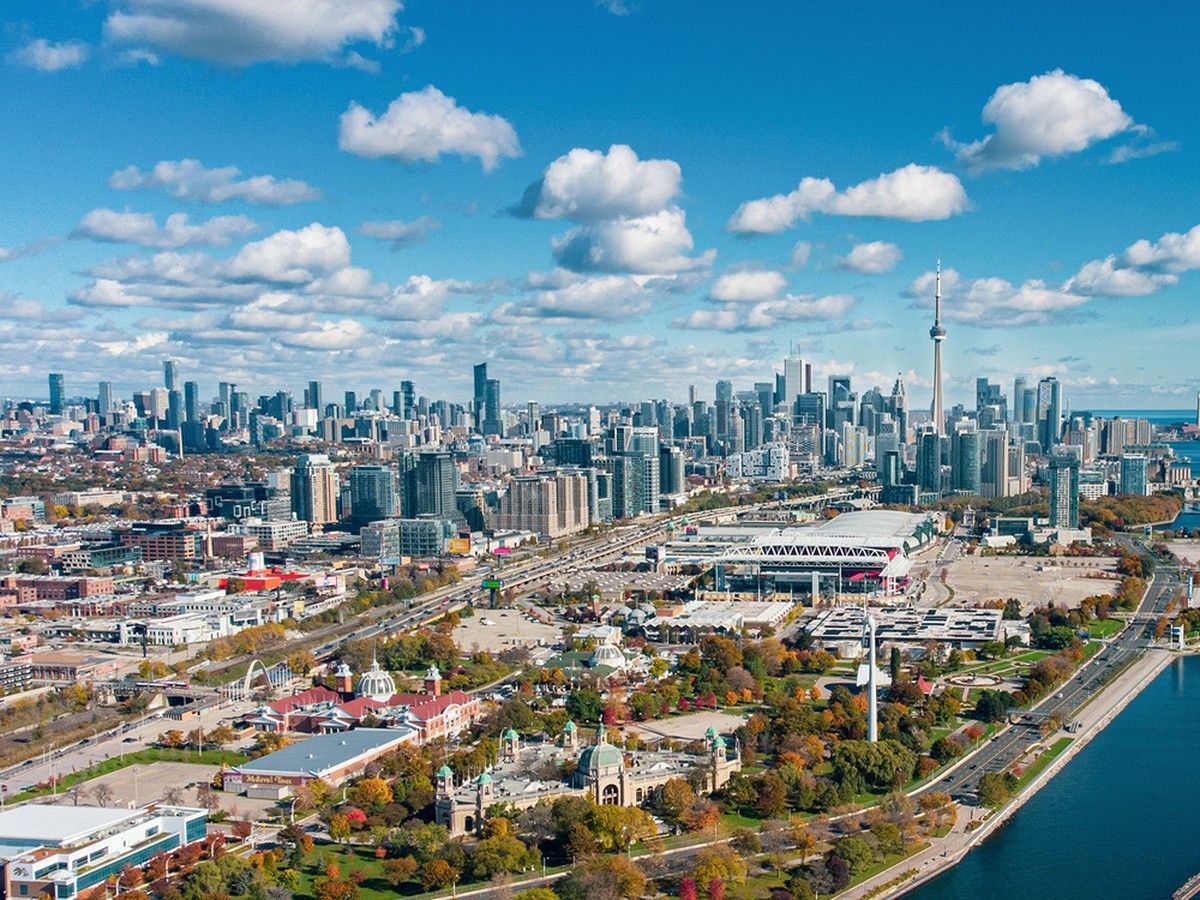
If we’re actually going to turn Exhibition and Ontario Place into something more than it is, having better access by transit to those areas. I think, a higher priority than building an additional subway extension to the airport. More riders, more linkage, more community benefit.
Do you think Toronto’s broken?
I think Toronto’s drifting. I wanted to write this book as a way of starting conversations about how we can stop the drift, and aspire for more.
Our website is the place for the latest breaking news, exclusive scoops, longreads and provocative commentary. Please bookmark nationalpost.com and sign up for our newsletters here.

