



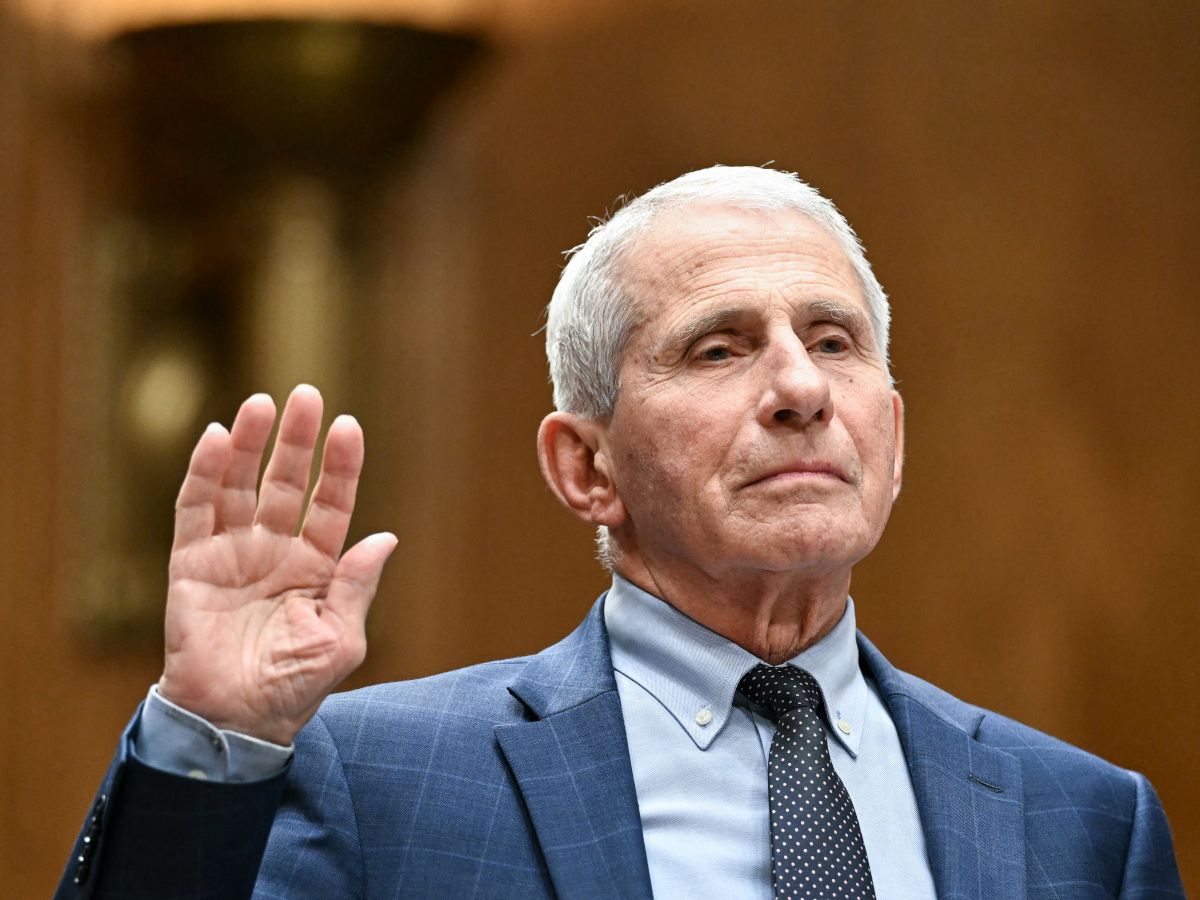
The last few years haven’t done any favours to the status of public health experts. Ongoing revelations from Anthony Fauci’s personal notes emphasize their eroded stature. Once the face of America’s response to COVID-19, the former director of the U.S. National Institute of Allergy and Infectious Diseases has been revealed by the publication of his “diary” as thin-skinned, intolerant of dissent, dishonest and obsessed with fame. To those of us who were already dismayed by authoritarian restrictions imposed by government during the pandemic, the exposed memos and emails confirm our worst suspicions about the nature of the thinking behind those policies.
For those opposed to lockdowns and convinced that Fauci played a role behind the scenes in promoting restrictions, the former public health bureaucrat offered plenty of ammunition. His notes , stored on government servers and therefore fair game for his critics to peruse, revealed him advising the then-governor of New York and mayor of New York City to order schools closed.
“I spoke with Bill de Blasio (Mayor – NYC) and convinced him based on what I was saying publicly and my conversation tonight to close the NYC schools,” Fauci boasted in 2020. “I went on to tell him he should close the bars and restaurants in NYC.” He said he had a similar conversation with California Gov. Gavin Newsom’s chief of staff. Two years later, Fauci told ABC News he “ had nothing to do ” with those lockdown decisions.
Fauci’s notes also reveal him admitting of early claims that the virus originated in a wet market that, “We know the market was not the source, it was the amplifier.” He also wrote that in a phone conference among knowledgeable scientists about the source of COVID-19, “about half of the people felt that this was possibly a constructed virus and the other half were convinced that this was a natural occurrence.”
Despite an obvious division of opinion about the source of COVID-19, Fauci remained convinced of its natural origin and lashed out at dissenters. He raged in 2021 that, “The FBI has no idea what they’re talking about since they are convinced that the origin of COVID-19 is from a laboratory leak.” Fauci similarly vilified the doctors and scientists behind the Great Barrington Declaration ’s call for focusing pandemic responses on the most vulnerable members of society and minimizing restrictions.
Overall, Fauci comes off as a man who projected false certainty despite behind-the-scenes disagreement and who is easily enraged by dissent, even when it comes from people fully qualified to assess diseases and recommend responses that are at odds with those he favours. He denied responsibility for policies he recommended to government officials while meticulously documenting media mentions of his name. If you were deliberately trying to erode expert credibility, he’s the perfect figure to choose for that project.
Public health experts will have to put in a lot of effort to regain trust. Pew Research found that the percentage of the population who believed public health experts had done an excellent or good job in responding to COVID-19 declined from 79 in March 2020 to 52 in May 2022. And that erosion in credibility continues.
Trust in the Centres for Disease Control and Prevention (CDC) “has fallen nearly 25 points since March 2020 when 88 per cent of Americans trusted the CDC,” Ipsos noted in June. “A bare majority of Americans (53 per cent) say public health officials lied to the American public about how effective COVID-19 vaccines and masks are at preventing the virus’ spread.”
Writing in 2022, RAND Corporation adjunct senior researcher and security expert Brian Michael Jenkins cautioned : “As in past epidemics, suspicions that government has exploited COVID-19 to expand its authority have been widespread.”
The case for such opportunistic expansion of authority is impossible to deny. In its 2021 “ Freedom in the World ” report, Freedom House bemoaned that, “As COVID-19 spread during the year, governments across the democratic spectrum repeatedly resorted to excessive surveillance, discriminatory restrictions on freedoms like movement and assembly, and arbitrary or violent enforcement of such restrictions by police and nonstate actors.”
The glimpse behind the scenes at Fauci’s pretense of certainty in the absence of anything of the sort, and his promotion of authoritarian policies while denying that he played such a role, confirm public suspicions that freedom and prosperity were curtailed for little reason. Schools, businesses and borders were closed by preening officials who denied the legitimacy of debate over such decisions.
Jenkins, who literally wrote a book on the topic — ” Plagues and Their Aftermath: How Societies Recover From Pandemics ” — added that government officials have a history of destroying their credibility by over-reaching during medical emergencies. After the deadly Spanish Flu outbreak, “lack of trust was inherited by descendants and persisted decades after the pandemic.” He saw the same dynamic at work during COVID-19, which “heightened distrust in American institutions, which many have come to see as dysfunctional, ineffectual, corrupt, even tyrannical.”
The gloating, self-aggrandizing nature of Fauci’s notes, in which he boasted, “I am the most famous and talked about person in the country,” won’t restore any of the lost trust in public health figures and institutions. To the contrary, they confirm the worst suspicions of many Americans.
Fauci’s concern that his leaked diary may expose him to penalties is evident in his repeatedly invoking the Fifth Amendment’s protections against self-incrimination during testimony before the U.S. Senate. Yale law Prof. Jed Rubenfeld thinks the former public health official pushed his luck and committed contempt of Congress, for which he has been referred to the Justice Department for potential prosecution.
Old and retired as he is, Anthony Fauci is unlikely to face serious legal consequences. But the public health experts he once led may suffer for years from the hubris displayed by him and his colleagues.
National Post

