


An internal B.C. document has revealed the extent of the province’s plans to cede more than 120,000 hectares of Crown land to First Nations control, including prominent landmarks around the provincial capital of Victoria.
The total proposed cessions are more than twice the size of the City of Toronto, or 300 times the size of Vancouver’s Stanley Park. What’s more, they would all become “treaty lands”; a special territorial designation that is not subject to local zoning controls.
In the case of Victoria, this means that some of the most prime development land in the city could become Indigenous-controlled properties exempted from local bylaws, approvals and building codes.
“Local government bylaws do not apply on treaty lands,” reads a May 2024 consultation paper published by the B.C. government.
That same document warns that the land transfers may “take some getting used to,” as they cover public lands that could end up sealed off from public access.
“Once those lands become treaty lands, there may be limited access or even no access for public use,” it reads.
The planned land cessions are included in the most recent edition of B.C.’s Public Accounts, published each year by the Ministry of Finance.
The document itemizes 20 planned land transfers to First Nations as “contingent liabilities and contractural obligations.”
The proposed cessions are part of modern treaty negotiations that stretch back to the 1990s in some cases, but the Public Accounts show that the lands are now officially on the books as government liabilities.
One B.C. government outline on modern treaties, published in 2023, explained that one of their primary goals is to “return lands to First Nations.”
The largest of the itemized cessions is 35,290 hectares earmarked for the Kitselas First Nation and 45,789 hectares for the Kitsumkalum First Nation. Both are located near Terrace, B.C., and comprise a total membership of about 1,500 people.
In many of the transfers, First Nations stand to receive territory well beyond the size of their existing reserve lands. And, unlike reserve lands, these would effectively be held as fee-simple territories.
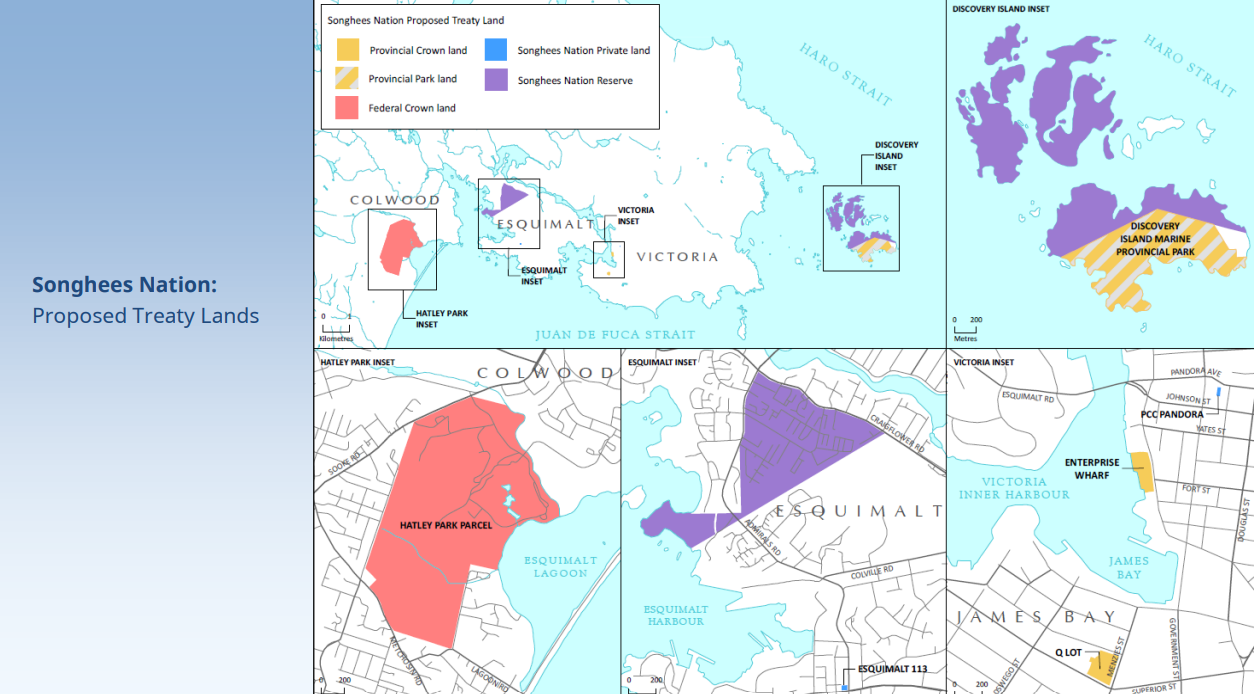
Among the most valuable cessions is the 1,916.7 hectares set aside for the Te’mexw Treaty Association, a coalition of five First Nations on Southern Vancouver Island.
The Public Accounts, released today, include a list of provincial Crown land to be transferred to First Nations. #bcpoli pic.twitter.com/ShuegO8HH6
— Bob Mackin (@bobmackin) August 10, 2026
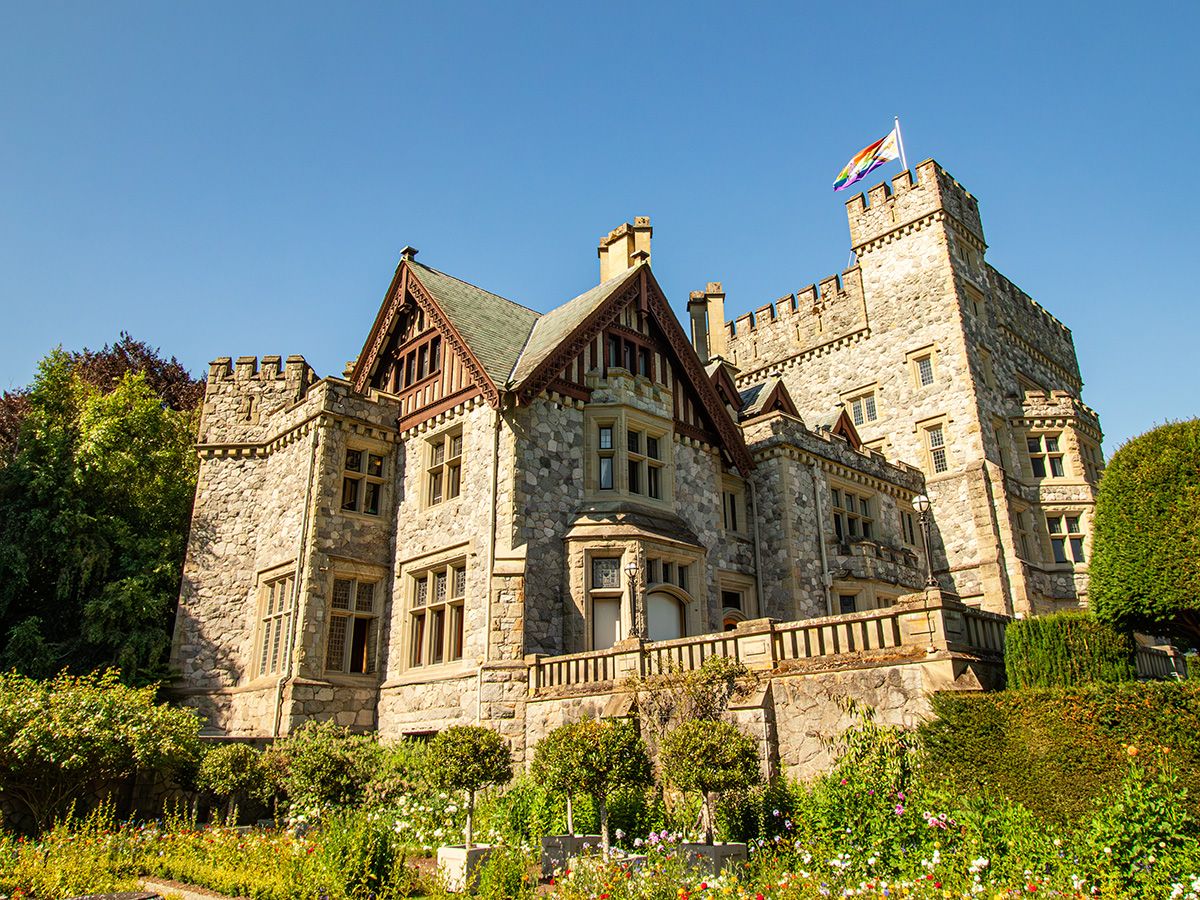
One of the more notable properties within the Te’mexw package is Hatley Castle, the 1908 Colwood estate best known for its role in the X-Men film franchise.
Built by the Dunsmuir coal mining family, the property first entered public ownership in 1940, possibly as part of a Canadian contingency scheme to house the exiled royal family in case of a Nazi conquest of the U.K.
Under terms being negotiated by the B.C. government, it would become a fee-simple possession of the 600-member Songhees First Nation.
The Songhees would also take possession of two parcels of land in Downtown Victoria, including a parking lot across from the B.C. Parliament Buildings with an assessed value of $24.8 million, and a nearby waterfront parking lot assessed at $22.3 million .
As treaty lands, both parcels could be developed without city council oversight. A good analogue being the recently completed Sen̓áḵw development in Vancouver; a compound of skyscrapers comprising 6,000 rental units that was able to exceed the usual local controls on density due its being located on Songhees First Nation land.
In a statement reacting to the Public Accounts, the opposition B.C. Conservatives said that the itemized transfers are a small fraction of the total land cessions under consideration by the government of Premier David Eby, and that the final figure could be in excess of 9.6 million hectares – about 10 per cent of the total province.
“There will be nothing left of B.C. by the time the NDP are finished with their plan to giveaway land that rightfully belongs to the people of British Columbia,” wrote B.C. Conservative Leader Kerry-Lynne Findlay in a Monday social media post .
24 million acres. A vast swath of British Columbia that’s larger than Portugal. That’s what’s at stake here.
And this is only the beginning. There will be nothing left of B.C. by the time the NDP are finished with their plan to giveaway land that rightfully belongs to the… pic.twitter.com/s7K32iOZvU
— Kerry-Lynne Findlay (@KerryLynneFindl) August 11, 2026
Ironically, B.C. First Nations governments are set to receive 120,000 hectares of fee-simple lands at the precise moment that the status of B.C.’s other fee-simple lands have been thrown into uncertainty.
Last year, the B.C. Supreme Court ruled in Cowichan Tribes v. Canada that Aboriginal title took precedent over all other land rights in B.C. Although the case is pending appeal, the immediate effect of the decision was to effectively transfer large swaths of privately owned land in Richmond, B.C., to the control of the Cowichan First Nation.
All the 120,000 hectares mentioned in the Public Accounts comprise Crown and other government-owned lands, and private property is not covered by any proposed modern treaty cessions.

