




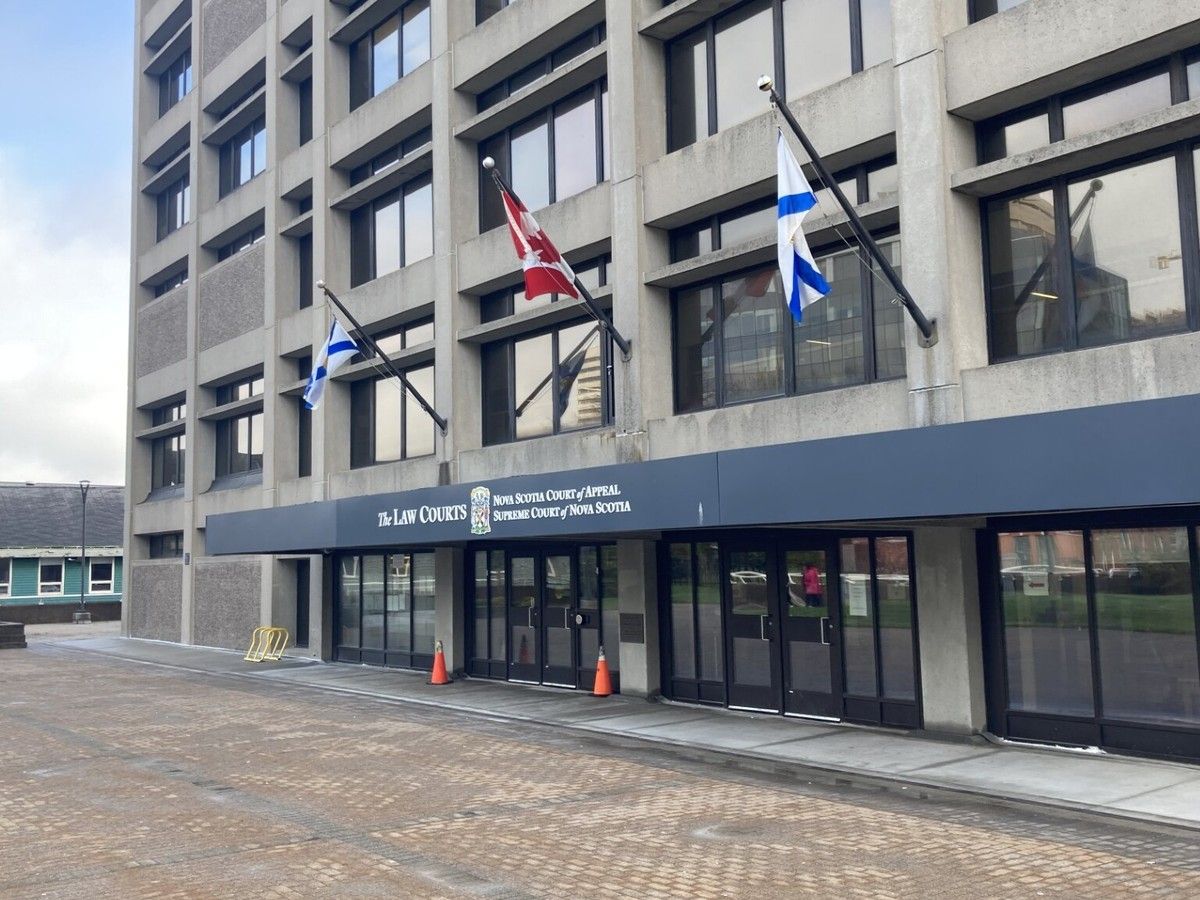
A tent should legally be considered a form of accommodation, according to the Nova Scotia Court of Appeal, in a decision that could set a precedent for income assistance granted to unhoused individuals in the province.
The appellant, Jacqueline Lowe, was acting as representative of the estate of Bradley Lowe, a homeless man who died of an overdose in downtown Halifax in Dec. 2023.
Two months before he died, Lowe, who had been initially approved to receive $380 per month in income assistance, applied for the enhanced rate of $974 per month. However, the request was denied because the applicant was deemed “unhoused” and therefore did not meet the eligibility requirements.
Days after Lowe’s death, Nova Scotia’s Assistance Appeal Board dismissed an appeal and upheld the decision denying enhanced rate assistance. The case then went to the Supreme Court of Nova Scotia and, in May 2025, Justice John A. Keith dismissed the judicial review, finding the Board’s decision unreasonable but ultimately concluding that Lowe did not meet eligibility requirements for the enhanced rate.
On Wednesday, however, the Nova Scotia Court of Appeal ruled not only that the Board’s original decision was unreasonable, but that Lowe met the eligibility requirements for enhanced rate assistance according to the province’s Employment Support and Income Assistance Act.

“The court found that the hearing judge erred in interpreting the Regulations (of the Act), as the term ‘accommodation’ should include the applicant’s tent,” Chief Justice Michael J. Wood wrote in the decision .
He said that the Act “aims to provide assistance to those in need, including shelter,” and that Lowe “was entitled to Enhanced Rate assistance based on a proper interpretation of the Act and Regulations.”
Section 50 of Nova Scotia’s Employment Support and Income Assistance Act states: “A recipient who is not boarding or renting or who does not own their accommodation must be allowed an amount of assistance at the essentials standard household rate.”
A person will receive the enhanced rate if they either have a disability; have a chronic mental, cognitive or physical condition that limits participation in employment services; are fleeing an abusive situation; are 55 years old or older; are a young person receiving assistance in accordance with subsection 8(3) and otherwise meet the requirements of the Act.
At the time of Lowe’s application for income assistance, he was unemployed and living in a tent which he owned and had erected in Victoria Park, a downtown public park. In September 2023, he was in receipt of the essentials rate of $380 per month, and a special needs allowance of $92 towards the cost of cell phone service and medically prescribed special dietary needs.
In October, with the assistance of legal counsel, Lowe requested an increase to the enhanced rate of $974 on the basis that he had a disability and owned his accommodation (i.e. his tent).
Later that month, a Department of Community Services (DCS) caseworker denied his application, confirming that he met the medical requirements but not the housing-related eligibility requirement because he was “unhoused.”
A review of the decision through an internal review procedure was requested, and the caseworker’s decision was upheld on the basis that Lowe did not rent or own his home.
Following this, an appeal hearing before the Assistance Appeal Board was requested, taking place in Dec., 2023. Lowe passed away on Dec. 15, and the Board released its decision on Dec. 19, in which it dismissed the appeal.
Lowe’s estate then sought judicial review, leading to the May 2025 decision by the Supreme Court of Nova Scotia.
In that decision, Justice John Keith wrote: “A tent does not qualify as an ‘accommodation’ (under the province’s) regulations. As such, Mr. Lowe did not own accommodation for the purpose of receiving enhanced benefits under this section.”
“A tent cannot qualify as an ‘accommodation’ and owning a tent does not entitle a recipient to household benefits,” Justice Keith said. “It is unreasonable and illogical to conclude that a recipient would be entitled to receive greater assistance by living in a tent.”
However, in Wednesday’s decision, Chief Justice Wood disagreed with the hearing judge and DCS decisions that Lowe’s tent did not meet the definition of “accommodation,” writing: “The purpose of the legislation found in s. 2 of the Act speaks of independence and self-sufficiency. It does not reference shelter or housing types.”
“I am satisfied that the tent owned by Mr. Lowe, and in which he resided, was his accommodation within the meaning of s. 49 of the Regulations,” the decision continued. “He was, therefore, entitled to receive Enhanced Rate assistance at the time of his application in October 2023.”
It concluded: “I would award costs to the appellant in the amount of $3,000 inclusive of disbursements.”
The decision raises questions around whether unhoused individuals in Nova Scotia who own and live in a tent should be granted enhanced income assistance, provided they meet other eligibility requirements.
Our website is the place for the latest breaking news, exclusive scoops, longreads and provocative commentary. Please bookmark nationalpost.com and sign up for our newsletters here.

