


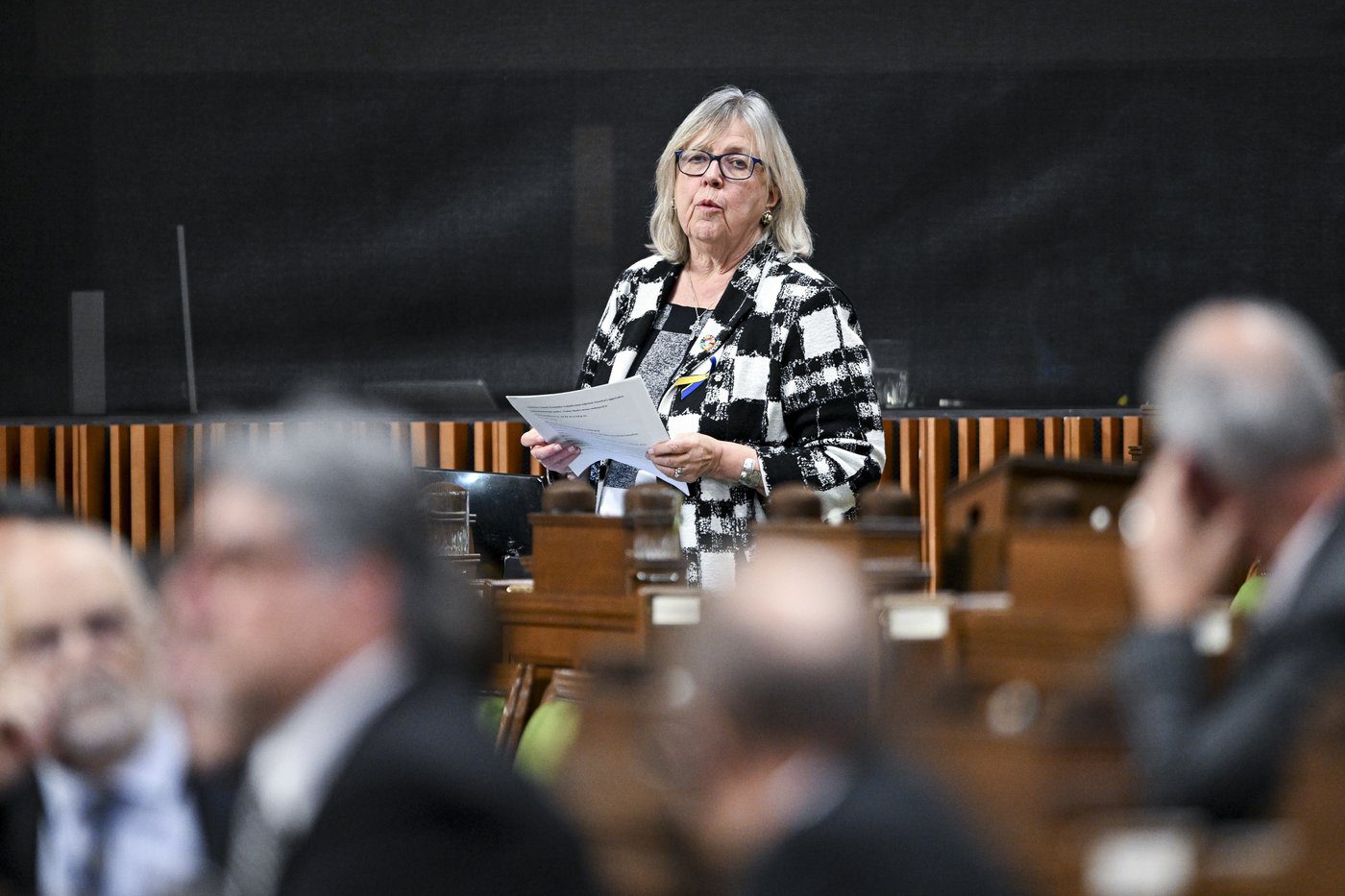
OTTAWA — Green Party Leader Elizabeth May says she thinks the Greens can pull off an upset in one of the upcoming byelection races by campaigning on Liberal rollbacks of climate policy.
The Greens are running Shelley Luce — an environmental scientist with a doctorate from UCLA and a former adviser to the City of North Vancouver — in the North Vancouver-Capilano byelection set for Aug. 31.
The Green Party hasn’t come particularly close to winning the riding in the past. Its best results to date were third-place finishes in 2008 and 2015, while its highest share of the vote total — 12 per cent — only earned it a fourth-place finish in 2019.
May said she still thinks the party can make inroads in the riding, thanks in large part to Prime Minister Mark Carney’s major projects push.
“There’s a number of things that pivot in our favour, including the number of projects that are getting rammed through that, geographically, they butt right up against the shores of North Vancouver,” she said.
She pointed to Ottawa’s approval of the dredging of Vancouver’s Burrard Inlet to allow larger oil tankers to load up from the Trans Mountain pipeline.
Carney first floated the idea of dredging Burrard Inlet in 2025. Environmental groups have raised concerns about the project’s potential threat to local wildlife.
Carney called three byelections earlier this week. Former natural resources minister Jonathan Wilkinson vacated the North Vancouver-Capilano seat after Carney appointed him as Canada’s ambassador to the European Union.
The Liberals chose Carney’s former deputy chief of staff Braeden Caley to run in the riding. The Conservatives are running lawyer Stephen Curran again, who came second to Wilkinson in last year’s election with a third of the votes.
“It’s hardly in the bag that Greens are going to win,” May said. “But Greens could win in North Vancouver-Capilano, and part of it is the strength of our candidate. And that’s what voters are doing in a byelection.
“It’s a risk-free tryout of this MP at most for the next three years. Then there’ll be a general election. If you don’t like the job Shelly Luce has been doing for you as your MP, well, you’ve got at most a three-year, risk-free, money-back guarantee.”
One polling expert said May’s optimism is misplaced.
“To win the seat? No,” poll analyst Éric Grenier of 338 Canada told The Canadian Press.
“I think there’s a chance that the party could have a decent enough result. I mean, it’s not a bad region for them and they put up some OK numbers in past elections. But in the current context, it would be quite a surprise for the Greens to be able to pull off that.”
The Greens did surprise pollsters earlier this month when provincial candidate Tayte Willows beat P.E.I. Liberal Leader Robert Mitchell in a byelection. Grenier acknowledged in a podcast earlier this month that he’d been too swift to downplay the Greens’ chances.
But federally, Grenier said, the Greens are only pulling about five per cent support in B.C.
“There’s a big difference between winning a district that has a few thousand voters versus winning a riding in B.C. that has 100,000 voters,” he said.
“The Greens have some ridings where they have a shot at winning. But I really don’t think that this one is one.”
As the Greens turn their focus to the upcoming byelections, the party is simultaneously in the middle of a leadership race. Nominations closed on July 17 and the full list of candidates is coming out on Wednesday.
The party allowed candidates to run individually or as co-leadership pairs.
Asked whether she felt a co-leader model could work, May — who co-led the party with Jonathan Pedneault last year — pointed to the success of the Green Party of England and Wales, which ran co-leaders in 2024, won four seats in the House of Commons and enjoyed its best results in local elections that year.
Pedneault resigned as deputy leader in 2024, then returned in January 2025 to serve as co-leader. When his invitation to participate in the French election debate that year was withdrawn because the party hadn’t met the debate commission’s conditions for participation, Pedneault called the decision “undemocratic.” He resigned again after the 2025 election.
“I really felt very positive about the co-leadership with Jonathan Pedneault, and it was heartbreaking for me that after being pulled out of the leaders’ debates, he decided to actually quit politics altogether and go back to human rights work internationally,” May said.
“I think a change, a transition, refreshed leadership is important for any party. And I have a lot of confidence that this will be a period for us where we will have MPs in the House. We’ll be one of the five parties in the House.
“But I want, when I hand the torch to the next leader, to know that they’re prepared to pick it up and work really hard and get the message out and explain to more people that the Green Party is the most solid choice for democracy.”
This report by The Canadian Press was first published Aug. 2, 2026.
— With files from Wolfgang Depner in Victoria.
Nick Murray, The Canadian Press

