


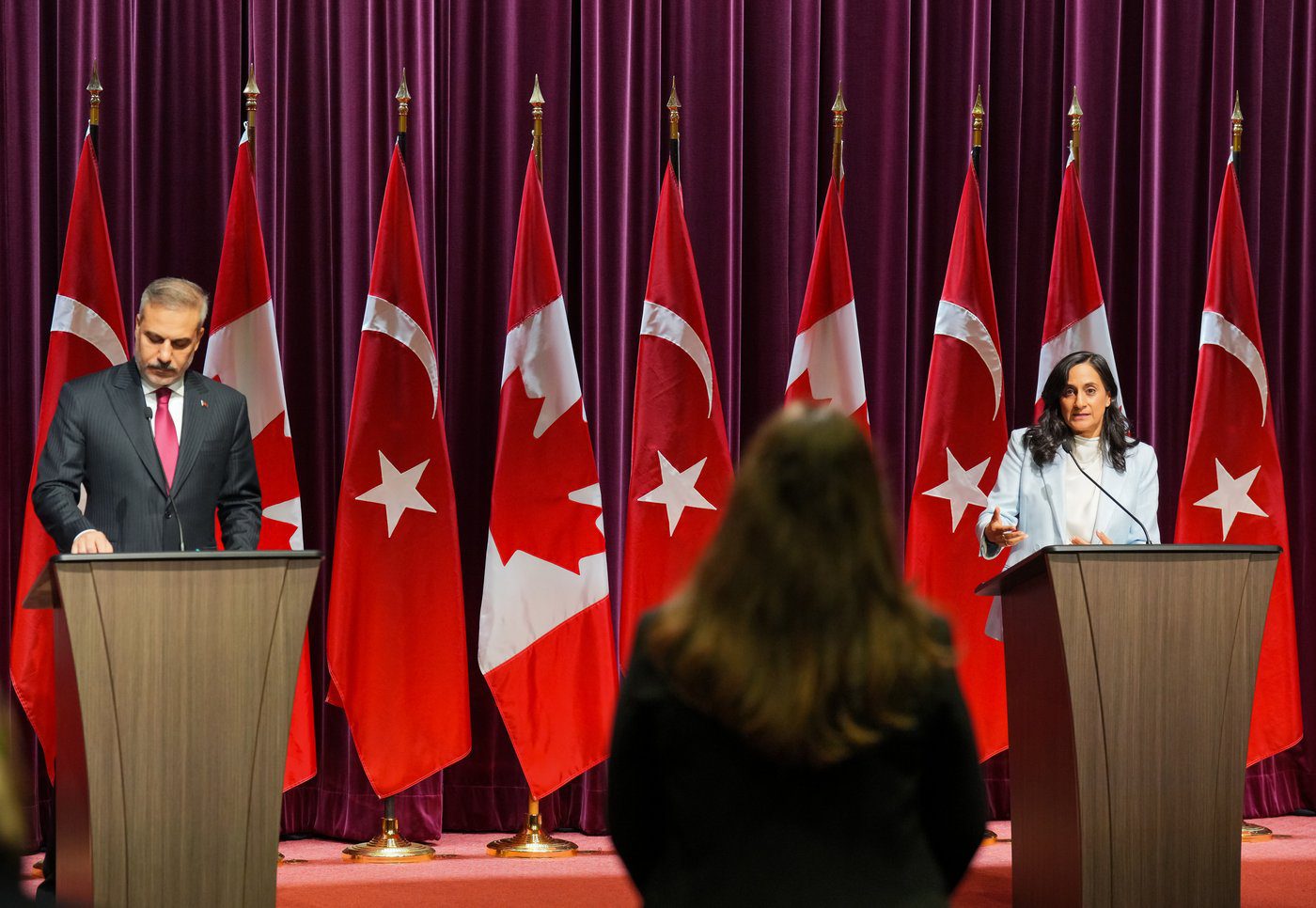
OTTAWA — Foreign Affairs Minister Anita Anand says Canada is doing foreign policy differently by reviving stagnant relationships with countries on multiple continents in pursuit of trade.
“It is diplomacy like Canada has not done before, in the recent past,” Anand said Monday in an interview from Islamabad, where she was meeting with Pakistan’s foreign minister. It’s the first visit by a Canadian foreign minister to Pakistan in 19 years.
Anand was recently in Brazil, Romania and Panama and will soon head to Benin and the Ivory Coast. She may also visit Morocco and Kazakhstan in the near future.
The minister said Ottawa’s new approach to foreign policy focuses on trade and economic growth, prioritizes signing trade deals wherever possible and pursues new or revived diplomatic relationships with an emphasis on face-to-face engagement.
“Certainly, it reflects a changed foreign policy,” she told The Canadian Press. “A foreign policy that is responding to a completely rewired global trading order, and our work to double non-U.S. trade over the next 10 years.”
Anand said the change in approach can be seen in how her office prepares for her overseas trips. She said she reaches out to major Canadian business groups ahead of her diplomatic visits to identify commercial opportunities in the host country; she spoke with the Canadian Meat Council ahead of her visit to Brazil last week.
Before boarding the flight, she said, she tasks staff at Global Affairs Canada with evaluating prospects in the host country for trade agreements, investment protection deals, strategic partnerships and other trade-boosting arrangements.
“My briefing notes have to be different than they have historically been,” she said, adding she wants to know “what are the key Canadian commercial interests in this jurisdiction and how are we going to promote them” before she starts shaking hands.
Anand said that in her speech to Canada’s heads of diplomatic missions in Ottawa on June 1, she laid out “the marching orders for the diplomatic corps.”
Those orders are essentially to engage with Canadian businesses and identify opportunities for new or expanded trade.
While Canada has long maintained critical diplomatic and trade ties with the United States and Europe, it has tended in the past to spend less time and effort maintaining relationships beyond those two continents. Foreign officials in Asia, Africa and South America have said Canadian interest in their regions tends to ebb and flow.
Anand said the shift in Ottawa’s approach to diplomacy involves pitching Canada as the solution for an increasingly volatile world where countries compete to secure reliable sources of energy and critical minerals.
“This is a new way of doing diplomacy,” she said.
“Everybody is looking to diversify their trading relationships. The difference between Canada and all other countries, it seems, is that … we started earlier.”
Prime Minister Mark Carney’s government has signed 20 economic or security arrangements across five continents, including a trade deal with Indonesia that was years in the making and Canada’s first-ever defence industry framework with Qatar.
Anand said Canada has natural advantages in the global race to secure new trade ties: ample supplies of critical commodities like oil and gas, potash and food.
“We have what the world wants,” she said.
The Conservatives have accused the Carney government of signing deals abroad that offer little beyond vague language, or that raise security and human rights concerns that Ottawa isn’t explaining to Canadians.
The NDP has argued that public service cuts are having an outsized impact on Canada’s diplomatic missions, making it impossible for Global Affairs to follow through on Carney’s vision.
The Senate foreign affairs committee has issued the same warning about cuts to the diplomatic service and has said Canada is missing out on opportunities beyond Europe, especially in high-growth African countries.
Anand said Pakistan’s decision in late 2025 to allow imports of Canadian canola seeds after China had restricted them showed how the government’s diplomatic push is delivering tangible results. Pakistan and Canada also announced this week a defumigation agreement that will lift restrictions on more canola exports.
Prime Minister Carney is hoping to finalize a trade deal this November with the Association of Southeast Asian Nations. Anand is off to the Philippines later this week to pursue that deal.
Carney drew global attention back in January with a speech to the World Economic Forum in Davos urging middle powers to band together to advance their interests and avoid being subjugated by superpowers. Many saw that as a reference to both American tariffs and Chinese coercion.
Anand said she is working to bring that Davos message to life by reviving overseas relationships that have fallen dormant.
“In some respects, the prime minister and I are dividing and conquering. He of course is visiting certain countries (and) attending multilateral meetings and summits,” she said. “I have to ensure that we’re still prepared and servicing relationships that have had less attention than is ideal.
“I’m very much using the summer to maximize the travel and the visits to countries that need attention … in order to serve Canadian interests in particular.”
Anand stressed she is still raising consular cases and human rights during each visit and said meeting her counterparts gives her a chance to raise collective interests, such as support for Ukraine.
International law comes up often during these trips, she said, adding that some countries’ diplomats want to learn about Canada’s efforts to achieve reconciliation with Indigenous peoples.
Often, Anand said, she’ll hold meetings in a foreign country shortly before Carney pays it a visit or welcomes its leader to Canada.
“What I see my role as doing is ensuring that that foundation is laid for prime minister visits or return visits to Canada by foreign leaders,” she said.
This report by The Canadian Press was first published July 20, 2026.
Dylan Robertson, The Canadian Press

