


OTTAWA — Ottawa might scrap the position of special envoy to Africa, despite House of Commons and Senate committees calling on the government to give the role a higher priority and more resources to capitalize on a projected economic boom on the continent.
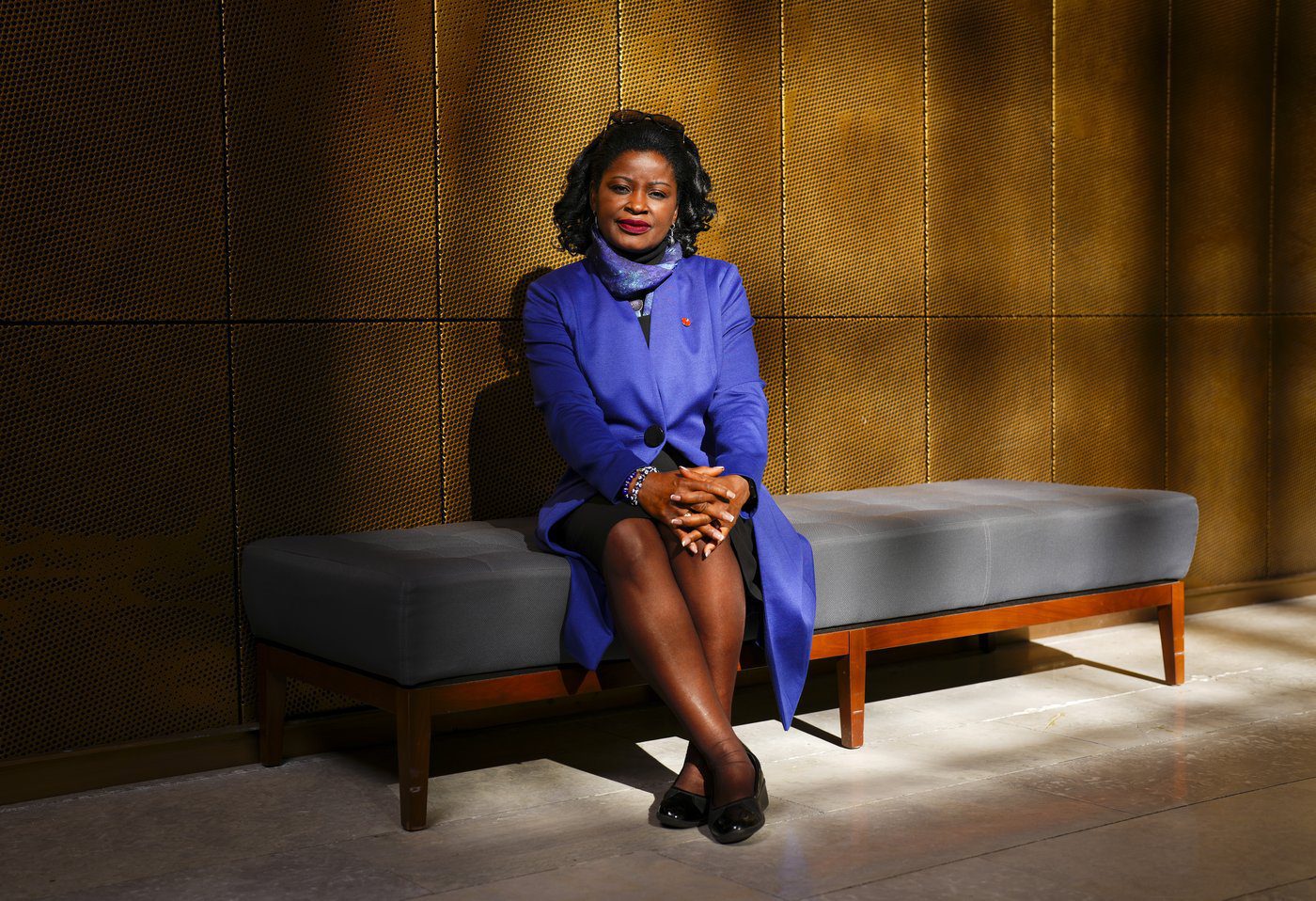
“Every time I speak about Africa, it’s like talking into a vacuum because I feel like people’s eyes are closed to this continent,” Sen. Amina Gerba said in a French-language interview.
“We shouldn’t limit ourselves to just Europe or just Asia. We need to open ourselves up to other markets, and the fastest-growing markets today are in Africa.”
On June 3, Global Affairs Canada announced it would replace its ambassador to the African Union when Ben Marc Diendéré’s three-year term wrapped up this year. In March 2025, in its last weeks in office, the Trudeau government appointed Diendéré as a special envoy for Africa.
The new role was part of the Trudeau government’s Africa Strategy, which called for Canada to shift its policy for the continent away from a focus on foreign aid and development and toward deeper economic engagement with the continent and its young population.
The strategy came out shortly before an election call after years of delay, and the Trudeau government provided no new funding for the strategy.
In a statement, Global Affairs Canada did not say whether the special envoy position will continue once Diendéré retires from the foreign service.
“The roles of permanent observer to the African Union and Special Envoy to Africa are distinct and hold separate mandates. (A) future announcement regarding the Special Envoy for Africa will be made in due course,” wrote department spokeswoman Thida Ith.
The foreign affairs committees of the House of Commons and Senate both have urged Ottawa to do a better job of defining and supporting the position.
The House committee released its report last Friday. It noted that during testimony in January, Diendéré told MPs he was supported by only one Canadian diplomat and one locally hired employee in Addis Ababa.
That report also cited testimony from last December by University of Calgary professor Chris W. J. Roberts, who said the positions of special envoy for the continent and special envoy for security issues in the Sahel region “have added titles to overworked ambassadors and their tiny staffs without any corresponding additional financial or human resources.”
The Senate committee heard similar concerns and urged Ottawa to outline “the mandates and objectives” of both envoys.
“The committee encourages the government to provide more information on the respective roles and priorities of the special envoys, and ensure that they have the resources necessary to fulfil their objectives,” the Senate committee reported.
The government has not responded since the Senate report was issued in December. Gerba said she finds that “really surprising.”
Both the Commons and Senate reports argued Canada has failed to fully capitalize on decades of generally positive relationships in Africa.
Gerba, a Quebec senator who grew up in Cameroon, said she fears Canada is missing opportunities in trade and infrastructure on the continent, particularly as Prime Minister Mark Carney pushes to double trade with countries outside the U.S.
She said Canada should lead trade delegations to Africa and have a plan to capitalize on economic growth in the medium and long term. Every other major trading nation, from China to France, is making headway on the continent, she said.
“What’s surprising is that we don’t see what other powers are doing in Africa. We’re fighting to form partnerships in Europe and Europe is now fighting to establish itself in Africa. Most of our G7 partners are already present in Africa, because that’s where the action is today,” Gerba said.
“We have special envoys in almost all important regions of the world. We don’t have any in Africa.”
Gerba said there has been some progress in recent weeks, citing Foreign Affairs Minister Anita Anand welcoming the heads of the African Continental Free Trade Area and the African Development Bank to Ottawa.
She noted Canada also recently endorsed a Moroccan plan on the future of the Western Sahara region. Gerba said Morocco has seen that issue as an irritant with Canada for years and it likely halted talks on a trade deal. In April, Anand announced Canada had endorsed Morocco’s policy and said she plans to visit the country “in the coming weeks.”
Diendéré’s replacement as envoy to the African Union, Annika Allman, has a background in international development. That has some business advocates wondering whether Canada’s focus on the continent is shifting back to its typical focus on aid over trade.
“Appointments are among the clearest signals governments send about their priorities,” the Canadian Centre for African Affairs and Policy Research wrote in a brief last week.
“If Africa is to be viewed principally as a strategic partner, Canada’s representation should increasingly reflect expertise in trade, investment, finance, and market development. Instead, Ottawa has once again turned to the development establishment.”
Gerba said she won’t weigh in on whether Canada is reversing its pivot toward trade in Africa until she sees results. She noted the continent is set to account for one-fourth of humanity by 2050.
“Other continents will be in decline, so where are we going to prosper? Where are we going to sell?” she asked.
This report by The Canadian Press was first published June 16, 2026.
Dylan Robertson, The Canadian Press

