


MONTREAL —
Mercedes Rodriguez says she and her seven kids struggle to sleep at night because of the sounds of mice scurrying in the walls in her apartment in Montreal’s east end.
In addition to a mice infestation, her social housing building in the city’s Hochelaga-Maisonneuve district is also plagued by mould, she said. Her clothes dryer once caught fire because of poor ventilation in the bathroom.
The single mother is impatient for long-promised renovations.
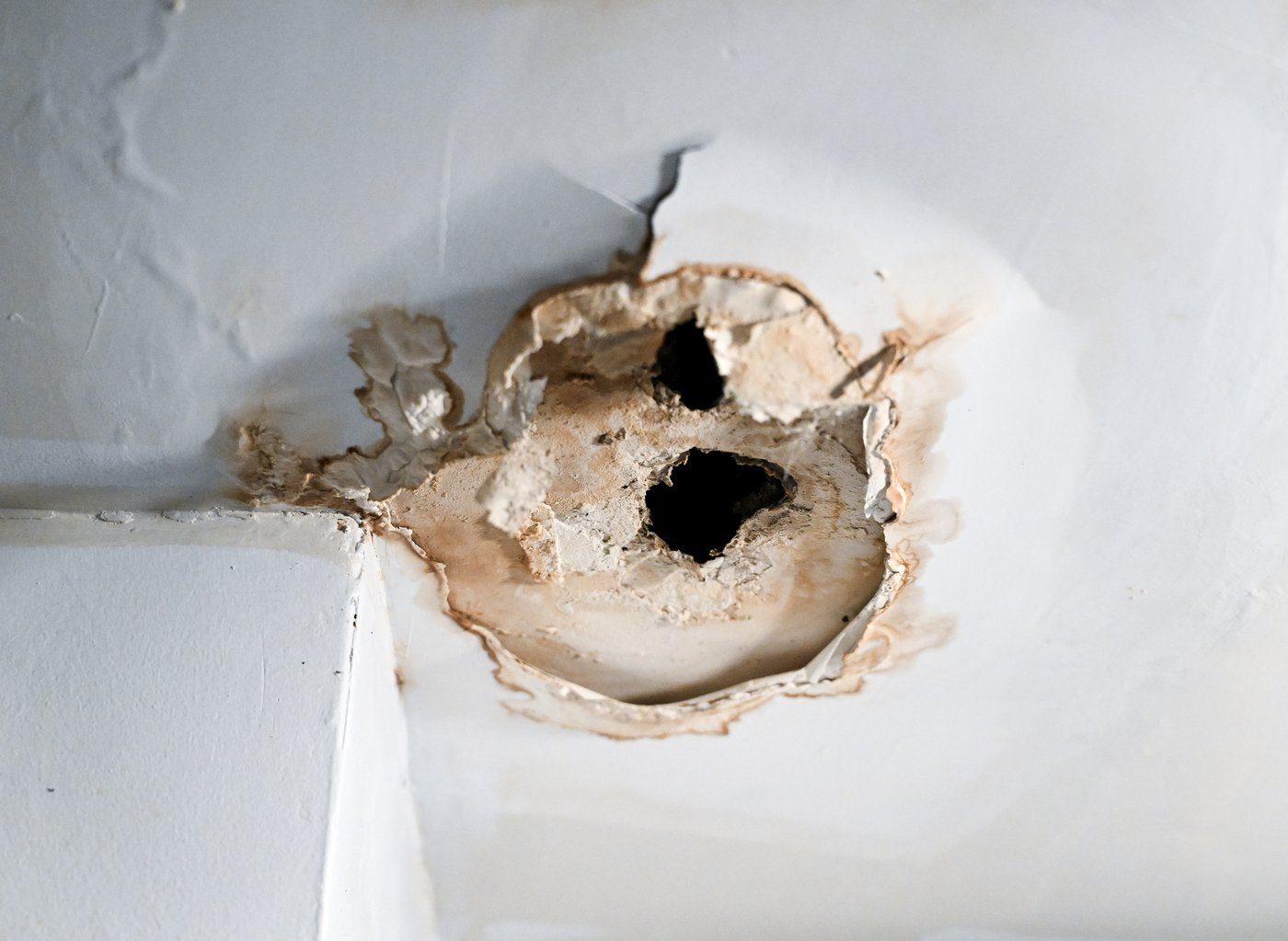
“It’s frustrating, really,” she said with a sigh while giving a tour of her apartment and pointing to various holes in her walls and ceilings she said were caused by mice, water damage and the fire in her bathroom.
While Quebec and Canada make multibillion-dollar investments into new builds to address the lack of affordable housing, one-third — nearly 21,500 units — of the province’s existing social housing stock is in disrepair. The pace of renovations, meanwhile, isn’t keeping up with inflation, leaving advocates concerned that maintenance budgets will be inadequate to address the extent of the issue.
Social housing in Quebec is owned by the provincial government and typically run by municipal organizations. It’s designed for low-income residents, whose rent is fixed at 25 per cent of the household’s income.
In Rodriguez’s apartment, her mother, who has terminal cancer, sleeps in a hospital bed in the living room while she and her seven kids occupy the apartment’s five bedrooms. Rodriguez makes do taking up contracts as a security guard.
Finding another five-bedroom home in her budget would be impossible, she says, with rents for similar units averaging more than $3,500 per month on the open market. And while Rodriguez has happily lived in social housing for more than 20 years, the state of her unit makes her fear for her family’s health.
She paid for a fresh coat of paint out of pocket. To prevent cockroaches and other insects from entering her unit, she had installed ceramic tiles on the kitchen floor and the backsplash. It’s too much of a hassle to deal with the city, she said, saying they are too slow to act.
“There are so many problems,” she said. “It’s been over two years of this now.”
Built in 1972, Rodriguez’s social housing complex, which spans three streets and includes 192 units in low-rise apartment buildings, is called Habitations La Pépinière and is slated for renovations, but she does not know when work will start in her unit.
The Canadian Press met with five tenants and visited three buildings in the complex.
Large strips of paint are peeling off the walls. Mice droppings collect on the windowsills. Tenants say the black-coloured specks and patches on their ceilings and walls are mould.
In 2019, tenants received a flyer — seen by The Canadian Press — from the city’s housing agency warning that an inspector had found mould in bathrooms, exterior walls and common areas of the buildings, such as laundry rooms and storage areas. And despite the fact the flyer said mould can cause eye, nose and throat irritation, sinus problems and bronchitis, it told residents that the inspection found “nothing alarming.”
Data shows Quebec has increased investments to renovate social housing units in poor condition in the last three years, but progress is slow. A third of the stock still needs heavy repairs, and advocates say Quebec’s budget likely won’t cover all expenses because construction and renovation costs keep climbing.
Quebec’s social housing network used to be administered and funded by the federal government, but Ottawa started transferring its responsibility to provinces in the 1980s. Ottawa has continued to provide some funding for upkeep through long-term agreements, many of which will expire by 2028.
Patricia Viannay has been fighting for tenants’ rights for two decades and works as the co-ordinator of the federation representing Quebec’s social housing tenants. She wants the funding agreements with Ottawa extended.
Quebec’s housing authority says it is confident it has the funds to cover the $1.079 billion in renovations it says is needed to bring all units up to code, but Viannay worries inflation will outpace investments. She also worries that over the coming years, units considered to be in good condition will deteriorate and there won’t be any money left in maintenance budgets.
The province says more than $1.3 billion of the $3.6 billion set aside by both Quebec and Canada to repair social housing by 2028 has so far been allocated or spent.
The Quebec housing authority said the government is aware of the serious need to fix up its social housing stock. A spokesperson said inflation has been a challenge and that the government has to prioritize certain renovations to “maximize” funding.
Back at La Pépinière complex, the windows of an apartment are boarded up while remnants of burned glass litter the front yard. Tenants say the unit caught fire in April and the smell of smoke lingered in the halls for weeks.
A few doors over from Rodriguez, Sophie Racine says she is frustrated with the state of her temporary apartment. She moved out of her regular unit six years ago because it had mould. In her temporary home, the floors are cracked and she says mice are a problem.
She’s still waiting for a renovated unit for her 21-year-old son and herself. “It never ends,” Racine said.
Viannay says the poor living conditions in some social housing complexes like La Pépinière deeply affect tenants’ well-being and dignity. “You don’t feel like anyone’s looking after where you live,” she said. “There are people who don’t dare to invite friends over anymore because of the state of their unit.”
Her organization is pushing for new social housing units to be built, saying public housing is the only way to restore balance and affordability in the market.
In 2023, the governing Coalition Avenir Québec axed its social housing program, AccèsLogis. In its place, it launched a program to help private developers and non-profit organizations build so-called affordable housing — units that are sold or leased below market price. The CAQ also invested in rent subsidies allowing tenants to pay 25 per cent of their income in non-profit and private housing.
While social housing advocates like Viannay criticize the new approach, Quebec’s housing society says these programs have “the same goal” as traditional social housing by allowing households to pay rent that is within their means.
More than 30,000 Quebecers are waiting for a social housing unit; in Montreal, the average wait time is five years.
This report by The Canadian Press was first published May 28, 2026.
Erika Morris, The Canadian Press

