


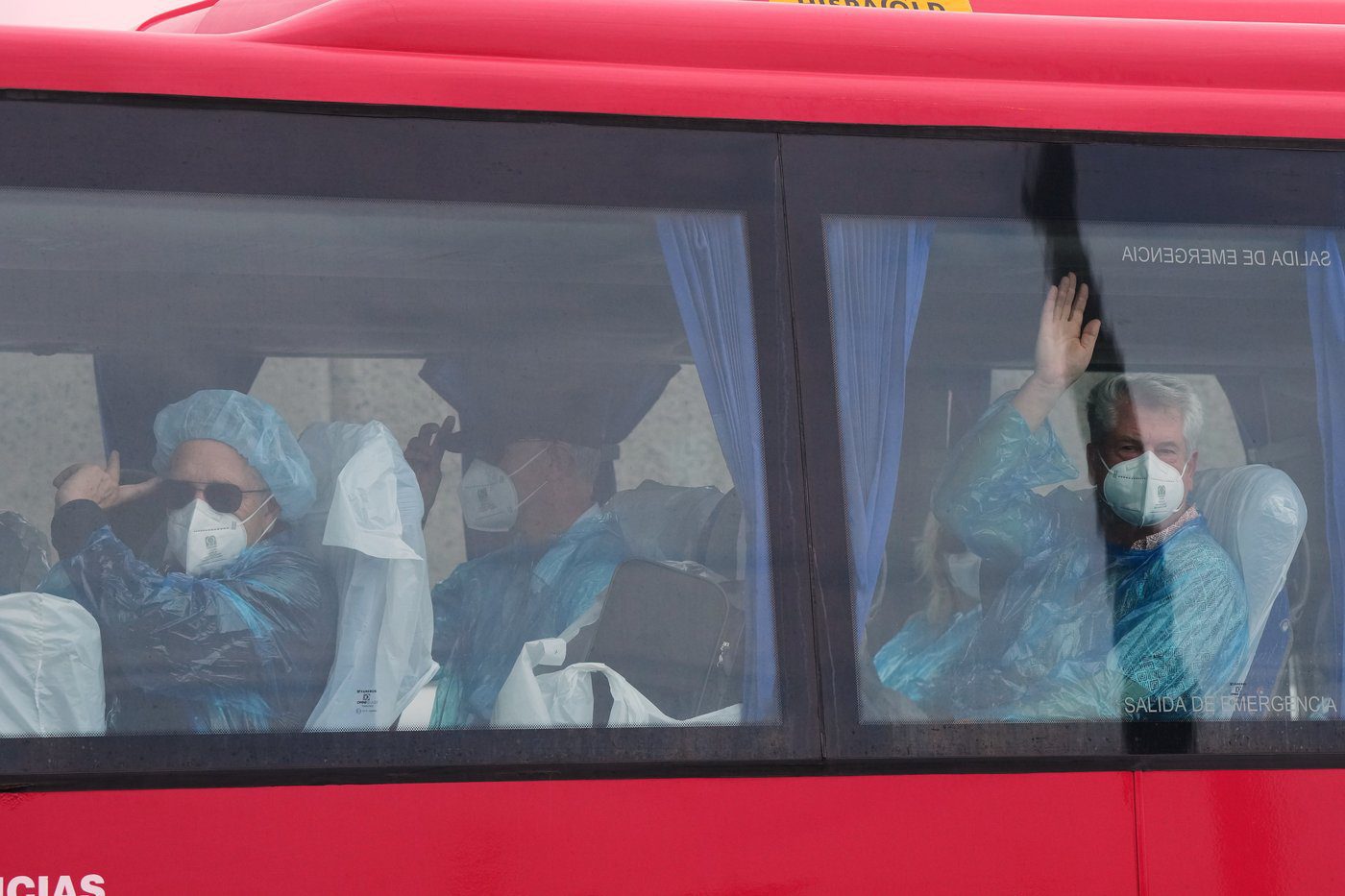
As the Canadians connected to an outbreak of hantavirus on the MV Hondius cruise ship isolate in British Columbia, Alberta and Ontario, rumours and misinformation about the virus are spreading online. Here’s a look at some of the claims.
THE CLAIM
The assertion that hantavirus is a side-effect of Pfizer’s COVID-19 vaccine appeared on TikTok, Facebook and X.
Those making the claim shared a screenshot of a page from a Pfizer safety report, which supposedly listed hantavirus as one of the known side-effects of its COVID-19 vaccine.
THE FACTS
The safety report from Pfizer is real. The pharmaceutical company prepared the document in 2021, and it became public after a group of health professionals sued the U.S. Food and Drug Administration to force the release of documents related to Pfizer’s COVID-19 vaccine.
The document looks at adverse events reported between the rollout of its COVID-19 vaccine in 2020 and Feb. 28, 2021.
The FDA defines an adverse event as an unfavourable or unintended sign, symptom or disease “temporally associated with the use of a medicinal product, whether considered related to the medicinal product or not.”
Regulatory bodies such as the FDA and the Public Health Agency of Canada require that drug manufacturers submit these adverse event reports.
The Pfizer document notes that adverse drug event reports were submitted voluntarily.
But the reference to hantavirus does not appear on the list of adverse events recorded in the report.
“Hantavirus pulmonary infection” appears instead on page 33 of the report under the appendix “list of adverse events of special interest,” also known as AESIs.
The FDA and the Public Health Agency of Canada define adverse events of special interest as something researchers should closely monitor because they could potentially have a causal association with a health product such as a vaccine.
Pfizer said it compiled the appendix list using pre-existing AESI lists from regulatory bodies including Brighton Collaboration, a vaccine safety research network, and the U.S. Centers for Disease Control.
By including hantavirus in the list, Pfizer is acknowledging that it might need to conduct more research or an investigation should the virus become a known or suspected adverse event following the vaccine.
THE CLAIM
Posts shared on X and Threads claimed hantavirus is not contagious.
“Here is a Hantavirus Fact sheet from the early ’90s from a Government Health Department. It CLEARLY states Hantavirus is NOT contagious!” reads one post. The post contains an image of a fact sheet from the San Juan Basin Health Department in Colorado.
THE FACTS
The health department listed on the fact sheet dissolved in 2023, but a similar fact sheet is archived on its website from 2001 via the Internet Archive’s Wayback Machine.
The fact sheet does say hantavirus is not contagious, but that is not entirely correct.
The World Health Organization notes that humans typically get infected through contact with infected rodents or their urine, droppings and saliva.
But the strain of the virus that caused the cruise ship outbreak, known as the Andes virus, can transmit between humans.
Human transmission wouldn’t have been a concern in Colorado around the time the fact sheet was published, however.
“To date, human-to-human transmission has been documented only for Andes virus in the Americas and remains uncommon,” the World Health Organization says.
THE CLAIM
On social media, comparisons between hantavirus and the COVID-19 pandemic spread alongside claims that cases were rising beyond the initial outbreak aboard the MV Hondius.
An X post from 2022 predicting hantavirus as the next pandemic after COVID-19 went viral in May for supposedly predicting the future.
Other posts claimed hantavirus cases were rising, with “214 new cases of hantavirus confirmed worldwide,” according to one account.
THE FACTS
The World Health Organization says that as of Wednesday, 11 hantavirus cases, including three deaths, had been reported from the cruise ship outbreak.
Health authorities worldwide say hantavirus is unlikely to become the next pandemic.
“The overall risk in Canada to the general population from the Andes hantavirus outbreak linked to the MV Hondius cruise ship remains low,” the Public Health Agency of Canada says. “Because transmission requires close, prolonged contact, person-to-person spread in Canada isn’t expected, even if an infected individual were to arrive in the country.”
In a letter published May 9, World Health Organization general director Dr. Tedros Adhanom Ghebreyesus said people should not mistake the cruise ship outbreak as a sign of a pandemic. “I need you to hear me clearly: this is not another COVID. The current public health risk from hantavirus remains low,” he said.
Other regulator health bodies such as the U.S. Centers for Disease Control shared similar messages.
“It isn’t the next pandemic. I think that’s the important point to remember for everybody — that this isn’t COVID,” David Safronetz, chief of special pathogens at the National Microbiology Laboratory in Winnipeg, told The Canadian Press this week.
SOURCES
Nicole Ireland and Hannah Alberga. What we know about hantavirus now that people linked to outbreak are back in Canada. The Canadian Press website. May 13, 2026 (archived)
Claims about hantavirus as a side-effect of Pfizer’s COVID-19 vaccine from TikTok May 8, 2026 (archived), Facebook May 7, 2026 (archived) and X May 7, 2026 (archived)
5.3.6 CUMULATIVE ANALYSIS OF POST-AUTHORIZATION ADVERSE EVENT REPORTS OF PF-07302048 (BNT162B2) RECEIVED THROUGH 28-FEB-2021. Public Health and Medical Professionals for Transparency website. April 30, 2021 (archived)
Aaron Siri. Why a Judge Ordered FDA to Release COVID-19 Vaccine Data Pronto. Bloomberg Law website. Jan. 18, 2022 (archived)
E19 A SELECTIVE APPROACH TO SAFETY DATA COLLECTION IN SPECIFIC LATE-STAGE PREAPPROVAL OR POST-APPROVAL CLINICAL TRIALS: Guidance for Industry, p. 12. U.S. Food and Drug Administration website. December 2022 (archived)
FDA Adverse Event Monitoring System (AEMS). Food and Drug Administration website. Accessed May 13, 2026 (archived)
Adverse events following immunization (AEFI) reporting form. Public Health Agency of Canada via Government of Canada website. Accessed May 13, 2026 (archived)
Guidance for Industry: E2F Development Safety Update Report, p. 23. U.S. Food and Drug Administration website. August 2011 (archived)
Reported side-effects following COVID-19 vaccination in Canada. Public Health Agency of Canada via Government of Canada website. Accessed May 13, 2026 (archived)
Claims about hantavirus fact sheet from X May 11, 2026 here (archived), May 10, 2026 here (archived) and Threads May 10, 2026 (archived)
Preventing HANTAVIRUS. San Juan Basin Health Department website archive via Wayback Machine.
Hantavirus. World Health Organization website. May 6, 2026 (archived)
Claims about hantavirus cases and COVID-19 from X June 10, 2022 here (archived), May 11, 2026 here (archived) and May 13, 2026 here (archived)
Hantaviruses. Public Health Agency of Canada via Government of Canada website. Accessed May 13, 2026 (archived)
Message by the WHO Director-General to the people of Tenerife regarding the hantavirus response. World Health Organization website. May 9, 2026 (archived)
ABOUT CANADIAN PRESS FACT CHECKS
You can find out more about The Canadian Press here and about Canadian Press fact checks here. To reach our fact-checking team with any tips, corrections or comments, please email us at cpfactcheck@thecanadianpress.com.
Marissa Birnie, The Canadian Press

