


WINNIPEG — The Manitoba government is sounding the alarm over rising HIV rates, as the province continues to document new cases of the virus at levels more than three times higher than the rest of Canada.
The province has declared a public health emergency, and is planning to raise awareness and work on new measures to stop the rise.
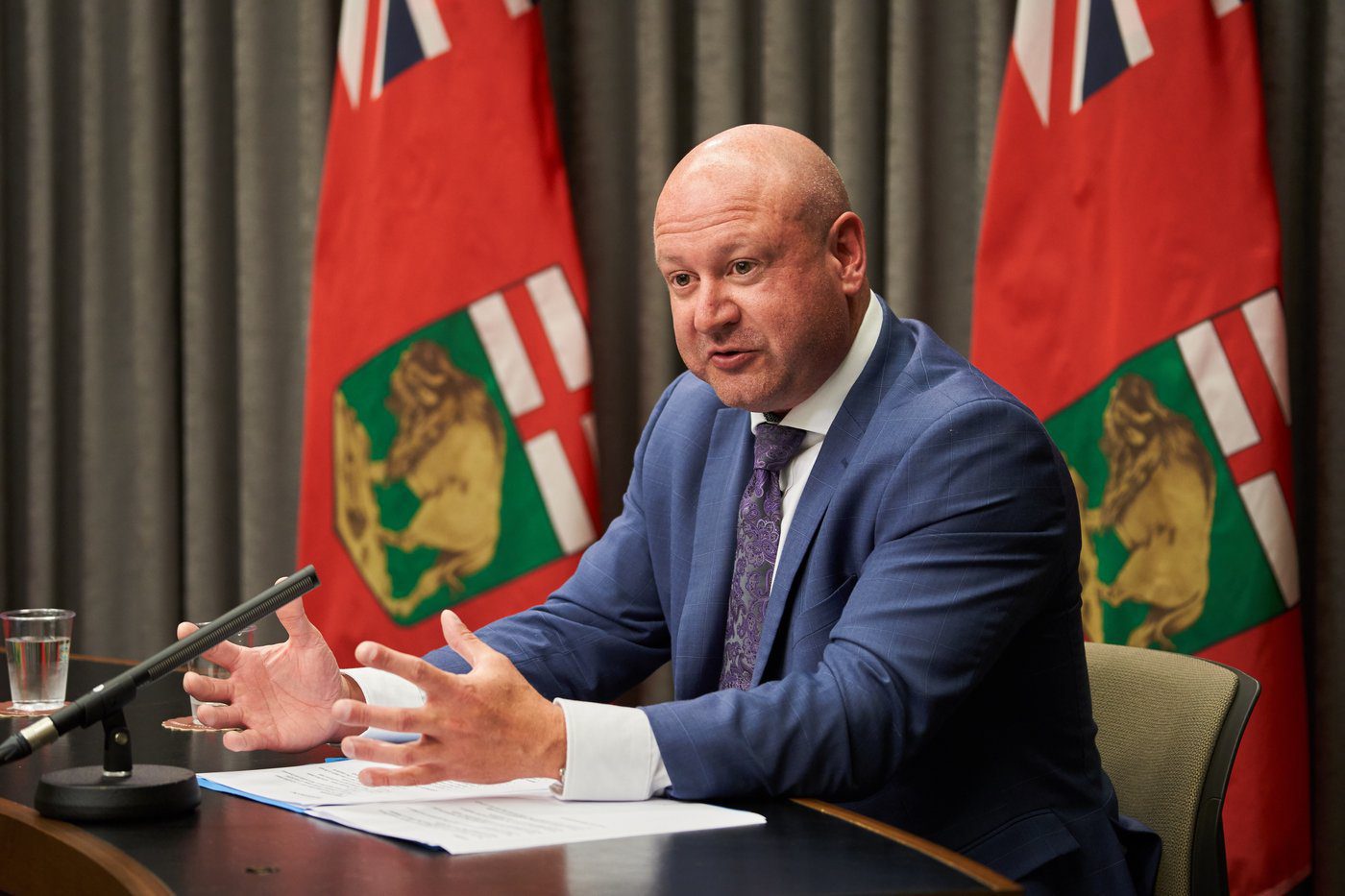
“This emergency, it’s not about creating fear, it’s about acknowledging the reality that individuals and communities are facing right now and to address that with a level of urgency,” Dr. Brent Roussin, chief provincial public health officer, said Thursday.
The province said new cases have been steadily increasing over the last six years, with 328 detected in 2025 compared to 90 in 2019. Numbers for 2026, so far, are comparable to this time last year, Roussin said.
He said by declaring the issue a public health emergency, the government can support a more co-ordinated response with other organizations and community groups.
The government plans to focus its attention on reducing new infections, improving access to care and supporting people living with HIV.
This also includes working with other levels of government, communities and health systems to address the factors that are driving the high rates, including injection drug use, homelessness, mental health issues and barriers to access to care.
Rates are highest in the southwest and northern parts of the province, with the largest number of cases diagnosed in Winnipeg.
The province is seeing the virus most commonly spread through intravenous drug use and unprotected heterosexual sex. In 2024, the government says about 70 per cent of transmission occurred through injection drug use.
A plan to open a supervised consumption site in Winnipeg has been put on hold while the NDP government is working with a local service provider to determine how users will be connected to treatment, recovery or other social service options.
The government has said a supervised consumption site is needed to address the growing number of overdose deaths in Winnipeg, as well as reduce the amount of people using drugs out in the open.
Advocates have long argued that access to harm reduction supplies, such as clean needles, can help to prevent transmission of the virus.
“When we see one of the big drivers of transmission being injection drug use, factors addressing drug use are going to be important,” Roussin said.
“Things like access to harm reduction, these sites here can increase that access.”
Roussin said women account for more than 50 per cent of the new cases, and the age range in Manitoba most affected is between 20 and 40.
This is the first time the province has declared a public health emergency over HIV rates, said Roussin.
Federal data shows that in 2024, Manitoba reported a rate of 19.5 cases per 100,000. The national rate was 5.5 cases per 100,000.
In Manitoba, Indigenous Peoples are disproportionately affected by the virus, which relates to the ongoing effects of colonization, said Roussin.
A health entity that services First Nations in northern Manitoba welcomed the province’s decision to declare a public health emergency.
Keewatinohk Inniniw Minoayawin said increasing HIV diagnoses are not new and a public declaration is long overdue.
The organization said ongoing jurisdictional issues between the federal and provincial governments have led to inadequate funding and persistent gaps in prevention, testing and treatment.
“We are facing a failure of systems. … What has failed is our ability to ensure equitable, timely and co-ordinated access to those tools for First Nations people,” said Michelle Monkman, the organization’s interim CEO.
“When governments evade responsibility, people fall through the cracks. HIV does not wait for jurisdictional clarity, and neither should we. We must act now to save lives.”
The group is calling for the federal and provincial governments to outline their roles in HIV prevention, testing and care on First Nations.
It is also advocating for the immediate expansion of harm reduction, testing and treatment access in communities, as well as incorporating HIV response in housing, mental health and substance use strategies.
This report by The Canadian Press was first published May 7, 2026.
Brittany Hobson, The Canadian Press

