


OTTAWA — The spring economic update the federal government released on Tuesday seeks to formalize a pivot in climate policy that first appeared in last year’s energy agreement with Alberta.
In the 2025 budget, the Liberals promised to not make enhanced oil recovery eligible for a tax credit for the development of carbon capture and storage systems.
But 10 days after that budget passed the House of Commons, Ottawa extended that tax credit to enhanced oil recovery projects in its energy memorandum of understanding with Alberta.
The flip-flop cost Prime Minister Mark Carney a cabinet minister, as Steven Guilbeault resigned the day Alberta MOU was announced.
The spring economic update lays out the criteria for accessing the tax credit in Alberta and other provinces where there are “sufficient regulations to ensure CO2 is permanently stored,” such as B.C. and Saskatchewan.
Ottawa projects the measure, which takes effect immediately, will generate $395 million in federal revenue over the next three years.
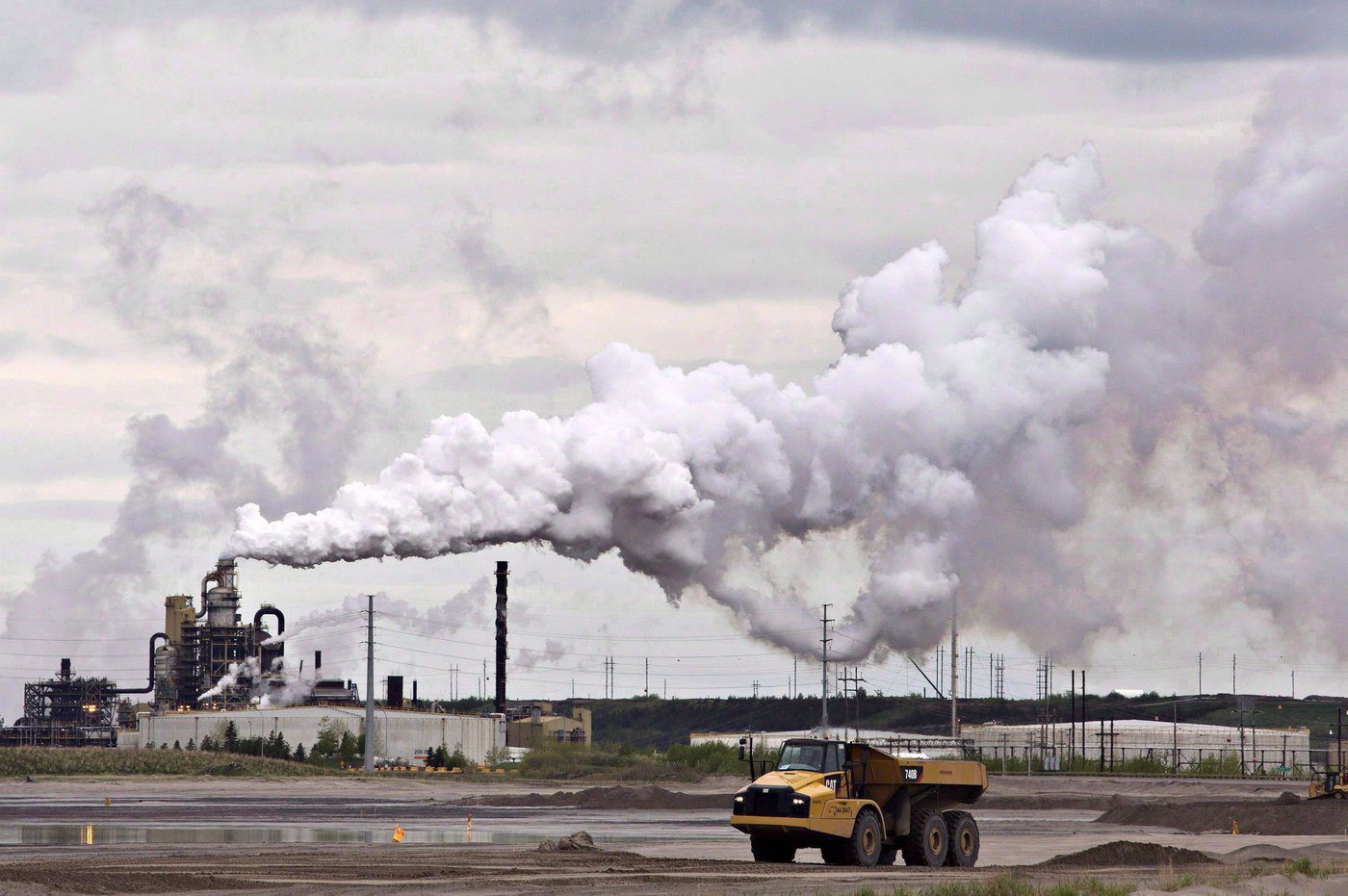
Enhanced oil recovery is a carbon capture and storage technology — or CCUS — that captures carbon dioxide from industrial emitters and injects it underground at oilfields.
That increases pressure and pushes more oil out of the rock, while the carbon dioxide is trapped underground.
Environmentalists see the extension of the tax credits to enhanced oil recovery as a direct subsidy of oil production, while the industry says tax credits are not subsidies.
Mark Scholz, president of the Canadian Association of Energy Contractors, told reporters late last year that including EOR in carbon capture credits was a “game-changer” and would put Canada in a much better competitive position for investment compared to the U.S.
“We think that this measure will help to store more carbon,” federal Finance Minister François-Philippe Champagne told reporters at a news conference Tuesday.
“We need to do more in order to make sure that we would be able to store more carbon. But at the same time, if you look at the state of the world today, you realize that Canada is increasingly that stable, predictable partner of choice when it comes to energy security.”
In the spring economic update, the government said the credit rate for carbon capture and storage through EOR would be half of the rate for storing carbon geologically or in concrete.
Equipment being used for both conventional carbon capture and for EOR is also eligible for tax breaks “on a weighed-average basis” depending on how much carbon is being captured through each method.
Storage equipment in an EOR capture project, however, would not be pro-rated.
The issue of making EOR eligible for tax credits has been a political hot potato for Prime Minister Mark Carney. Guilbeault resigned from cabinet in November over it. He was the heritage minister when he resigned, but spent four years as environment minister and was the architect of much of the Liberal climate plan.
Guilbeault, a prominent climate activist, had received assurances from Carney’s office that the tax credits for EOR would not be in the budget or added to it afterwards, sources told The Canadian Press at the time. Guilbeault had also been dispatched to win the support of Green Party Leader Elizabeth May for Carney’s first budget.
May had heard rumours that the government was going to reverse that decision, and it was one of the things keeping her from supporting the budget — until Guilbeault gave her his word that would not happen.
May voted for the budget — a key vote the Liberals needed at that time, when they still had only a minority government.
May said the reversal amounted to a “significant betrayal” which had her questioning the worth of Carney’s word.
Carney no longer needs to pacify any opposition MPs as he now governs with a majority, with five MPs crossing the floor to the Liberals since November.
Tuesday’s economic update also included $3 billion over five years for Global Affairs Canada, and another $168 million to Environment and Climate Change Canada to deliver “climate-related supports to vulnerable countries.”
It also pledged money to the Canadian Climate Institute to host a “sustainable finance conference in the coming year,” to discuss investment opportunities in Canada.
The report by The Canadian Press was first published April 28, 2026.
Nick Murray, The Canadian Press

