


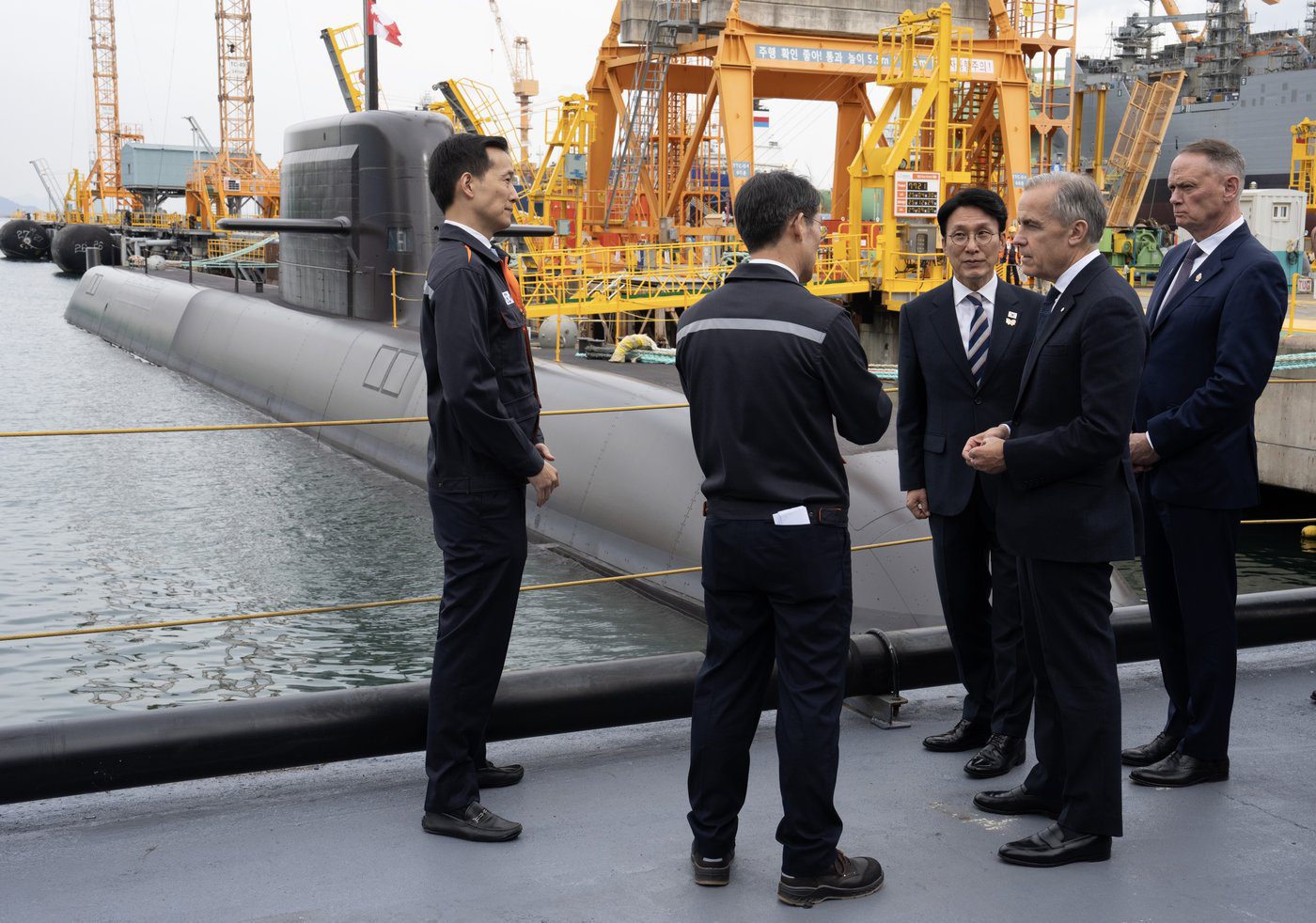
OTTAWA — The competition to build the Canadian navy’s next fleet of submarines is heading into a new phase after a deadline for both finalists to submit their final proposals to the federal government on Monday.
Canada is planning to buy a fleet of up to 12 conventionally powered submarines with the hope of having the vessels in the water by 2032.
The multibillion-dollar procurement is happening at an accelerated pace as the Royal Canadian Navy’s aging Victoria-class submarines are set to retire in the next decade.
The two bids are from South Korea’s Hanwha Oceans and ThyssenKrupp Marine Systems, or TKMS, in a bid that includes Germany and Norway.
Stephen Fuhr, the secretary of state for defence procurement, said in February that Ottawa will likely announce a winner this year.
The Liberal government has also made it clear that its decision will rest in part on which proposal provides the most economic and industrial benefits in Canada.
Canadian officials have visited the shipyards in South Korea and Germany, and officials from both countries have also visited Canada.
Hanwha and South Korean officials have framed the submarine contract as a starting point for a deeper industrial relationship between Canada and Korea.
TKMS has suggested it could build some of the submarines in Canada.
Both firms have signed agreements with a raft of Canadian companies to co-operate on work on the subs, should they win the contract.
They have also had a visible presence in Canada in recent months.
Hanwha has taken out bus shelter ads throughout downtown Ottawa and is running a large digital ad campaign, an unusual move aimed at making the company a household name.
TKMS is the main sponsor of the Conference of Defence Associations Institute’s annual conference in the capital this week.
Tom Lawson, chair of the institute’s board and a former chief of the defence staff, said Canada has cut years off the procurement process.
This kind of speed is precisely what the industry wants to see from the federal government as it implements its new defence industrial strategy, Lawson said.
“It starts the momentum, maybe we see a self-reinforcing upward spiral that works for the military and works for defence industry,” he said.
Lawson said the accelerated timeline on the submarine deal is helpful to both companies. While both want to win, he said, they are also sorting out future plans if they don’t.
“I don’t think, for either of them, that the competition’s existential. TKMS is going to have some other submarines to build for other countries. So is Hanwha,” he said.
But with billions of dollars on the line, Lawson said both will be pitching hard.
This report by The Canadian Press was first published March 2, 2026.
— With files from Kyle Duggan
Sarah Ritchie, The Canadian Press

