


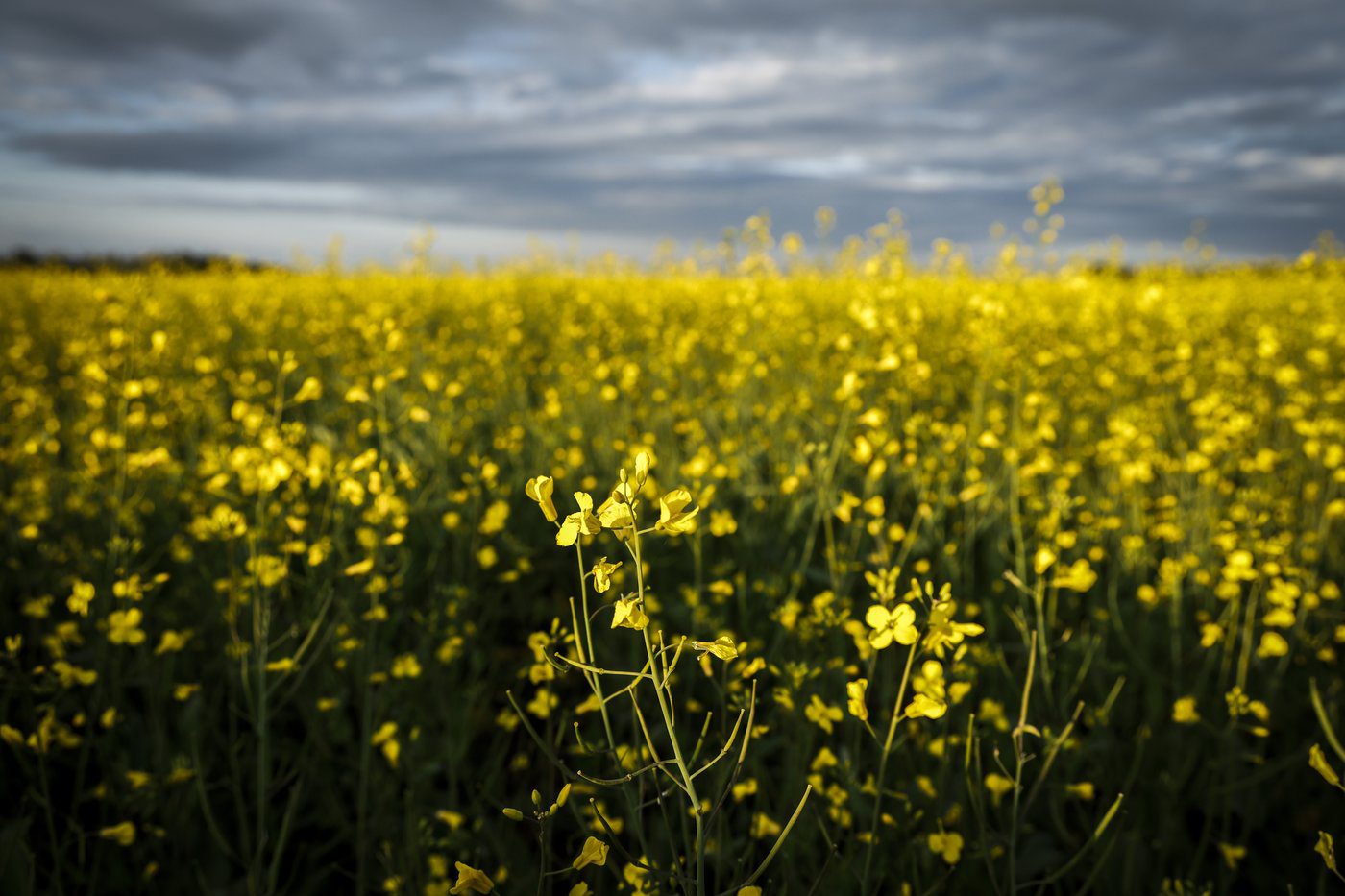
Canadian farmers are hoping for a breakthrough on punishing tariffs as Prime Minister Mark Carney talks trade in China this week.
Rick White, president of the Canadian Canola Growers Association, says Beijing’s steep levies on the major Prairie crop will cost producers at least $2 billion this year if the issue isn’t resolved.
“Farmers are already frustrated. They’re exasperated, they’re worried, they’re stressed,” White said in an interview Tuesday. “Every day, every week, every month this goes on, it just gets worse and worse and worse.”
Carney’s trip starts Wednesday, and he will be joined by cabinet ministers and Saskatchewan Premier Scott Moe. Carney is also set to meet with Chinese President Xi Jinping.
Saskatchewan, which grows over half of Canada’s canola, has felt the brunt of China’s tariffs.
“I think it’s helpful for (Moe) to be there,” White said. “He is sticking up and speaking loudly on behalf of the farmers and the industry … and that helps Prime Minister Carney make the case for Canada.”
Canada’s trading relationship with China has been strained for years, but issues came to a head in 2024.
In October that year, Ottawa imposed tariffs on Chinese electric vehicles and steel. Beijing later retaliated with levies on Canadian agricultural goods, including some canola products, peas and seafood.
In August, China upped the ante with a 76 per cent tariff on canola seed, a major Canadian export.
White said China has not bought Canadian canola since then, and Canada’s exports of the crop have fallen.
“That weighs heavy at the farm gate,” he said. “You can find small markets and sell a little bit more there, but nothing compares to what China will take.”
Bill Prybylski, the president of the Agricultural Producers Association of Saskatchewan, said he’s tempering his expectations of Carney’s trip.
“Ultimately, we would love to see some sort of negotiation to end the tariffs,” he said. “Realistically, though, I suspect that this meeting will hopefully be a positive meeting that will set the groundwork for the next meeting.”
Prybylski farms near Yorkton, northeast of Regina. He said his income has taken a hit as a result of the tariffs, and he might delay making big purchases.
“We’ve had to accept that we’re not getting paid as much as we had been in the previous years,” he said.
Prybylski’s not planning to reduce how much canola he plants in his fields this year, he added. He said he keeps his crops on a steady rotation schedule to manage the soil to prevent diseases and pests.
Andre Harpe, who farms near Grande Prairie, Alta., northwest of Edmonton, said he hasn’t changed his seeding plans but knows of others who are thinking of making last-minute changes.
“First and foremost (I’m hoping) that basically the tariffs get removed from Canadian canola and we regain our relationship with China,” said Harpe, who’s also the chair of Canadian Canola Growers Association.
Delaney Ross Burtnack, the executive director of Manitoba Canola Growers, said farmers can’t afford to sell the crop at a price that’s lower than what it is today.
“We must find a resolution as quickly as possible,” she said.
Carney has been squeezed on both sides over what to do with Canada’s tariff on Chinese electric vehicles.
Some politicians have called for its removal, while Ontario Premier Doug Ford has insisted it stay. Canada had originally imposed the EV levy in lockstep with the United States in a bid to protect the North American auto industry.
Many farming groups have said addressing the EV tariff is complex.
“It’s a political question and that’s for political leaders to answer,” White said. “We don’t have a position on it. What we’re looking for is results, which means canola needs to not be blocked by tariffs.”
This report by The Canadian Press was first published Jan. 14, 2026.
Jeremy Simes, The Canadian Press

