



Welcome to the era of the “Donroe Doctrine” — a reinterpretation of a 19th-century foreign policy used to justify the
United States’ attack on Venezuela
and assert dominance in the Western Hemisphere
,
encompassing North and South America and the surrounding waters. On Jan. 5, the U.S. Department of State
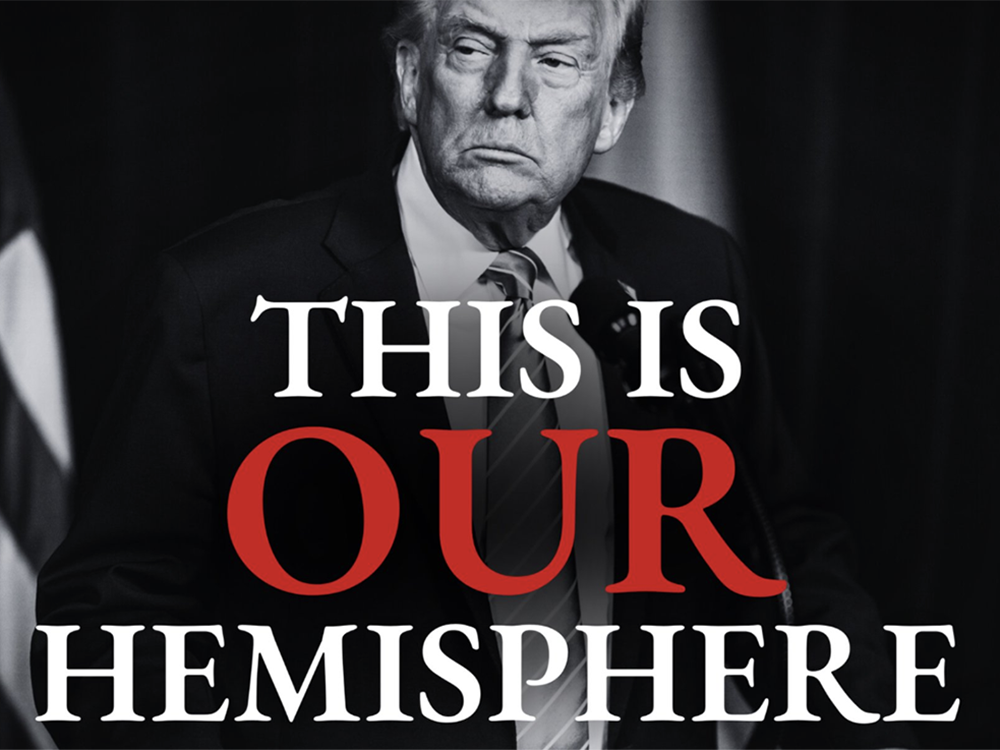
, “This is OUR Hemisphere, and President Trump will not allow our security to be threatened.” A photo of U.S. President Donald Trump with a text overlay — “THIS IS OUR HEMPISPHERE” — was attached.
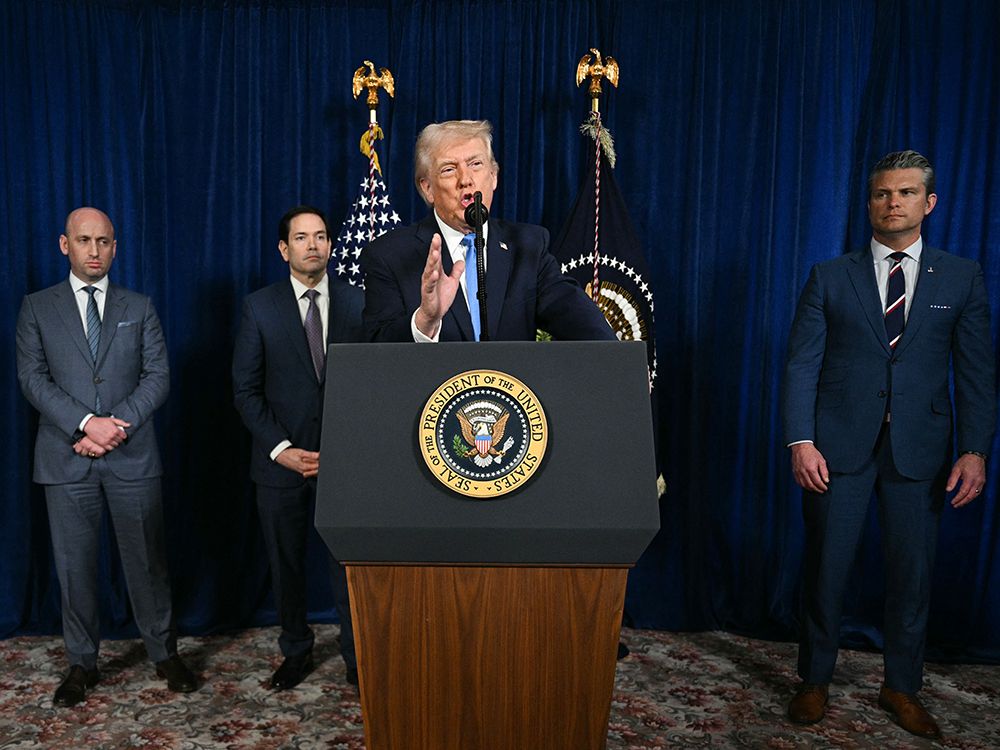
Two days earlier, Trump announced at a Mar-a-Lago
that the U.S. military had
Venezuelan President Nicolás Maduro and his wife, Cilia Flores, who face drug trafficking and weapons charges in a New York court. Flores and Maduro, who says he’s a prisoner of war,
in their first court appearance on Monday.
Trump said the United States would run Venezuela until “a safe, proper and judicious transition” is possible, bringing a 202-year-old framework — the Monroe Doctrine — into the spotlight. Here’s what you need to know.
What is the Monroe Doctrine?
The
dates back to Dec. 2, 1823, when the fifth U.S. president, James Monroe, made a speech before Congress warning European nations against further intervention in newly independent Central and South American countries.
“As a principle in which the rights and interests of the United States are involved, the American continents, by the free and independent condition which they have assumed and maintained, are henceforth not to be considered as subjects for colonization by any European powers,” Monroe said.
Over time, the address became known as the Monroe Doctrine. Presidents including Theodore Roosevelt (who introduced the
), Ronald Reagan and John F. Kennedy have invoked the foreign policy framework. As seen in Venezuela, the doctrine continues to affect the United States’ relationships with Latin American countries. Its reinterpretation has played a role in other U.S. interventions in the region, including the
and
in the 20th century.
One of the main concepts of the doctrine was to maintain two distinct spheres of influence: the Americas and Europe.
According to the
, “The independent lands of the Western Hemisphere would be solely the United States’ domain. In exchange, the United States pledged to avoid involvement in the political affairs of Europe, such as the ongoing Greek struggle for independence from the Ottoman Empire, and not to interfere in the existing European colonies already in the Americas.”
The idea of dividing the planet into three spheres of influence has held sway over members of the Trump administration, writes American historian
. “The U.S. would control the Western hemisphere, China would control Asia, Russia would control Europe.”
From a yearning to
to a threat of
, the Trump administration has placed its foreign policy strategy under the Monroe Doctrine umbrella.
What has Trump said about the Monroe Doctrine?
Monroe’s portrait reportedly
near Trump’s desk.
In November 2025, the Trump administration released its
, saying it would “assert and enforce a ‘Trump Corollary’ to the Monroe Doctrine.” The objective, according to the document, is “to prevent and discourage mass migration to the United States,” to cooperate with other governments in the Western Hemisphere “against narco-terrorists, cartels and other transnational criminal organizations,” to keep the hemisphere “free of hostile foreign incursion or ownership of key assets” and supportive of supply chains, and to maintain access to strategic locations.
Trump then released a
on the anniversary of the Monroe Doctrine in December 2025 that he called the “Trump Corollary” to the policy: “That the American people — not foreign nations nor globalist institutions — will always control their own destiny in our hemisphere.”
Trump couched the United States’ recent Latin American intervention — in which Venezuela’s interior minister says
— in the Monroe Doctrine.
at his Mar-a-Lago resort in Palm Beach, Trump
, “We will run the country until such time as we can do a safe, proper and judicious transition.” U.S. secretary of state Marco Rubio later
the United States wouldn’t govern the South American country but would enforce an existing “oil quarantine” on sanctioned tankers. American forces
on Jan. 7, the same day Trump told
that “only time will tell” how long the U.S. will run Venezuela and draw oil from its reserves, but he expects it to be years.
Venezuela had been
with China and Russia. With the U.S. asserting its authority, the countries’ investments in Latin America are
. “This is the Western Hemisphere. This is where we live — and we’re not going to allow the Western Hemisphere to be a base of operation for adversaries, competitors and rivals of the United States,” Rubio told
.
Why are people calling it the ‘Donroe Doctrine,’ or the ‘Trump Doctrine’?
Following the U.S. attack on the Venezuelan capital of Caracas, Trump used the Monroe Doctrine to assert the United States’ authority in the Western Hemisphere, crediting his spin on the policy — the “Donroe Doctrine,” a play on his first name that the
is believed to have coined a year ago.
“The Monroe Doctrine is a big deal, but we’ve superseded it by a lot, by a real lot. They now call it the ‘Donroe Doctrine,’” said the U.S. president. “(The Monroe Doctrine) was very important, but we forgot about it. We don’t forget about it anymore. Under our new national security strategy, American dominance in the Western Hemisphere will never be questioned again.”
Under the Donroe Doctrine, Canada would also fall under the United States’ sphere of influence.
Stephen Miller, the White House deputy chief of staff for policy and homeland security adviser, has reinforced this message, referring to the recast maxim as the “Trump Doctrine.”
“The United States is using its military to secure our interests unapologetically in our hemisphere. We’re a superpower, and under President Trump, we are going to conduct ourselves as a superpower,” Miller
. “The Monroe Doctrine — and the Trump Doctrine — is all about securing the national interests of America.”
Trump’s approach now has a name, but John Bolton, the U.S. president’s former security adviser, questioned the existence of a cohesive policy, telling
, “There is no Trump Doctrine: No matter what he does, there is no grand conceptual framework; it’s whatever suits him at the moment.”
Our website is the place for the latest breaking news, exclusive scoops, longreads and provocative commentary. Please bookmark nationalpost.com and sign up for our daily newsletter, Posted, here.

