



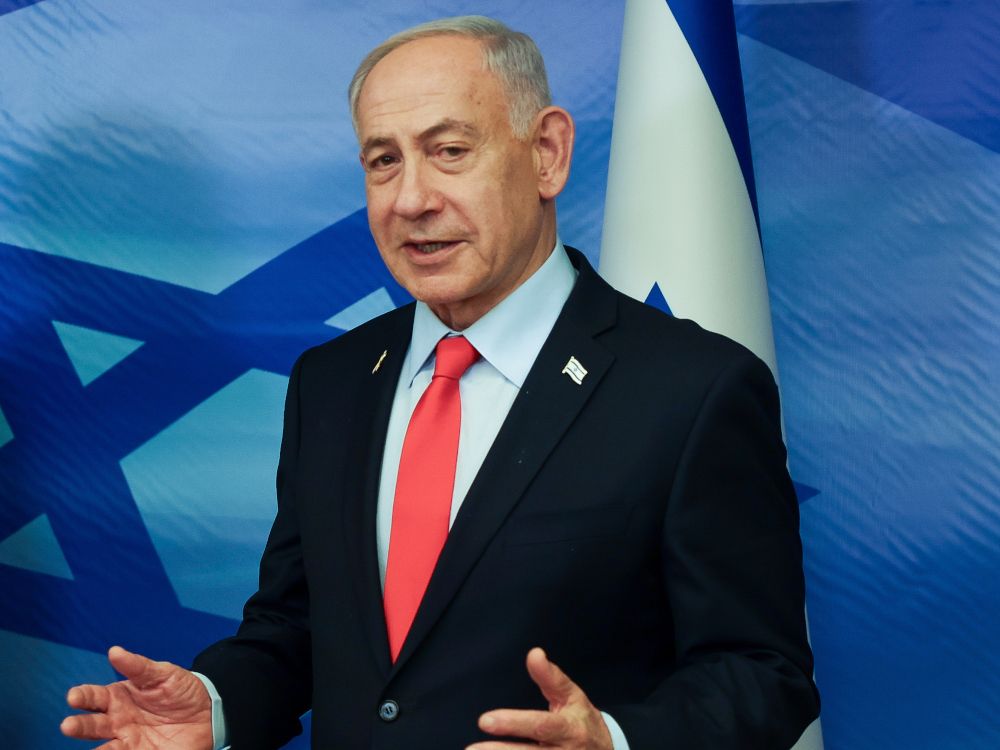
Last week, Israeli Prime Minister Benjamin Netanyahu delivered the ultimate Boxing Day troll by
the state of Somaliland — a country that few people have heard of, and even fewer have given a passing thought to — provoking widespread international condemnation.
There are
for Israel to recognize the fledgling statelet. Somaliland’s president announced his intention to join the Abraham Accords, which would expand the list of countries that have normalized relations with Israel. The country is close to Yemen and could allow Israel to attack Houthi targets if it were allowed to establish a military presence there. It is also located at the mouth of the Red Sea, which is often used to deliver weapons and fighters to Israel’s enemies.
But it’s hard not to see the move as a troll directed at world leaders who are still patting themselves on the back for recognizing a nonexistent Palestinian state in the fall.
Israel and Somaliland do share some commonalities. Like Israel, Somaliland is a byproduct of the collapse of the British Empire following the Second World War. It became
in 1884 and a Crown colony in 1920. It briefly gained independence in 1960 before joining with the Trust Territory of Somalia, which was governed by Italy under a United Nations mandate, to form the Somali Republic.
In 1991, as the Soviet Union was breaking apart like a jigsaw puzzle in an earthquake, Somaliland once again declared its independence. But unlike the alphabet soup of Soviet republics that were welcomed into the community of nations, Somaliland was universally shunned.
Despite this, it has operated with de facto independence since Bryan Adams’ “(Everything I Do) I Do It for You” was topping the charts. It holds democratic elections that have
by western observers. It operates its own police force and
, has its own army, its own currency and issues its own passports. It has
asserting its sovereignty that was overwhelmingly adopted in a democratic referendum.
While the border between Somalia and Somaliland is in dispute, most of its territory is clearly defined. And, despite its problems, it is far more stable and
than neighbouring countries, including Somalia.
“Palestine,” on the other hand, does not have clearly defined borders or an established government. It is split between Gaza and the West Bank. Half of Gaza is controlled by a genocidal terrorist organization that has so far refused to disarm, while Israel controls the other half. The West Bank is also split into
, with Israel and the Palestinian Authority, a weak authoritarian government, having varying degrees of control over each. And the West Bank’s borders have yet to be settled under international law.
Somaliland is, in other words, much closer to the
internationally accepted definition
of what constitutes a state than “Palestine” is, or ever has been.
Nevertheless, Netanyahu’s announcement was bitterly condemned by regional and global powers, resulting in a
UN Security Council
on Monday, where only the United States was willing to stick up for the Jewish state.
A
issued by numerous countries — including Qatar, Jordan, Egypt, Algeria, Iran, Iraq, Kuwait, Libya, Nigeria, Oman, Pakistan, Saudi Arabia, Sudan, Turkey and Yemen — unequivocally rejected and condemned the move “in the strongest terms,” claiming it would have “serious effects on international peace and security,” and is a “grave violation of the principles of international law.”
Yet these countries were saying very different things when France led the charge to recognize a Palestinian state earlier this year. Qatar
for recognizing a Palestinian state in September and called on other countries to “take similar steps that reflect their commitment to international law.”
Saudi Arabia also
that such recognitions “confirm the international consensus on the inherent right of the Palestinian people to self-determination, the establishment of their state, the ability to live on their land in security and peace, and the fulfillment of their aspirations for stability and prosperity,” while claiming that it would lead to “lasting security and peace.”
For those keeping track: Palestinians have a right to self-determination, but the Somalis of Somaliland do not; recognizing Somaliland is a violation of international law that threatens peace and security, while recognizing Palestine is in keeping with international law and will lead to peace and harmony.
International law, however, is not so clear cut. Articles 1 and 2 of the
discuss the need to maintain “international peace and security” and prohibit using force to subvert the “territorial integrity or political independence” of member states. But Israel is not threatening to use force and it’s not at all clear that recognizing a country that has existed for more than three decades will lead to violence.
The issue of international law as it applies to the Palestinian territories is also a matter of intense debate. Israel’s presence and settlements in the West Bank are often cited as violations of international law. But the fact is that the West Bank’s borders have yet to be settled under the Oslo Accords, the relevant international legal statutes, largely due to Palestinian resistance.
Moreover, some international legal experts make a compelling argument that Israel is not an occupying power at all.
, a British lawyer who specializes in international law, summarized the argument nicely in a 2020 article published in the
.
Hausdorff argues that, “The universal rule for determining borders for emerging states, ‘uti possidetis juris,’ dictates that such states are established with the same boundaries of the prior administrative entity in that land, unless otherwise agreed.…
“Under this principle of international law, as the only state to emerge from the British Mandate, on 14 May 1948 Israel automatically inherited the mandatory boundaries as its own borders. The eastern border ran along the Jordan River all the way south to the Red Sea, originally dividing the British administrative units of ‘Palestine’ and ‘Transjordan.’ ”
Thus, Hausdorff argues, the West Bank and Gaza have been sovereign Israeli territory since 1948, even when they were occupied by Jordan and Egypt, respectively. “Since the application of this fundamental principle to determine Israel’s borders at the moment of independence in 1948, there has not been a single agreement to alter territory or borders,” she continues. And, in the “absence of a final settlement” of the Oslo Accords, “sovereignty and borders have remained unchanged.”
By recognizing Somaliland, Netanyahu is forcing Israel’s detractors to confront the hypocrisy of their own arguments in favour of conjuring a Palestinian state out of thin air. I do hope that one day we will see a Palestinian state existing side-by-side with Israel in peace and prosperity. But that’s not going to happen until world leaders, including our own prime minister, recognize the complexities of the Israeli-Palestinian conflict, and confront their own biases against the Jewish state.
National Post
jkline@postmedia.com

