

The capture of Venezuelan dictator Nicholás Maduro and wife Cilia Flores by U.S. forces is cause for global celebration, though caution is warranted so long as the Maduro regime’s remaining leadership clings to power.
Overnight strikes on the South American country were limited to
military-related infrastructure
, including the headquarters of the Venezuelan armed forces and a handful of air fields and ports. In the ensuing chaos, American special forces infiltrated Maduro’s
, detained him and his wife, and then transported them to New York to face drugs and weapons charges.
Other high-ranking members of the regime — such as the vice president, interior minister and Attorney General — were
.
U.S. officials, particularly Republicans, have long maintained that Maduro is
not Venezuela’s legitimate leader,
given his history of election fraud. They have instead characterized him as a narco-terrorist who personally leads the
, a criminal organization operated by the Armed Forces of Venezuela that specializes in drug trafficking, money laundering and terror financing.
Maduro is also widely despised by Venezuelans for his economic ineptitude, corruption and cruel autocratic rule. Since he took office in 2013, the country’s socialist economy has
— a collapse generally unheard of outside of wartime — and
have fled abroad due to starvation and abject poverty. The country’s elections are now entirely rigged, and political dissidents
.
In a press conference on Saturday morning, Trump indicated that the United States will
“until such time as we can do a safe, proper and judicious transition,” and that he wants American
to enter the Venezuelan market, which has struggled under socialist policies, and “start making money for the country.”
While Trump declared that he is not afraid to launch a second wave of strikes, and even place American boots on the ground if necessary, U.S. Secretary of State Marco Rubio said that
is anticipated for now — so escalation will apparently depend on whether the Venezuelan government agrees to cede power.
Caracas’ remaining leaders immediately
the American bombings and Maduro’s detainment, suggesting that they won’t be eager to listen to Trump’s proscriptions. They benefit from the fact that, unlike other autocrats, Maduro always relied on a constellation of influential domestic allies to maintain power, and was thus never indispensable to his own regime.
But even if these residual Madurists can, in the absence of their leader, retain control over the Venezuelan state, they will likely be weakened by some degree of factionalism. Presumably, any reasonable person in their position would also think twice about resisting Washington now that it is clear just how far Trump is willing to go, and how easily uncooperative leaders can be detained and imprisoned.
So despite the regime’s structural resilience, there is good reason to be optimistic.
In his Saturday news conference, Trump
that Rubio had been talking with Venezuela’s vice president, Delcy Rodriguez, and that she may be willing to work with the United States in some transitional capacity. Yet,
that Delcy had actually flown to Moscow following Maduro’s detainment — a story which the Russian foreign ministry denied as “fake” — so her candidacy remains uncertain.
Meanwhile, Venezuela’s exiled opposition leader, Maria Corina Machado,
suggesting that she and her pro-democracy allies would be willing to take power if permitted. “Venezuelans, The time for freedom has come!… Let us remain vigilant, active, and organized until the democratic transition is complete,” went the letter, warning citizens to prepare for further communications.
They would clearly have popular support. In the country’s 2024 presidential election, which was widely-condemned as fraudulent, preserved tally sheets showed that the opposition candidate, Edmundo González, probably won with
of the vote before the final numbers were seemingly fudged to give Maduro a narrow “victory.”
Pushing for an opposition-led transitional government would be the ideal, and most ethical, outcome — but so much is still up in the air. It remains entirely possible that the surviving Madurists will try to preserve their power by any means necessary, including brutal crackdowns, until removed by the American military.
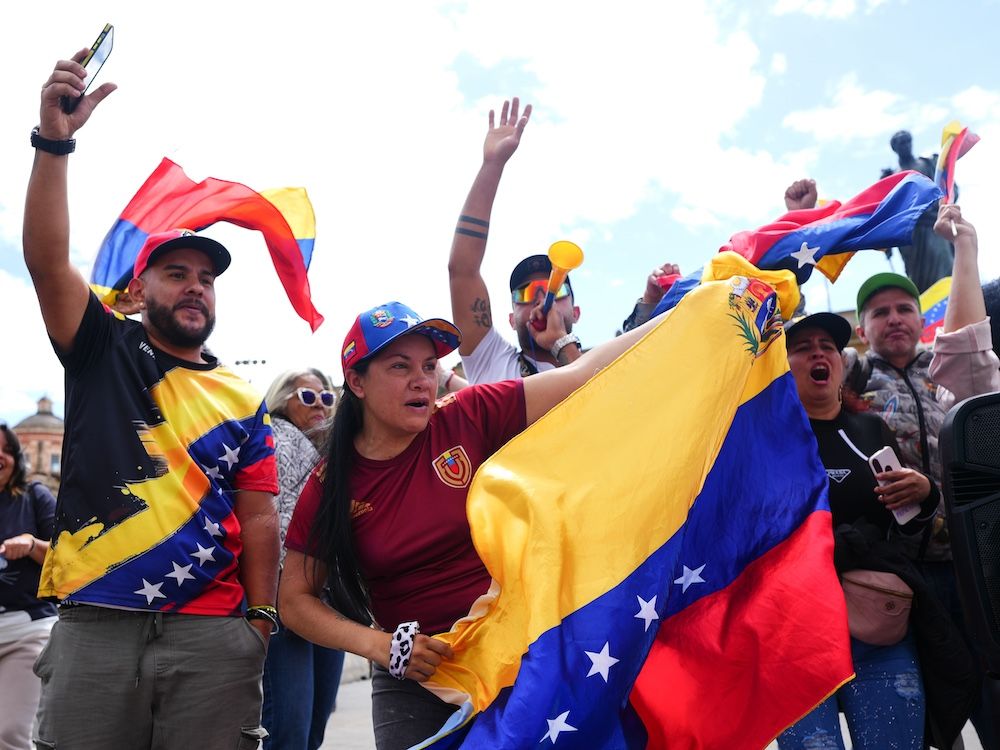
Despite these uncertainties, the Venezuelan diaspora, engorged by millions of refugees who recently fled Maduro’s madness, is
. Street parties were held on Saturday in major cities
and Spain. “We are free. We are all happy that the dictatorship has fallen and that we have a free country,” said one Santiago-based reveller to Reuters, mirroring the joy seen in countless social media posts that have flooded online.
Within Caracas, where criticism of the government is grounds for arrest, some of Maduro’s supporters have rallied in defence of their detained president. Yet,
suggests that the crowd
, quiet and unenthusiastic, in stark contrast to the
of the international anti-Maduro crowds.
Western policymakers, particularly American ones, also have many reasons to celebrate.
Ever since socialist populist Hugo Chavez was elected Venezuela’s president in 1999, the country has been
. A staunch opponent of Washington, Chavez propped up Cuba’s failing economy with discounted oil, established a
, purchased large volumes of
and accepted
from China that gave Beijing a foothold in Latin America.
As Chavez’s protege and successor, Maduro only continued these policies which is why, last year, Russia supplied
to Caracas, which were destroyed in Saturday’s American operation.
By taking Maduro out, and indirectly demonstrating the superiority of America’s military technology, the Trump administration effectively struck another blow against the global anti-western axis and showed that American power has not diminished as much as some critics would like to believe. So long as the United States follows through, and ensures that a just transition is implemented, the world will be a better place for Venezuelans and their democratic supporters alike.
National Post