



Legal manoeuvres in the Supreme Court of Canada may soon land the country in another constitutional crisis. Earlier this week, the Carney government, through Attorney General Sean Fraser, filed an
in the upcoming appeal on Quebec’s secularism legislation (Bill 21) at the Supreme Court.
Crucially, however, the federal government is not contesting the secularism law itself. Instead, it is urging the judges to impose novel restrictions on the use of the notwithstanding clause, which permits legislatures to shield laws from judicial review for a renewable period of five years. This legal argument, if accepted, would undo a key component of Canada’s constitutional settlement and further subordinate parliamentary government to adventurous exercises of judicial power.
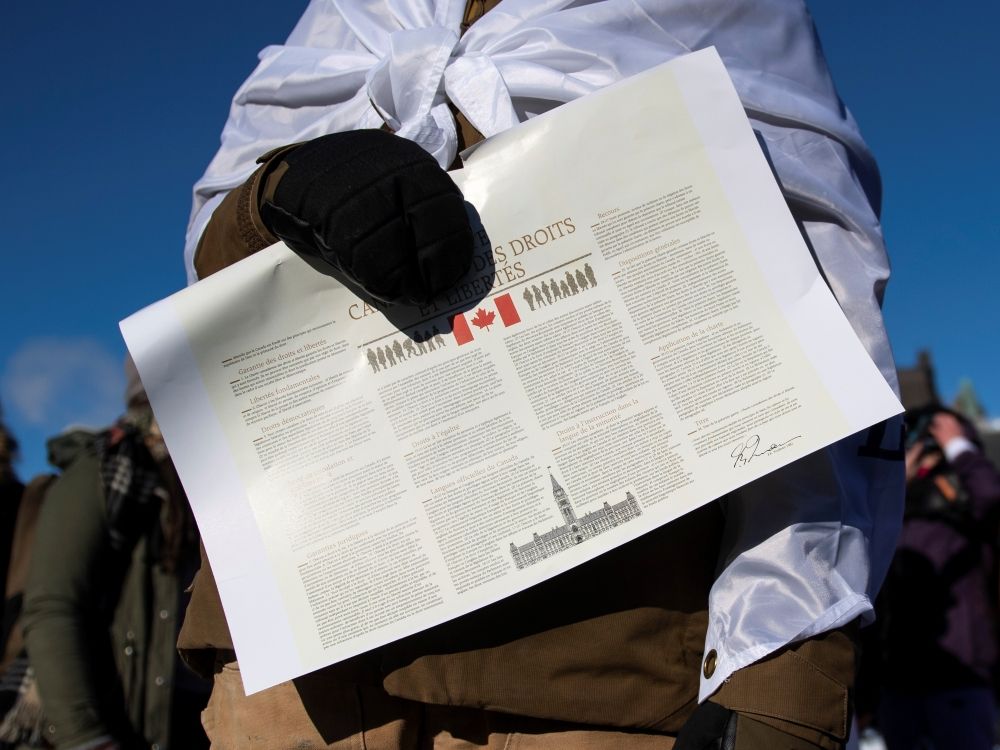
Enacted as Section 33 of the Charter of Rights and Freedoms, the notwithstanding clause was vital in the negotiations leading to the adoption of the 1982 Constitution. As historians have documented, the impetus for its inclusion in the constitutional settlement was the view, particularly favoured by Western premiers, that Canada should maintain continuity with the venerable British tradition of parliamentary supremacy and that a democratic safeguard is needed to check judicial excesses.
Hence, in keeping with its essential purpose, Section 33 has long been interpreted, in the words of the Supreme Court’s 1988
in Ford v. Quebec (Attorney General), as giving “no warrant for importing into it grounds for substantive review of the legislative policy.” Simply put, once the notwithstanding clause is invoked, it is not for the courts to assess the legislation for Charter compliance.
While professing to “clarify the law,” the federal government’s
actually contemplates a wholesale revision of this settlement. According to its legal submissions, the courts should refuse to give effect to the notwithstanding clause if it leads to an “irreparable impairment” of Charter rights or eliminates the “means indispensable to the exercise” of a right. Equally troubling is the federal government’s contention that the courts can and should declare whether a given law violates Charter rights, even when the notwithstanding clause is properly invoked.
Subtle though these arguments may be, they effectively invite the Supreme Court to sterilize the only democratic mechanism for remedying misuses of judicial power. Once the door is opened, it will be difficult for the courts to articulate any principled limits on lawfare — that is,
— challenging deployments of the notwithstanding clause.
Typically, the courts have refrained from adjudicating cases where the outcome would have no practical effect, to conserve time and public resources. But if the judiciary were empowered to determine whether a law shielded by Section 33 violates the Charter, litigants will be encouraged to seek a “private reference” opinion from the courts whenever the notwithstanding clause is used. Having endorsed this newfound power, the Supreme Court would be hard-pressed to explain why and when, if at all, it should be limited. But it would upend the traditional approach to constitutional adjudication, which focuses on concrete rather than hypothetical disputes, and stymie the law-making process even further.
Next, consider the federal government’s proposed revision to the notwithstanding clause, which would prevent it from being used to “irreparably impair” a Charter right or used for a “prolonged period.” The meaning of these terms is unclear — a point implicitly conceded by the government’s own lawyers when, in its legal submissions, they disclaimed the need for the Supreme Court to “establish a definitive or exhaustive test.” It is doubtful that these vague notions furnish genuine legal standards that judges can manage and apply, without infringing the separation of powers.
More concerningly, if a court can adjudicate a Charter claim despite the notwithstanding clause, then it may be entitled to grant remedies, as well. Though courts would still be incapable of striking down the law, according to some interveners in the Quebec appeal, they should be free to award monetary compensation and other relief to claimants who are harmed in these circumstances. Such an approach, if taken, would drastically curb the utility of the notwithstanding clause going forward.
Until recently, such arguments would have been dismissed as inconsistent with Canada’s constitutional order. But last year, in the case of Canada (Attorney General) v. Power, the Supreme Court
a novel form of judicial intrusion into the legislative realm by allowing courts to sit in judgment over parliamentary processes and to award compensation from the public purse for the enactment of legislation they deem “clearly unconstitutional.” Notably, Chief Justice Richard Wagner and Justice Andromache Karakatsanis justified this unprecedented decision with the ahistorical assertion that the Charter effected a “revolutionary” break from Canada’s prior constitutional traditions.
To be sure, there is nothing in the Power judgment that requires a further revolutionary break in the form of a judgment weakening the notwithstanding clause. But a Supreme Court that is inclined toward revolution in one case can fairly be suspected of being inclined toward yet another, even more perilous proposal to depart from Canada’s constitutional settlement.
Should the court confirm these fears, the judicial effacement of the notwithstanding clause will almost certainly bring about a crisis of democratic governance, if not one of national unity. With the legal force of the notwithstanding clause severely diminished, political decision-making will remain exposed to the vagaries of expanding judicial power, which, in recent years, has granted “
” to novel constitutional rights,
settled understandings of the division of powers between the federal and provincial governments, and trenched on socioeconomic decisions relating to
,
,
,
policy, and more.
These are not idiosyncratic legal disputes, but issues of high policy that impact virtually everyone who lives in Canada. Given that Canadian courts appear increasingly intent on growing their power to weigh in on matters of political judgment, the need for a mechanism such as the notwithstanding clause has become more salient than ever. Without it, governments across the country will have little choice but either to comply with the trend of judicial adventurism — and all its ramifications — or to ignore it. To seek to neutralize the notwithstanding clause is thus to court a constitutional crisis.
Regrettably, Fraser’s intervention is every bit as politically imprudent as it is legally flawed. One can only hope that the Supreme Court of Canada will see reason enough to step back from the brink.
National Post
Kerry Sun is a doctoral student at the University of Oxford and Research Associate at UBC’s Centre for Constitutional Law and Legal Studies.