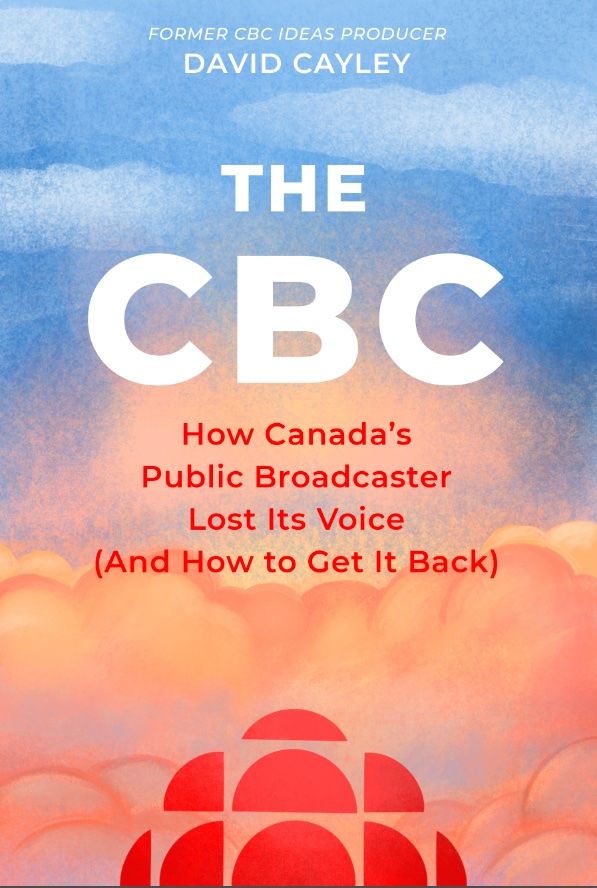


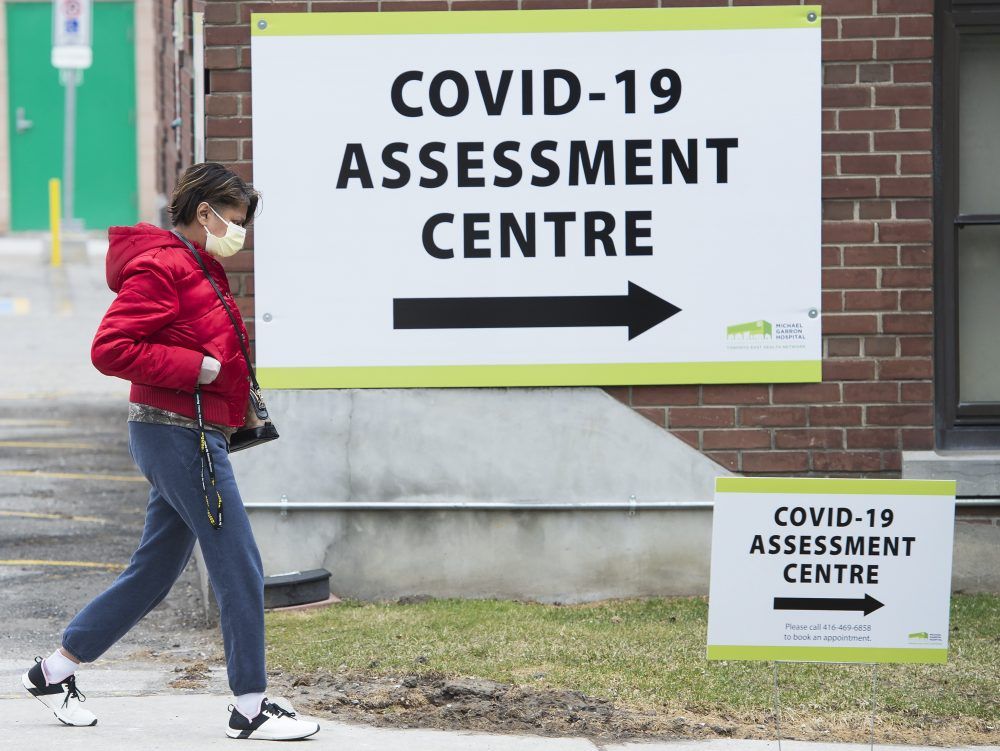
In his provocative new book The CBC: How Canada’s Public Broadcaster Lost Its Voice (And How to Get It Back) — released with Sutherland House Books on Sept. 16, 2025 — veteran producer and broadcaster David Cayley examines the decline of the institution he served for more than four decades. He argues that the CBC has abandoned its duty to serve as an open forum for the whole country, narrowing instead into a partisan voice that polices dissent. In this excerpt, Cayley revisits the broadcaster’s early coverage of the COVID-19 pandemic, showing how its suppression of credible but divergent views revealed a troubling willingness to act as a mouthpiece for government rather than as a true public forum.
On March 22, 2020, CBC News Network interviewed Dr. Richard Schabas. Schabas had been Ontario’s chief medical officer of health between 1987 and 1997 and had appeared, or been heard, on the CBC, by his estimate, “literally hundreds” of times before. For more than 30 years, he had been a regular and trusted source on public health matters, and he had fully justified the CBC’s confidence in him. During the SARS outbreak in 2003, for example, Schabas was the chief of staff at one of the affected hospitals, York Central. At a time when there was widespread panic and some models were predicting 120 million deaths worldwide, he determined that the disease was not sufficiently infectious to spread in community settings and predicted that it would die out as soon as proper infection control measures were adopted in hospitals. He was proved right.
In his interview on March 22, 2020, he questioned some of the measures, like lockdown, that were being taken against COVID-19. The interview disappeared from the CBC’s website the day it was posted. CBC News Managing Editor Tracey Seeley wrote to her colleagues: “NN (News Network) unfortunately ran an interview with Dr. Schabas this morning, and a clip was included in our web story. We … had Uncoder unpublish it completely. (Such) sources are considered ‘the climate change denier’ equivalent of corona prevention.” Dr. Schabas, Seeley said, was an “outlier” and “should be treated as such.” Schabas never heard from the CBC again — he had been cancelled.
The careful and considered opinion of a seasoned professional who had proved prescient on public health matters in the past was suddenly equivalent to “climate change denial.” This set the tone for coverage in which scientific disagreements were rigorously excluded from public discussion. People were simply told that their leaders were “following science,” regardless of the fact that the available science was both scant and contested. The virus was new, so was the policy being used to combat it, and yet “the science” was held up as if it offered transparent, obvious, and unequivocal guidance. Often the term meant nothing more than the opinion of some credentialed person.
The question of the utility of masks provides a further example. No randomized controlled trial has ever shown that masks — even good masks properly fitted — reduce transmission of respiratory viruses. At the beginning of the pandemic, in April 2020, retired Canadian physicist Dennis G. Rancourt surveyed the existing scientific evidence in a paper for the Ontario Civil Liberties Association and concluded unequivocally that “masks don’t work.” A more recent meta-analysis of 78 randomized trials, reported by the Cochrane Library in January 2023 confirmed this finding. At the beginning of the pandemic, both the WHO and Theresa Tam, Canada’s chief public health officer also took the view that, as Rancourt had said, masks don’t work. Both then changed their view without any change in the evidence. The only explanation for this, that I can think of, is that there was a desperate need for a way of ritualizing the fear that had been generated, and masking provided the needed ritual. This is understandable. But what is remarkable is how easily this rain dance then became “the science.” Rancourt’s study was easily available, but it was never, to my knowledge reported — on the CBC or anywhere else. Instead, the “anti-masker” became the very epitome of anti-scientific bigotry.
Throughout the pandemic, scientific dissent about all aspects of COVID-19 policy was systematically excluded from the CBC. What began with the banning of Richard Schabas as an “outlier” continued thereafter. This was most egregious in a case that occurred in the summer of 2020. It was then that Dr. . Schabas joined with a number of other former public health officials to question the policy of universal quarantine that all Canadian governments were then following. This distinguished group included, along with the two former provincial chiefs, two former chief public health officers for Canada, three former deputy ministers of health, three present or former deans of medicine at Canadian universities, and various other academic luminaries — a virtual who’s who of respected elders in the field of public health in Canada. In their open letter to the prime minister and Canada’s political leaders, they pleaded for “a balanced response” to the pandemic, arguing that the “current approach” posed serious threats to both “population health” and “equity.” To the best of my knowledge, this letter was never reported on the CBC or in the press and never answered by any of the political leaders to whom it was addressed. It was months after it was written that I even heard of it — through a friend. Again, I can only underline how extraordinary, and how ominous, I find this to be. Cautions against lockdown and other related elements of COVID-19 policy, from what had recently been the public health establishment, ought to have raised alarm in both political and media circles, and certainly at the public broadcaster. What followed instead was silence.
The crucial point here is that the pandemic provoked extensive and deep-rooted scientific disagreement, but news of this disagreement never reached the public. The CBC established a strict and effective censorship, as the case of Richard Schabas’s cancellation shows. Those who tried to resist this policy were silenced. One who has told her story is Marianne Klowak, a 32-year veteran of the CBC Radio newsroom in Winnipeg. She has said that she was prevented throughout the pandemic from covering any story relating to protest against COVID-19 policies, scientific dissent, or vaccination side effects. When she argued that the CBC ought to try and find out something about the large peaceful protests that were assembling outside the Manitoba legislature, she was told that these were “anti-vaxxers” and therefore not deserving of a voice. On another occasion, she was, in her words, “gaslighted” in front of her entire newsroom — that is, made to feel crazy for persisting in her desire to cover the other side of an issue that her colleagues insisted had no other side. Her attempts to cover cases of vaccine injury were blocked. Eventually, she left the CBC.
Veteran journalist Rodney Palmer, a former CBC reporter and CTV bureau chief, has shown that virtually all the “independent” scientific experts on whom the CBC relied during the pandemic were receiving funding from Science Up First, a Canadian government initiative designed to “stop the spread of misinformation.” It was on these grounds — stopping the spread of misinformation — that Marianne Klowak, at CBC Winnipeg, was prevented from talking to anyone outside the bounds of the official COVID-19 consensus. The CBC, in this case at least, functioned in exactly the way the opponents of public broadcasting claim that it does — as a mouthpiece of government.
Special to National Post
Excerpted from The CBC: How Canada’s Public Broadcaster Lost Its Voice (And How to Get It Back), published by Sutherland House Books on Sept. 16, 2025. A veteran producer and broadcaster, author David Cayley made documentaries for CBC Radio’s Ideas for more than three decades.