



By Matt Spoke and Ariella Kimmel
Ontario’s health-care system is under immense strain. Emergency rooms either have hours of waiting time or are simply being closed. Wait times for surgeries and specialist appointments are growing, and accessibility to diagnostic testing is leaving patients in the dark. Thousands of families across the province still cannot find a family doctor.
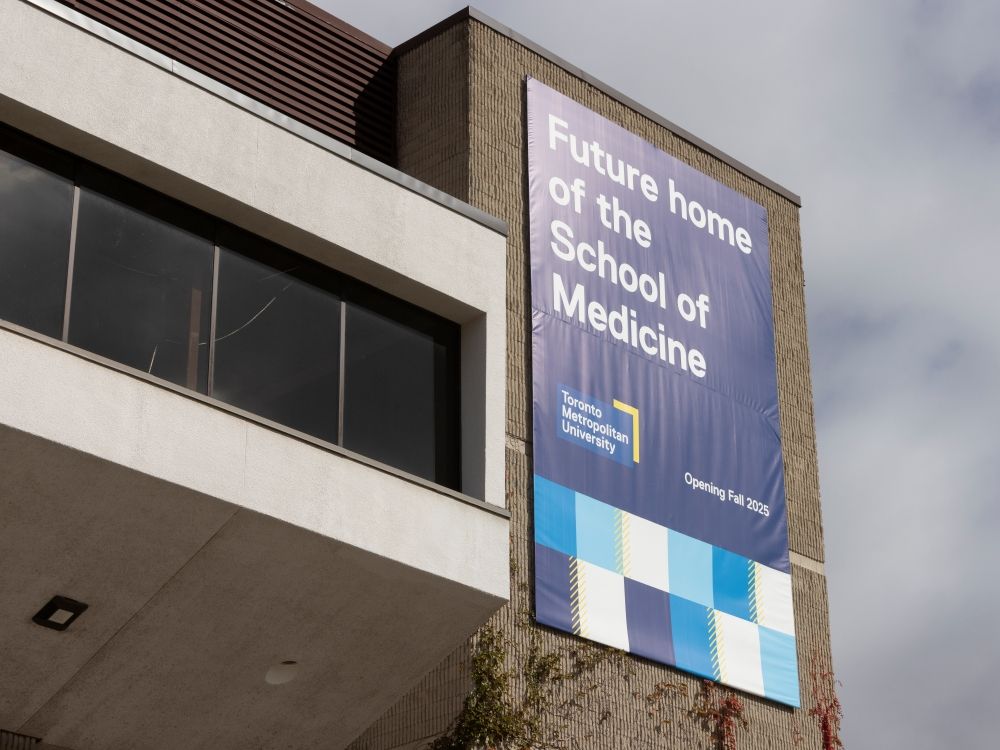
With all this in mind, it is no surprise that Premier Doug Ford’s government has made expanding medical school enrollment a priority. Just this week, he was in Brampton celebrating the opening of the new Toronto Metropolitan University School of Medicine, a laudable announcement to create more seats for aspiring doctors. This was unfortunately overshadowed by the school’s embrace of progressive ideology and rejection of traditional admission standards.
The school claims to be the “first medical school in Canada founded and intentionally built upon the foundations of social accountability, EDI and
” with an equity, diversity and inclusion action plan that specifies how these values will become part of its admissions criteria.
It has adopted admissions criteria that go well beyond academic achievement or aptitude for the
. The school draws on values like “anti-oppression” and offers
for admission: a “Black Admissions Pathway,” an “Indigenous Admissions Pathway” and an “Equity-Deserving Admissions Pathway” for those who self-identify as disadvantaged. Disadvantaged students, according to the school, include members of the LBGTQ community, people with disabilities, those who have who have faced familial or socio-cultural barriers, those who have experienced poverty or low socio-economic status, and people who identify as racialized.
These streams are not just outreach programs; they come with their own dedicated selection committees and evaluation processes. The school explicitly
that the purpose of these streams is “to address the under-representation of identified equity-deserving groups in medical education,” indicating a clear intent to select according to identity.
This approach is not just wrong in principle but is dangerous in practice. Medicine is not a field where ideology should trump excellence. Admissions should be based on merit and aptitude, not politics; otherwise, we risk having future physicians who are less qualified to meet patients’ needs. When medical schools start prioritizing ideological litmus tests, the entire system suffers, and patients pay the price.
That same ideological lens is showing up and proving that woke ideologies that see the world through an “oppressor–oppressed” binary lens have a damaging impact on our health-care system, from medical schools to hospitals. Ontario now risks losing some of its best doctors, not because of pay or working conditions, but because of the culture taking root within the profession. A recent report by the Jewish Medical Association of Ontario found that nearly one in three Jewish physicians are considering leaving the
, mainly driven by rising antisemitism in the workplace.
This paints a troubling picture of the environment forming within our hospitals and universities. Of those surveyed by JMAO, more than 80 per cent of respondents said they’ve faced antisemitism at work. The most common place was in university or academic settings, where almost three-quarters reported experiencing it, while 60 per cent of respondents reported encountering antisemitism in hospitals.
These numbers should alarm us all, and they speak to the damage done by an ideology which elevates identity over merit and creates exclusion and hostility in the workplace. Jewish professionals who, until the late 1960s, faced quotas when applying to Canadian medical schools, are now being framed as oppressors and are not considered “equity-deserving” under this framework. In fact, their perceived privilege is often used to justify discriminatory attitudes and behaviour, which has led to a significant spike in antisemitism in the medical field in Canada.
A health-care system that turns away qualified students for political reasons and alienates experienced doctors because of their identity is not built to serve patients. It is built to serve ideology while undermining the entire system, compromising patient care and eroding workplace integrity.
A conservative government should not hesitate to oppose this trend by not funding its growth. Ford and his ministers do not need to issue platitudes. They need to act. That means pushing Ontario’s medical schools to return to academic standards and professional neutrality and confronting the rising antisemitism that is undermining morale within the system.
Without fundamental change, we risk losing a generation of physicians, educators and researchers, leading to severe detrimental effects on Ontario’s medical system. Instead of pushing back against an ideology which has been proven to be problematic, the admission standards at TMU will continue to see discrimination not only being tolerated but, in some cases, perpetuated. This systemic inaction must be confronted and reversed immediately by the government.
was launched to speak plainly about the challenges facing this province. On healthcare, the diagnosis is clear; we need more doctors, but not at any cost. What we need are more of the best. That means protecting merit, confronting bigotry and restoring public confidence in a system that touches every life in the province.
We cannot afford to politicize medicine. The stakes are too high.
National Post
Matt Spoke is a Toronto-based entrepreneur, a contributor to Project Ontario, and a board member of the Canada Strong & Free Network. Ariella Kimmel is the president of Winston Wilmont, having worked for conservative governments federally and provincially.

