



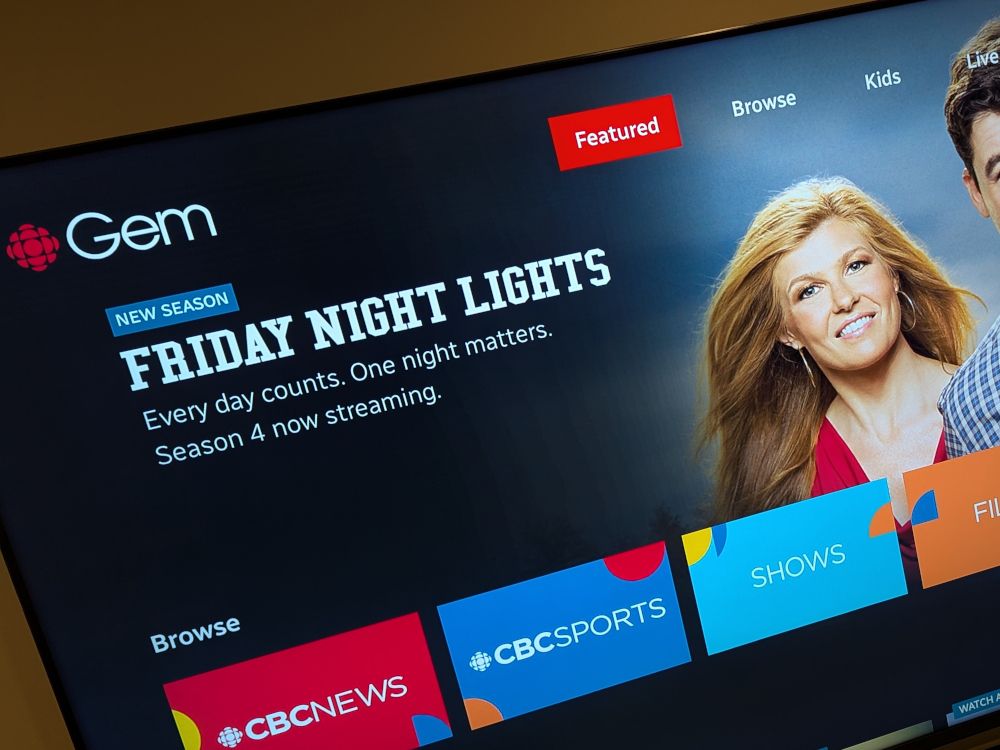
Since it launched in 2018, CBC’s Gem streaming service has been a slap in the face to Canadians. Ottawa takes around
a year out of our pockets, ostensibly so the public broadcaster can provide reliable news and support the domestic film industry, but if Canadians want to watch CBC News Network without a cable package, or tax-funded programming without ads, they have to fork over an additional
.
If you’re wondering how many people are actually willing to pay to be fed a steady stream of anti-Israel, anti-capitalist, anti-Conservative propaganda, you wouldn’t be alone. Matt Malone, an assistant professor in the faculty of law at the University of Ottawa, has been attempting to get subscriber numbers for CBC Gem through an
.
Despite an order from the information commissioner to hand over the data, the public broadcaster, which is constantly crying poor, has chosen to spend its resources fighting the directive in court. It’s not a good look for a news outlet with a history of taking governments to task for being too opaque.
In 2018, for example, the broadcaster
to fight the Ontario government’s refusal to release ministerial mandate letters. The case made it all the way to the Supreme Court, which last year
that the province was within its rights due to the longstanding principle of cabinet confidentiality. But as
in 2023, when it comes to “shielding materials from disclosure when they pertain to consultations or deliberations, the CBC itself is likelier than the Ford government to invoke such exemptions.”
When it comes to releasing its subscriber data, the CBC argued that it cannot be compelled to make information available that could “harm its competitive position by providing sensitive data to … competitors, allowing them to use it to be more aggressive in their attempts to lure paid subscribers from the Gem platform to theirs.” The information commissioner disagreed, saying that the broadcaster failed to “demonstrate that there was a reasonable expectation that these harms could occur.”
Indeed, it’s hard to imagine that simply knowing how many people subscribe to Gem would give an advantage to private-sector streamers like Netflix and Crave, especially when they can compete based on the fact that they have more content that people actually want to watch.
It’s more likely that the real reason CBC is willing to take its lack of transparency all the way to the Federal Court is because it doesn’t want to admit how much of a failure its streaming service has been. The CBC sent
to C21Media, an entertainment industry trade publication, last year, and the results weren’t great.
According to the broadcaster’s own calculations, based on Ontario viewership data compiled by Numeris between September 2023 and June 2024, YouTube was the most-watched streaming platform with 32.9 per cent of the market. Netflix led the big streaming services with 14.1 per cent, followed by Prime Video (13.6 per cent) and Disney+ (3.7 per cent). CBC Gem attracted a measly 0.35 per cent of viewers, and that includes both paid and unpaid subscribers.
It’s no secret in the entertainment industry that subscriber data is generally only released when companies have something to brag about. This can be seen in boxing, as well. When a pay-per-view event does really well, promoters and networks are quick to release information on how many people bought the fight, in order to show how popular and successful their shows are. When that data isn’t made available, you can be pretty certain that very few people were willing to shell out their hard-earned money to watch it.
A general lack of interest in its programming is an issue that’s plagued our public broadcaster for many years. After all, why would it give a darn about catering to the wants of Canadians, when the government hands it a cheque each year, regardless of how many people actually see value in its programming?
And the truth of the matter is that the CBC has long had an inherent competitive advantage over its primary competitors — private television stations — because it competes for the same ad dollars but has access to an additional $1.5 billion in taxpayer funds. In more recent years, the Mother Corp has used this advantage to drive local newspapers out of business by offering similar online content without making people pay for it, while gobbling up scarce ad revenue.
Which begs the question as to why a Crown corporation should now be competing with large foreign streaming services like Netflix, and homegrown private ones, such as Crave? In an era in which cable TV is going the way of rotary phones, it’s understandable that the corporation would see value in making its programming available online. But given that nearly three-quarters of its revenue is pilfered directly from taxpayers, that programming should be made available at no additional cost and limited to Canadian content — no more using public money to line the pockets of Hollywood executives.
There’s likely little that can be done to curtail the CBC’s excesses after Prime Minister Mark Carney was elected on
to “build critical cultural institutions, such as CBC-Radio Canada.” Last month, CBC’s CEO wrote in an email to employees that the broadcaster is being forced to find $198 million in
as part of the government’s general cost-cutting measures. But it will also receive the
a year that Carney promised during the election campaign, so making the cuts shouldn’t be all that difficult.
Regardless, even the CBC boosters in cabinet should be able to admit that the state broadcaster’s public funding comes with some strings attached. One of those is that it must accept a higher level of transparency than companies operating in the private sector. Our tax dollars should not be used to fight court battles intended to give the Crown corporation a leg up over companies it has no business competing with in the first place.
National Post
jkline@postmedia.com

