



The Post gets results dep’t: Conservative immigration critic Michelle Rempel Garner announced plans Wednesday to introduce a bill amending the Criminal Code so as to “
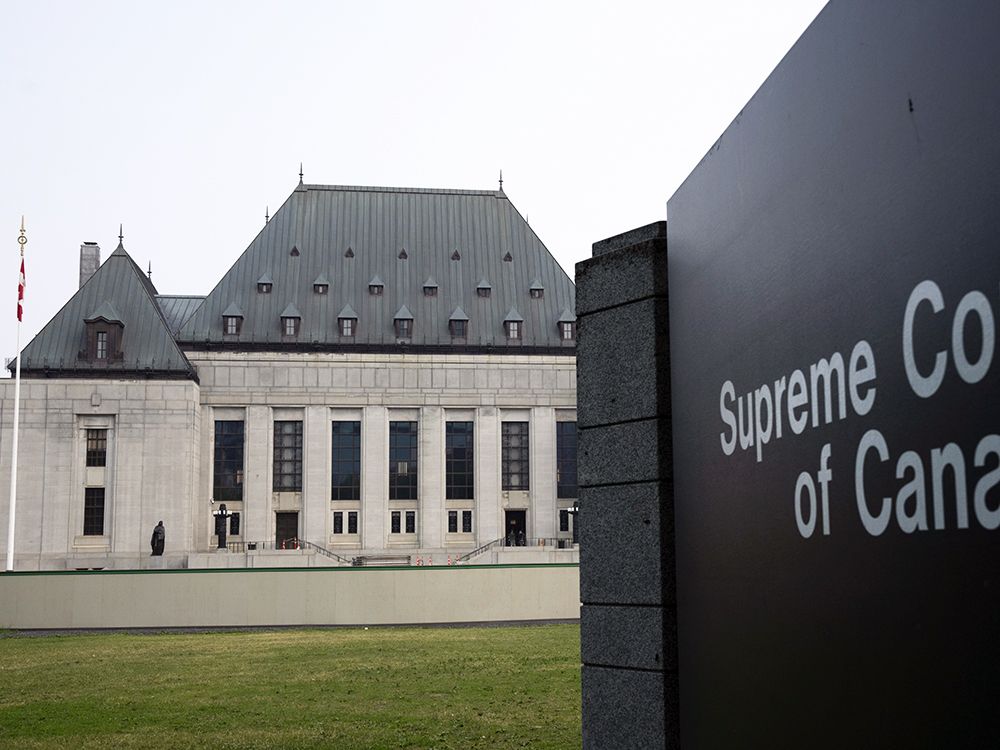
.” In 2013, the Supreme Court ruled in R. v. Pham that it was legitimate, in some circumstances, to adjust criminal sentences downward to spare convicted non-citizens from deportation or other immigration-related consequences.
As
Jamie Sarkonak
through tireless accumulation of examples, this has led to a spate of deliberately softened sentences for non-citizens perpetrating odious crimes. Rempel Garner and the Tories hope to explicitly Pham-proof the Code and require judges to ignore immigration status. In a minority Parliament, this idea will put the ball in the Liberal government’s court. Will they co-opt this Conservative idea, or will they sigh and dust off the old playbook of racism accusations and howls of “MAGA!”?
To go back to square one for a moment: Hoang Anh Pham had been given two years in prison on marijuana charges, which, under the terms of the Immigration and Refugee Protection Act, would have resulted in him losing his right to appeal any subsequent deportation order. The trial judge wasn’t specifically advised that this was a consequence of his sentence, so Pham appealed, asking for a sentence of two years less a day, which wouldn’t cost him his IRPA appeal right. The Crown agreed that the infinitesimally lighter sentence would have been fine, because it was still otherwise appropriate to the offence. Alberta’s appeal court rejected Pham’s plea, but it succeeded at the Supreme Court, winning seven to nil.
The language in the Pham ruling
, delivered by (then-puisne) Justice Wagner, is interesting. The Court accepted an equality-before-the-law argument that obviously has two sides. The concern was that when a non-citizen at risk of deportation is convicted of some crime, giving him the exact sentence a citizen would receive might in practice be much worse for him (or for blameless family members). But, of course, this gives non-citizens an avenue for sentence mitigation that is unavailable to citizens. Which view of equality before the law shall prevail?
The Pham court was careful to say that sentences shouldn’t be reduced to the point of being outside the accepted range; that trial judges were entitled to ignore immigration implications of a sentence as long as they took their existence into account; and, in particular, that soft-hearted judges shouldn’t design “inappropriate and artificial sentences in order to avoid collateral consequences which may flow from a statutory scheme or from other legislation, thus circumventing Parliament’s will.” Oh, no, not that!
This seems like an open invitation to Parliament to make its will known when it comes to principles of criminal sentencing, not to mention the higher-level political question of what distinctions the law is permitted to make between citizens and non-citizens. There is also the even-higher-level question whether Parliament has
any remaining practical control of criminal sentencing at all
. After all, the accepted sentencing ranges which loom so large in the Pham reasoning are themselves established by judges through an opaque oracular process of vibe-consultation, and they sometimes lead to controversial outcomes.
The Liberals will probably kill Rempel Garner’s bill with as little fuss as they can manage. But the more interesting outcome will arise if they co-opt it, allowing the Criminal Code to be amended. (Whatever your own views on immigration, you cannot reasonably deny that public sentiment has undergone a nightmarishly fast and well-documented change of attitude toward it.) Would the appellate courts then find a way to reject the new directive despite their endless fine talk of deference to legislatures?
I’m afraid the only real question is “How would they go about it?” Think about this month’s Ontario Superior Court decision establishing that a few Toronto bike lanes were protected by the Charter. (You’ve seen various nincompoops complaining in other newspapers that, no, this ruling “didn’t create a right to bike lanes”: readers may enjoy
perusing the uncategorical view offered by the professionals at McCarthy Tetrault
, and in particular the “key takeaways”.)
That bike-lane decision may not survive in the appellate courts, but the judicial procedure that led to it will certainly be available in a context of criminal sentencing. A trial judge confronted with the Conservative-initiated changes to the Criminal Code would almost be bound to accept that Charter rights were implicated, and he could thereby, like enterprising Superior Court Judge Schabas, conduct his own personal re-analysis of Parliament’s decision, deciding whether the people’s representatives had behaved rationally and non-arbitrarily. Thus is the character of our government now: any thought of statutory measures being “passed into law” by “legislators” is itself increasingly obsolete and misleading.
National Post

