



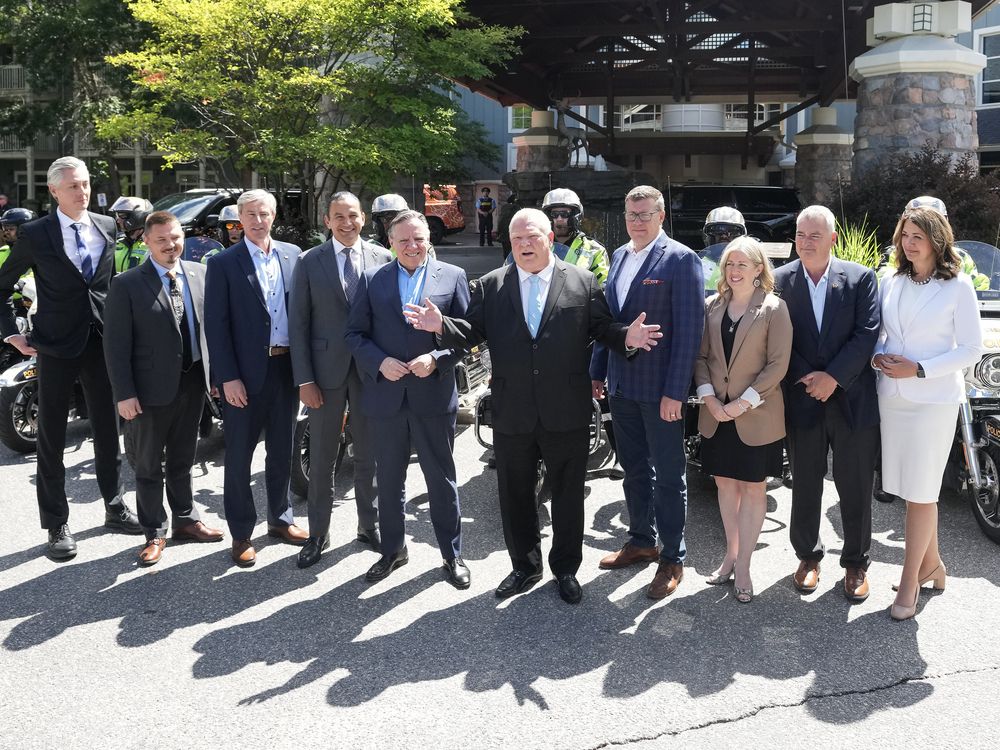
There’s a reason Canada’s premiers schlepped their briefing binders to
instead of meeting in Toronto at Queen’s Park’s grey towers. Hosting this summer’s Council of the Federation — the annual gathering of Canada’s premiers — Ontario Premier Doug Ford wanted his colleagues, and surprise guest Prime Minister Mark Carney, to see him in his natural element: Muskoka hoodie, dockside banter, and all.
Over three hot days in July, formal discussions on trade, energy corridors, and health transfers seamlessly blended into
, capped off by an impromptu Muskoka cottage sleepover with the prime minister. Protocol quickly went out the window — the prime minister doesn’t usually attend these gatherings, let alone stay overnight at Doug Ford’s private cottage. The atmosphere was carefully informal, but the purpose was deliberate and strategic: build personal trust first, shape policy second.
I’ve been around long enough to know that the oldest test in politics — would I have a beer with this person — is really shorthand for credibility. It’s a vibe check, and you can’t fake it. Authenticity and emotional intelligence build credibility faster than any white paper or policy briefing ever could. When voters see a leader being genuinely themselves, flaws and all, trust follows naturally.
Authenticity isn’t a substitute for policy. But it can grease the wheels of progress. The Muskoka retreat yielded a joint push on credential recognition for skilled workers, a tentative corridor plan for west-to-east energy transmission, and fresh momentum to slash inter-provincial trade irritants.
History shows that meaningful political progress is often grounded in trust between leaders. Franklin D. Roosevelt and Winston Churchill
over 1,700 messages during World War II, streamlining decisions and cutting through layers of bureaucracy and red tape. Similarly, Canada’s Brian Mulroney recognized the power of personal rapport, famously fostering genuine friendships with Ronald Reagan at the
, paving the way for the Canada-U.S. Free Trade Agreement. Even a humorous mishap — accidentally lodging a
in George H.W. Bush’s ear — only deepened their personal connection and trust.
We see the same dynamic on a very different front line. Since 2022, Ukraine’s Volodymyr Zelenskyy has delivered hundreds of selfie-style
in an olive-green t-shirt, speaking directly to citizens and parliaments from darkened Kyiv streets. Minimal production, maximum impact; those nightly clips have rallied Ukrainians to fight and convinced the world to send weapons.
Closer to home, Manitoba Premier Wab Kinew practices radical honesty. In his book,
The Reason You Walk,
he lays bare arrests, addiction, and reconciliation with his father. By putting scars on the table, Kinew invited Manitobans to judge him on who he is now. That candour helped him convert skeptics and win a majority in 2023.
In Ontario, even Ford’s harshest critics will admit his authenticity isn’t staged — it just happens. Like the time a Walmart barber
and Ford turned the buzzcut into a running joke. Or when a
bee flew straight into his mouth during a press conference
in Dundalk — he coughed, made a joke that the bee has a lot of real estate to work with in his belly, and carried on. Both moments went viral not because they were polished, but because they weren’t. They were messy, unscripted, human — and oddly endearing.
Critics often dismiss these moments as political theatre, but suspicion evaporates when leaders genuinely risk vulnerability. Ford’s most notable apologies are case in point. In 2023, when he scrapped the controversial Greenbelt land-swap, he bluntly
he had got it wrong and promised to restore every acre. Similarly, during the peak COVID fatigue in 2021, he
reversed an unpopular decision
that had closed playgrounds and expanded police powers, publicly apologizing the next day. Each reversal attracted criticism, yet his willingness to admit mistakes built trust in ways that no scripted memo ever could.
In an era of polarization, it’s tempting for politicians to hide behind talking points and social media armies. They reward the politician who can laugh at a bee, admit a bad call, or linger on the dock because another premier still has questions about labour mobility or energy sharing. Authenticity guarantees a human connection sturdy enough to survive inevitable disagreements.
Politics will always need vision, math, and mastery of the file. But the leaders who move mountains are the ones who start by moving hearts — showing up, scars, jokes and bee stings included, to earn the trust that makes the hard stuff possible.
National Post
Laryssa Waler is the founder and CEO of Henley Strategies.

