



If Canada’s leaders will not put young Canadians first, they should not be surprised when those same people abandon a country that abandoned them first.
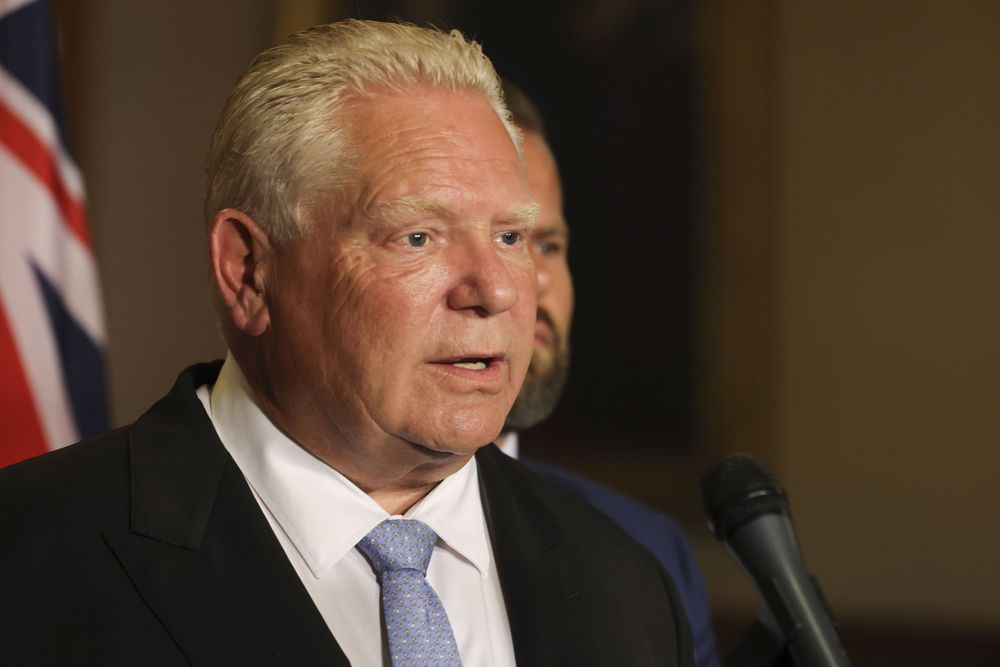
After a meeting in Huntsville, Ont., on July 24, Ontario Premier Doug Ford and the rest of the premiers made it clear that they want greater powers over immigration.
Ford specifically mentioned that his government was
of the Constitution Act to find a way to bypass Ottawa and unilaterally grant work permits for Ontario. Section 95
the provinces to make immigration decisions, “as long and as far only as it is not repugnant” to any federal law.
On Monday, however, Ford announced he was
that initiative, and this is a tiny spot of good news for young job seekers in the province.
There are nearly 100,000 unemployed asylum seekers
in hotels in Etobicoke. Prior to his retreat on the policy, Ford wanted to put them to work, even though the unemployment rate of Ontario residents aged 15 to 24
at 16.4 per cent, higher than the national average of
.
During the short time he considered the initiative, Ford’s elbows were up, displaying a willingness to throw them at his province’s youngest and most vulnerable adult citizens.
Trying to add another 100,000 people to the workforce would have been a cruel strategy when youth unemployment is rampant in the Greater Toronto Area. Between January and July of 2024, it
from 13.2 per cent to 19.8 per cent.
The Ontario government would not be helping by pushing for even more cheap foreign labour, which has already likely already
wages and
housing affordability for Canadians.
This combination has grown alongside a national immigration policy that saw an average of 612,000 permanent and temporary residents
to the country yearly between 2016 and 2023. The policy of mass, low-wage immigration had a
on the Canadian economy, according to Michael Bonner, a former policy advisor in the Harper government and later Director of Policy for the Government of Ontario.
“The consequences are structural underemployment, stagnant wages, and a climate in which businesses are rewarded for failing to invest in hiring, training, and retaining a domestic workforce,” wrote Bonner.
Despite his modest promised reductions in yearly immigration, Prime Minister Mark Carney is still
400,000 permanent residents annually by 2027,
than the average during the years of the Harper government.
Housing unaffordability is a crippling fact of life for those under 40. During the spring election, the Liberals pledged to deliver a
that was the “most ambitious since WWII” and build 500,000 homes per year.
This aligns with the Canada Mortgage and Housing Corporation’s report that
up to 480,000 new units would have to be built annually over the next decade to restore affordability to 2019 levels, which could only be charitably described as
than today’s.
Those who earnestly believed that alleviating this crisis would be a first-order objective for the Carney Liberals can stop deluding themselves. Just 245,367 units
in 2024, and this year has shown little sign of major improvements on those numbers where it matters most.
In the
two most expensive provinces to live
, Ontario and British Columbia, there have been respective 26 per cent and 8 per cent
in housing starts this year.
The premiers bear much of the blame too, for housing is a responsibility
between Ottawa, the provinces, and the cities themselves. Since the April election, they have constantly met with Carney. Despite a number of the premiers
that housing was a priority in the discussions, no national roadmap or coordinated plan for affordability has emerged.
Instead, Carney’s government has devoted almost all of its focus to trying to
President Donald Trump and secure a new trade deal. Given the importance of relations with the United States, this is understandable to a degree, but a government can accomplish two things at once.
The most notable news on affordability this year was rookie Housing Minister Gregor Robertson
the tortured
that there are no quick fixes for the housing crisis.
Do not be surprised if affordability becomes effectively forgotten by our current government, which was
to power in the spring election on the votes of disproportionately
and comfortable
.
For many older, often propertied voters, they could afford to care more about sticking it to Trump than ensuring their grandchildren can own a house or attain a career that half resembles the ones they once enjoyed.
By contrast, the Conservative Party managed a historic breakthrough with younger voters, who likely found themselves
to Pierre Poilievre’s platform due to its emphasis on affordability and “
.”
Electorally, there is no incentive for the Liberal Party to try to appeal to young Canadians by trying to unlock career or housing opportunities.
It is much easier to appease the
Liberal
. So long as they believe Carney is giving Trump a hard time during negotiations, they will cheer him on, and the premiers are mostly happy to help.
There are real consequences to this outside of winning elections. King’s Trust and Deloitte have found that youth unemployment could
the Canadian economy up to $18.5 billion in GDP by 2034.
The flight of Canadian-born youth to the United States rose 50 per cent in 2022
to the pre-pandemic era. Do not expect that to stop so long as Canadian leaders double down on a low-growth, unfulfilling economy addicted to
.
Canada is becoming a country where young people cannot even dream of a stable career or home ownership, and Carney and the premiers had best be prepared to govern it.
National Post