



First Reading is a Canadian politics newsletter curated by the National Post’s own Tristin Hopper. To get an early version sent directly to your inbox, sign up here.
TOP STORY
Last week, Crown prosecutors announced
they were seeking jail sentences of up to eight years
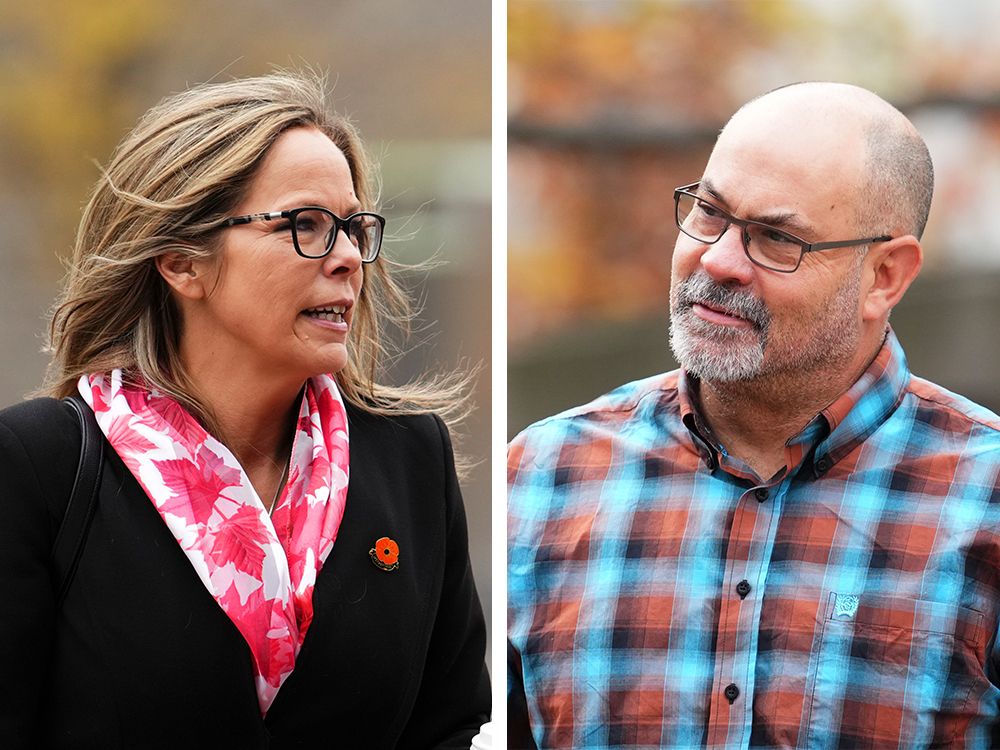
for Tamara Lich and Chris Barber, two organizers of the Freedom Convoy protest.
Both were convicted of mischief, but the Crown is seeking a minimum sentence of seven years in jail for Lich, and eight for Barber, who was also found guilty of counselling others to disobey a court order.
The Crown has argued that the disruptiveness of the Freedom Convoy blockades warrants the harsh sentence, but in a statement this week, Conservative Leader Pierre Poilievre said courts are throwing the book at Barber and Lich while simultaneously giving free reign to “rampant violent offenders” and “antisemitic rioters.”
It’s certainly the case that you can do an awful lot of heinous things in Canada before a prosecutor would ever think of asking for seven years. Below, a not-at-all comprehensive list of things you can do in Canada, and have the Crown seek a lighter sentence than the one they’re seeking for the organizers of the Freedom Convoy.
Sexually assaulting a baby
The accused can’t be named due to a publication ban, but he’s a B.C. man convicted of sexually assaulting his one-year-old daughter. Specifically, he rubbed his penis against the child’s exposed genitals while filming it on his cell phone.
In March, Crown prosecutors
for the man’s conviction for sexual assault, possession of child pornography and sexual interference with a minor.
Using a car filled with guns to ram into Justin Trudeau’s house
Defence lawyers for Barber and Lich have argued that the pair were active in keeping Freedom Convoy peaceful, and urging supporters away from violence. Ironically, there is another case also from the Ottawa area in which an anti-mandate demonstrator was much more violent in his demands — and yet still faced a lighter proposed sentence.
Months before Freedom Convoy ever got underway, an army reservist angry about COVID lockdowns
, smashed through the gates of the official prime ministerial residence and was stopped as he attempted to approach the residence to “arrest” then prime minister Justin Trudeau. The reservist’s crimes were much more serious than mischief; he was convicted of seven weapons charges and one charge of destruction of property. But the Crown in his case sought a sentence of six years.
Killing multiple innocent people via drunk driving
When it comes to crimes that kill people, vehicular manslaughter is routinely among the most lightly punished. There exist any number of examples of a Canadian driver killing someone through inattention or recklessness,
and getting off with nothing more
than a fine and a brief driving ban.
Even in cases where a drunk driver wipes out a whole generation of a family, a seven-year sentence would be considered on the tougher side.
Edmonton man Taylor Yaremchuk killed a senior couple while driving drunk in 2022. The Crown in his case sought, and received, a five-year jail sentence, with the sentencing judge
declaring it sent a “strong message.”
Five years was also the sentence sought by the Crown in the case of a Newfoundland man who took to the wheel after drinking all day at a 2019 music festival,
causing a crash that killed couple John and Sandra Lush
, and seriously injured their daughter and her boyfriend, who were in the back seat.
Stabbing a man to death because he told you to stop abusing your girlfriend
Under Canadian law, a convicted murderer has to spend at least 10 years in jail; that’s the mandatory minimum sentence for second-degree murder. Nevertheless, it’s common to see cases in which a killer receives only a few years in jail simply because the homicide they committed is prosecuted as manslaughter.
In 2018, 26-year-old Abeal Negussie Abera received fatal stab wounds in Downtown Vancouver after he attempted to intervene between a man yelling at his common-law spouse. “Yo, bro, she’s just a girl. You don’t have to treat her like that, calm down,” Abera reportedly said just before Benny Rae Armstrong plunged a blade into his chest.
, Crown prosecutors sought a five-year jail term for Armstrong.
Being a police officer who stalks and sexually harasses crime victims
Edmonton Police constable Hunter Robinz was convicted earlier this year not just for sex crimes, but for sex crimes against vulnerable women he would track down using his status as a police officer — sometimes forcing himself on the women while in uniform.
In one instance, Robinz returned a distressed and intoxicated woman to her apartment, only to spend two hours attempting to kiss her while ignoring calls from his police radio.
The Crown
sought two to three years for Robinz
, but in May a sentencing judge opted instead for six months.
Amassing enough child pornography to fill a video store
Joshua Stairs’s child pornography collection was tallied up by police as containing 7,170 videos and 1,148 images. At trial, Judge Johanne Lafrance-Cardinal said the images were so graphic, violent and disturbing that she occasionally urged lawyers not to detail their contents so as to spare court staff members. The ages of the victims depicted in the images ranged from four to 12.
The Crown sought three to three-and-a-half years for Stairs, and
.
Torturing a toddler to death
It’s not unusual that the killing of a baby or toddler will
yield a sentence of only a few years
, particularly if the killer is the child’s parents. But there were some aggravating factors in the death of Gabriel Sinclair-Pasqua, an 18-month-old who died in 2021.
Sinclair-Pasqua’s last days were spent in extreme pain after a scalding caused him to suffer burns across a third of his body. His parents not only refused to seek medical care, but in text exchanges they referred to the emaciated and screaming child as “a paycheque.”
The Crown
would end up seeking the exact same sentence
for the parents as that being sought for Barber: eight years in jail.
Shooting at police
In the summer of 2023 Siavash Ahmadi was pulled over by West Vancouver Police for suspected impaired driving. When instructed to retrieve his licence, Ahmadi instead reached into a bag of loaded guns, retrieved a pistol and fired at two officers from a distance of just two metres.
Admadi didn’t hit anyone, and neither did the officers when they returned fire. At trial last November, the Crown
sought a sentence of seven years
. Ahmadi ultimately received just four years, in addition to a $1,000 fine for impaired driving.
Intentionally ramming a car loaded with children and pregnant women
Michael Augustine, 60, pled guilty to a 2022 incident
to intentionally ram a minivan carrying his step-daughter, whom he had just threatened to kill.
The minivan, which was carrying a total of four children and two pregnant women, rolled multiple times before coming to a stop in the woods, 83 metres from the road. Miraculously, nobody was killed, despite one of the children being ejected from the crash.
Despite Augustine’s long history of violent criminal convictions, the Crown sought eight years, and Augustine was ultimately sentenced to five.
Beating a fellow homeless shelter resident to death
While staying at an Edmonton homeless shelter, Stanley Jago attacked a confused fellow resident who had been returning from the bathroom, beating the man so badly that he suffered a fatal seizure.
In the court proceedings that followed, Jago gained a reputation for unstable behaviour, such as threatening court participants or attempting to attack sheriffs.
Jago was convicted of manslaughter, and sentenced to five years —
than the five-and-a-half years the Crown had been seeking.
Raping a minor and bragging about it online
In arguing that 56-year-old Prakash Lekhraj didn’t feel any remorse for raping a teenaged girl, the Crown would only have needed to point to Lehkraj’s testimony that “he never needs to seek the consent of a female to have sexual relations with her.”
Lehkraj was convicted of both sexual assault and the production of child pornography for an August 2020 assault in which he photographed himself raping a minor before uploading the images to an online group chat. The victim “took it like a champ,” wrote Lekhraj.
The Crown
sought a sentence of four to five years
, but a judge went with three years and three months.
IN OTHER NEWS

Amidst Canada’s bid to fortify its economy against U.S. trade aggression, easily the most low-lying fruit has been the spectre of interprovincial trade barriers. The various regulatory issues that make it hard for provinces to trade with one another
cost the Canadian economy an estimated $160 billion per year
.
Nevertheless, despite
some early successes in knocking down the barriers
, a major setback occurred this week when Manitoba Premier Wab Kinew
with Alberta, Saskatchewan and Ontario that would commit all four provinces to collaborate on new pipelines, rail links and other infrastructure. Kinew didn’t sign on the grounds that no such projects should proceed without Indigenous “consensus.” That also happens to be the high standard that Prime Minister Mark Carney has suggested for any new federally administered infrastructure; that nothing gets built unless it has “a consensus of all the provinces and the Indigenous people.”

Get all of these insights and more into your inbox by
for the First Reading newsletter.