



The back-from-the-dead Law Commission of Canada is a distinctly Liberal institution that serves to churn out “independent and non-partisan” policy advice that coincidentally supports government priorities — or pulls them to the left. The genius in all this? It hides in plain sight.
Stephen Harper knew this very well, which is why in his first nine months in the prime minister’s office, he
it (and 66 other programs). The commission had existed since 1996, brought to life under Jean Chrétien, and was shuttered in 2006. Between those years, its projects covered child abuse in Canadian care, spousal rights and gay marriage, and lastly, electoral reform.
Among the last of the recommendations made by this first iteration of the commission was proportional representation, along with legal reforms requiring parties to help get more women and visible minorities in politics — a move that would give government far too much power over the operations of parties. It also
that Canada look into creating an Indigenous house of government.
Justin Trudeau
the forgotten project in 2023 because there was really no downside: the commission is an ideologically aligned think tank with all the conveniences of government. Naturally, it was given the express goal of furthering the issues that occupied the hearts and minds of the left, and laundering the “evidence-based policy” to help meet them. This was plain from the government officials who gleefully announced its progress.
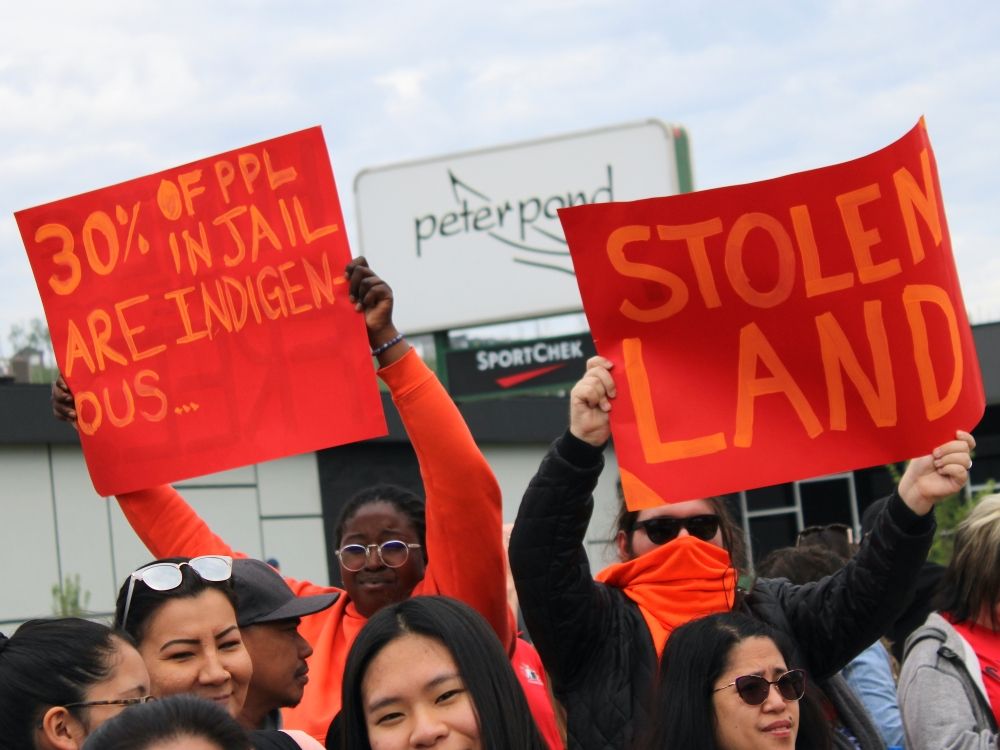
“The Commission will develop new approaches to the law to address systemic racism in legislation and the legal system and support reconciliation with Indigenous peoples,” read one government
from 2023. “Other important priorities like access to justice, legal issues around climate change and rapid technological shifts may also be considered.”
In 2022, back when the commission was seeking commissioners, these priorities were also
in its job postings.
As for the resulting commission, well, it was
by law to be diverse, not just in terms of legal background — which is sensible — but in terms of culture. The
is a McGill professor whose research focus is on children’s law. The lead
is a “civic organizer and trainer” and former spokesperson for the National Council of Canadian Muslims; she doesn’t have a law background, but rather, public policy.
Joining her in the office is one Aidan Johnson, a lawyer at the Niagara Community Legal Clinic and user of the prefix “Mx.” Kevin O’Shea is the sole openly male commissioner, and is the executive director of a different legal clinic further east. Then there’s Renée Cochard, the Alberta provincial court judge who set up the province’s Indigenous courts program (with mixed success, depending on who you ask). Not the most diverse group in terms of craft, but they certainly check all the boxes.
To their credit, they don’t beat people over the head with social justice. The commission’s
is bland; its budget is small (
per year — modest, in government measures); its top project at the moment has to do with charity law, a niche that most people don’t think or care about. Think-tank-like, it runs student photo competitions to engage those entering the profession.
But within all that mundanity sits an opportunity more open to radical change: the commission’s
which offers $20,000 to successful essay writers, is aimed at addressing concerns of stakeholders and “embracing complicated conversations, addressing breakdown of trust, contributing to common endeavours, and fostering constructive change.”
It doesn’t mean much until you examine those stakeholder concerns, which the commission compiles in an
. Included in these are radical notions of a decolonized legal system.
“There is a need for this shift to take place at the pedagogical level in universities, particularly because students are at the heart of decolonization,” read one piece of input in favour of politicizing education even further. Most law schools already mandate Indigenous courses (which are often taught with a heavy anti-Canadian bias). But for some activists, that’s simply not enough.
Another favoured the “recognition of Indigenous jurisdiction over environmental matters,” while other feedback spoke of a “multi-juridical future” in Canada that could be assisted by adding Indigenous legal traditions into law school curriulcums. Canada, for context, is a bijural system that uses both English common law and French civil law; some activists
that the notion of “Indigenous law” — a heterogeneous mix of tribal traditions that are often interpreted through the lens of far-left academics — should make up a third pillar of Canadian law that governs the lives of citizens. The federal justice department
making this so-called third order of law a reality.
We have every reason to believe these will resonate with the commission. Aside from its initial mandate, it published a bizarre navel-gazey
about intersectionality — one concept at the heart of progressive thought — written in the fluffy, philosophically shallow style of a diversity consultant’s website. For example:
“Intersections may prompt us to think of Canada in the world and of worlds within Canada, or of the complicated and perhaps permeable boundaries between human and non-human, whether living or artificial. Solidly grounded in the complex reality of law, the framing notion of intersection mandates ambitious creativity in delineating the scope of meaningful law reform.”
When the Law Commission of Canada starts rolling out publications, it will claim that its ideas were borne from extensive community consultations — and when the reforms it proposes just so happen to suit the government’s social policy desires, well, what a coincidence that will be.
National Post

