



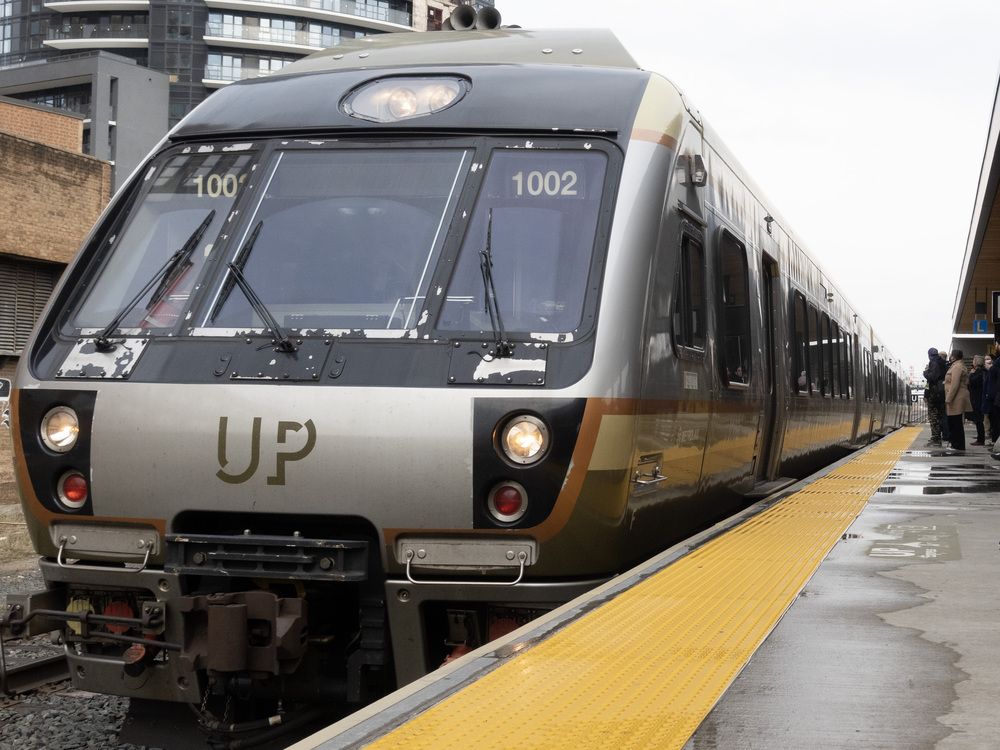
It gets harder by the week to distinguish Canada’s response to U.S. President Donald Trump’s protectionism from … well, protectionism, as opposed to something more sophisticated, calculated or intelligent.
that there’s no good reason for BC Ferries to pay over the odds for new vessels if a Chinese shipyard can build them on time and for the best price — but of course I understand the unique sensitivities around China, just as I do those around the United States.
But now consider
this headline from hell in the Toronto Star this week
: “Everyone wants the new TTC (Toronto Transit Commission) subway cars to be made in Canada.”
“Everyone” in this case is all three levels of government involved: Toronto city council, led by an NDP mayor; the provincial government, led by a Progressive Conservative premier; and the federal government, led by a Liberal prime minister. So, not
literally everyone
, though I get the sense we’re not far away from the latter, even as we’re supposedly trying to project a free-trading image to the world. Right and left are united, at least rhetorically, on the “buy Canadian” thing.
It’s a major step backward, and I worry its effects will long outlast Trump.
When Rob Ford won the Toronto mayoral election in 2010, bringing brother Doug along with him to city council,
one of their major complaints against former mayor David Miller
was that under his watch, the city had paid far too much for new subway cars in order to ensure they were built by Bombardier in Thunder Bay, Ont. — which is more than a 15-hour drive from Toronto, and which many Torontonians probably couldn’t place on a map.
As the “Canada is not for sale” premier, Doug Ford is now David Miller. “I am requesting that the City of Toronto recognize this historic opportunity and consider a sole-source procurement with Alstom, which would support Ontario workers in Thunder Bay and across our province,” Ford’s provincial Transport Minister Prabmeet Sarkaria
. (Alstom, a French company,
gobbled up Bombardier Transportation in 2021
.)
“With the procurement of these subway trains, I am supportive of any action that accomplishes a build Canada option in a manner that is consistent with the city of Toronto’s legal obligations,” federal Infrastructure Minister Gregor Robertson wrote to Mayor Olivia Chow this week.
Any
action? If I’m Alstom right now, I’m seeing nothing but dollar signs.
It’s one thing to rule out American or Chinese companies. I wouldn’t — the best deal is the best deal — but it’s at least coherent: China is not a Canadian ally, and Trump is taking dead aim at the Canadian economy. But the past few decades have seen a very welcome move away from protectionism in public-transit procurement.
Vancouver has
. Edmonton has
and
. Calgary uses some of the same German-built Siemens cars as Edmonton does. The rail link between downtown Toronto and Pearson Airport
. Heck, even Via Rail — Montreal-based, Quebec-dominated, sclerotic federal Crown corporation Via Rail! — chose Siemens for its new Windsor-to-Quebec City corridor trains.
They were built in California.
This was progress. Every dollar we save by getting the best deal on subway or intercity trains is a dollar that remains at Canadians’ disposal to do something useful with. Even if we rule out Chinese or American rolling stock, and even if the South Koreans, Germans, Spaniards, Czechs or other rolling-stock-producing countries don’t have suitable bids to offer, we could at least maintain the
illusion
of a competitive process. Sole-sourcing these things on principle telegraphs to the world precisely the opposite message we’re trying to communicate: free trade good; protectionism bad.
Or at least, I
thought
that was the message we were trying to telegraph. Some tall foreheads
want us to join the European Union
, for heaven’s sake. The idea makes no earthly sense, but it certainly indicates an openness to free trade between sovereign nations. (Canada
already has a free-trade agreement with Europe
, of course.)
Many of us, not least politicians, seem instead to be sleepwalking in the other direction.
“We’re strengthening Canada’s steel industry,” Finance Minister François-Philippe Champagne
: “curbing foreign imports with tightened TRQs (tariff rate quotas) and 25 per cent tariffs on steel melted and poured in China, investing $1 billion in producers/workers, and mandating procurement to source domestic so that nation-building projects are made with Canadian steel.”
“Isn’t this basically how Trump is justifying tariffs on everything?” University of Alberta
economist Andrew Leach asked on X
.
Yup. Pretty much.
National Post
cselley@postmedia.com

