



This week offered a couple of insights into Canada’s
slow, overburdened and massively backlogged refugee system
. Both suggest the need for serious, long-overdue systemic change.
The first case involves Angel Jenkel
, a gender non-binary American. She hadn’t actually claimed refugee status, it seems, but rather overstayed her visitor visa. But the result is being hailed as precedent-setting by
those who argue Canada ought to offer LGBTQ Americans asylum
: A Federal Court judge recently ordered Jenkel’s scheduled deportation stayed, arguing the “pre-removal risk assessment” — which anyone being deported from Canada can request, including failed asylum claimants — hadn’t taken into account the current conditions in Donald Trump’s United States.
Jenkel may yet be deported. But it’s quite silly nonetheless. Leave aside for now the fact
about how dreadful it is to be transgender or otherwise gender-non-conforming in Canada. The fact is, the United States has Portland, San Francisco, Las Vegas and
other famously LGBTQ-friendly cities in it
— indeed, more LGBTQ-friendly cities to choose from, and more cities period, than in Canada. Not wanting to move to another part of your country has never been justification for claiming asylum in another.
“I … fear not being able to travel to see my family, as most of my family lives in the South, which has already been deemed unsafe for transgender people to travel,” Jenkel told the Globe and Mail — rather oddly, because there’s nothing Canada can do to remedy Jenkel’s travel wishes.
Meanwhile, goodness only
knows how many LGBTQ people are living under threat of persecution
in countries that offer no areas of respite or sanctuary whatsoever. Only they don’t get nearly as much press in Canada as Americans. This is a classic example of how many of Canada’s refugee advocates can’t see past the ends of their noses.
Meanwhile,
United Way Greater Toronto released a study
finding that asylum-seekers who settle in Canada’s biggest city from Africa are having a tough go of it. Major obstacles identified include housing, employment, recognition of foreign credentials, language barriers and insufficient legal support.
Well … yeah.
Everyone
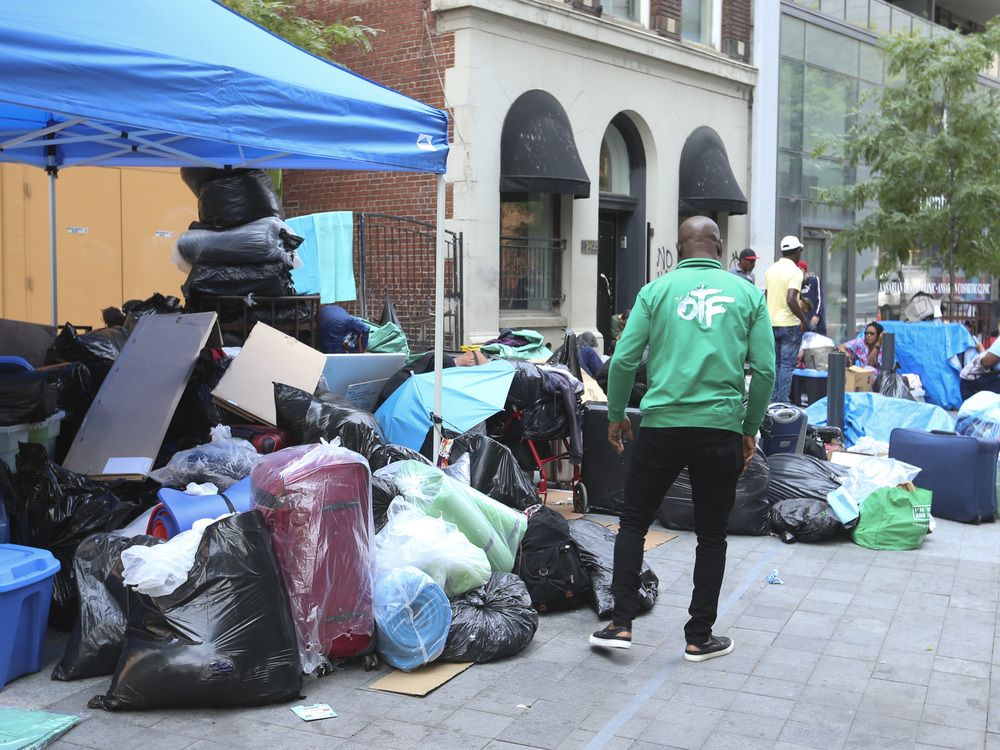
is struggling with housing. Toronto’s shelter system was so overtaxed in 2023 that
this supposed “sanctuary city,”
led by a supposedly progressive mayor, barred refugees from the city’s homeless shelters.
They formed a makeshift encampment on a sidewalk downtown
, before several evangelical churches stepped up to offer them food and shelter on their own dime.
Language barriers? If you don’t speak English, and if you’re not part of a very well-established ethnic community in the city, then … yeah, you’re going to have trouble. (As of the 2021 Census, just six per cent of immigrants to the Greater Toronto Area came from Africa.) Mistrust of foreign credentials? Again, as our former prime minister Justin Trudeau might say, welcome to Canada. Some credentials
can’t even cross provincial boundaries
.
Insufficient legal support? That checks out too. Google “Ontario legal aid crisis” and just watch the results flow in. (Aspiring refugee claimants might want to do that before they come.)
The simple fact is, Canada is not equipped to handle as many refugee claims as we currently accept. If we were, there wouldn’t be African migrants sleeping on Toronto sidewalks. There wouldn’t have been 281,000 pending asylum cases as of March 31.
Prime Minister Mark Carney’s Liberal government is certainly aware of the issue.
Bill C-2 proposes a one-year deadline
after arriving in Canada for claiming asylum — so people with expired or revoked visas couldn’t apply, for example — and to eliminate a loophole in the Safe Third Country Agreement that allows illegal border-crossers who evade capture for two weeks to apply for asylum nevertheless.
Both are entirely reasonable. But the current issue of The Economist,
cover headline “Scrap the refugee system,”
suggests the sort of wholesale changes to the
global
refugee system that I have been arguing for forever. It’s interesting not so much as a piece of journalism as it is to know that liberal (and Liberal) policymakers very much tend to read The Economist.
“About 123 million people have been displaced by conflict, disaster or persecution. … All these people have a right to seek safety,” the magazine’s editorial observes. “But ‘safety’ does not mean access to a rich country’s labour market. Indeed, resettlement in rich countries will never be more than a tiny part of the solution.”
The goal, the august organ argues, should be for refugees to receive asylum closer to home — ideally in culturally and linguistically similar countries whose population will tend to be more sympathetic. For the money that rich countries spend processing everyone who manages to make it to their shores — who are generally by definition
not
the world’s most imperilled or downtrodden, else they wouldn’t be able to get here — they could help
vastly
more people to safety, even if not First World prosperity. (The latter was never the goal of the current system.)
This is an idea that would require multilateral co-operation to achieve full bloom, of course. But many First World countries are far more hostile to asylum-seekers, if not immigrants in general, than Canada is. If Canada significantly restricted refugee claims made on Canadian soil, and instead refocused its efforts on helping people find refuge closer to home, it would set a useful example — not least because we have been so welcoming, to a fault, in the past.
National Post
cselley@postmedia.com

