



First Reading is a Canadian politics newsletter curated by the National Post’s own Tristin Hopper. To get an early version sent directly to your inbox, sign up here.
TOP STORY
As Canada is actively trying to expand its trade with the non-U.S. world, Parliament has just entrenched the one thing that has scuppered more trade negotiations than anything else.
This week, the first bill passed by the 45th Parliament ended up being a Bloc Québécois-championed proposal to shield the Canadian supply management system from any foreign trade negotiations.
Bill C-202, which passed the Senate on Wednesday, bars the Department of Foreign Affairs from negotiating any trade deal that liberalizes foreign access to Canada’s heavily tariffed dairy and egg sector.
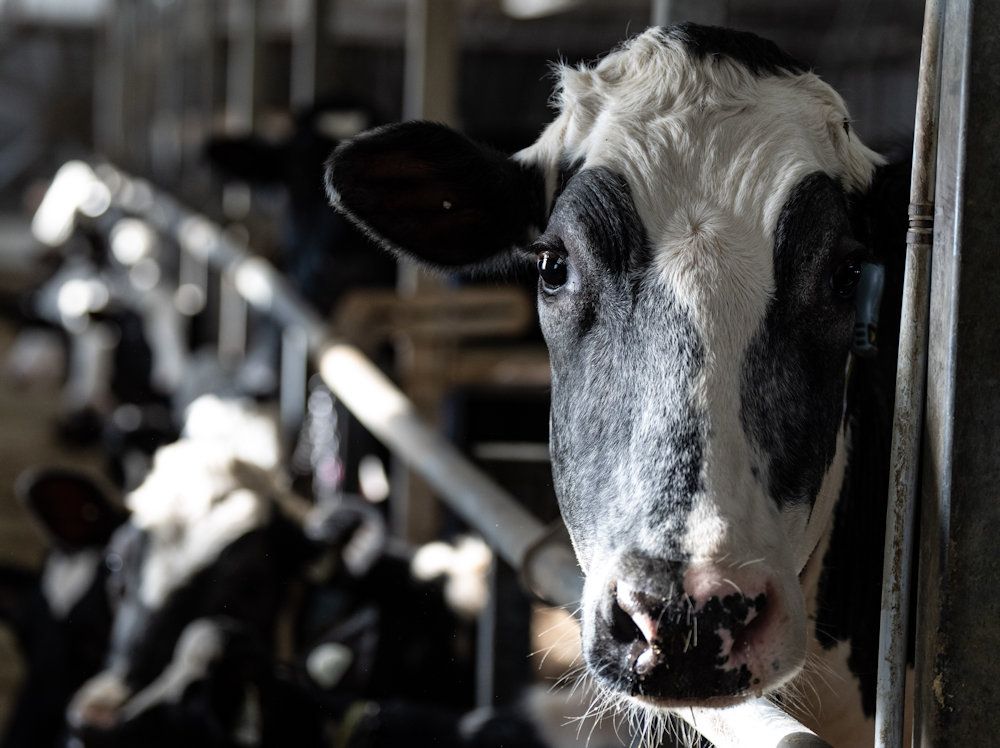
Although the bill has been framed as a boon to the country’s 9,000 dairy farms, everyone from trade analysts to other Canadian farmers have warned that it comes at the cost of kneecapping Canada’s ability to grow its global trade links.
The Grain Growers of Canada trashed the bill, saying it scares away trade partners at the precise moment that Canada needs to find more of them. “For grain farmers who rely on access to international markets, the result will be less ambitious trade agreements, fewer export opportunities, and slower economic growth at home,” said Kyle Larkin, the group’s executive director, in a Wednesday statement.
The Canadian Agri-Food Trade Alliance (CAFTA) similarly framed C-202 as throwing a wrench into Canada’s “accelerated trade diversification agenda.”
“At a time when Canada must be demonstrating leadership and consistency in defending predictable, rules-based trade, this bill sends the wrong message,” CAFTA said, in a press release.
Supply management has directly led to the collapse of at least one major Canadian trade deal, and has held up negotiations on several others.
In January 2024, the U.K. walked away from negotiations for a bilateral trade deal with Canada over Ottawa’s refusal to compromise on supply management and accept increased imports of British cheese.
During 2015 negotiations for the since-cancelled Trans-Pacific Partnership, Canada’s refusal to allow free trade access to its dairy sector wound up becoming one of the deal’s most conspicuous snags.
As U.S. negotiator Darci Vetter said at the time, Canada was trying to close a “market access” deal that “doesn’t include market access.”
A 2016 trade agreement struck with the European Union was secured only after Canada agreed to liberalized European access to the Canadian dairy market — but at the cost of billions in compensation paid to dairy farmers.
Under the terms of Bill C-202, no such compromises would be allowed.
First established under the government of then prime minister Pierre Trudeau in the 1970s, supply management effectively functions as a state-managed cartel for the production of dairy, poultry and eggs.
Supply managed goods are all subject to price fixing by centralized marketing boards, which also set quotas controlling how much each farm is allowed to produce. Any surplus produced outside the quota has to be destroyed. In the dairy industry alone, this usually works out to several hundred million litres of dumped milk each year.
Supply management doesn’t work without a strict program of import quotas and prohibitive tariffs, as the entire purpose of the system is to keep prices artificially high by controlling the amount of product allowed into the Canadian market.
Any grocer looking to import foreign cheese or dairy must apply for a special import permit that is then subject to tight quotas. Any imports outside the quota are hit with some of the highest tariffs in Canada, with rates of at least 200 per cent.
The system is not only a constant bugbear for trade negotiations, but it’s also perennially landing Canada in foreign trade disputes — often for cases that it ends up losing.
In 2018, Canada joined the Comprehensive and Progressive Agreement for Trans-Pacific Partnership (CPATPP), an 11-member free trade pact mostly comprising Pacific Rim nations.
Almost immediately, Canada would become the target of the agreement’s first major trade dispute, when New Zealand took Ottawa to task for a failure to approve dairy import quotas.
Canada had been allowed into CPATPP on the grounds that while it could retain its supply management system, it would at least be required to extend favourable dairy import quotas to the other signatories.
When Ottawa simply refused to grant the quotas to importers, New Zealand took Canada before a panel of arbitrators, who ended up siding with the Kiwis.
Supply management was also at the core of one of the first disputes launched under the United States-Mexico-Canada Agreement. There again, Canada was accused of agreeing to quotas that it then never authorized.
In Senate testimony last November over an earlier version of Bill C-202, C.D. Howe Institute economist Daniel Schwanen warned that any entrenchment of supply management would come at the expense of hampering the “99 per cent” of the Canadian economy that doesn’t fall within a supply managed industry.
“Other Canadian sectors that depend on open international trade — including the bulk of Canada’s agriculture — generate jobs, government revenues, and of course exports that are overwhelmingly more important,” said Schwanen.
Sylvain Charlebois, a Dalhousie University agri-food researcher who is one of the country’s leading critics of supply management, wrote in an op-ed this week that Bill C-202 serves only to turn Canada into a “trade pariah.”
IN OTHER NEWS
Bill C-5, the legislation that would allow Prime Minister Mark Carney to suspend one of 13 federal laws in the service of a company or development project, is proving to be remarkably popular among conservatives. Conservative MPs have signalled they will vote for it, and conservative premiers such as Alberta’s Danielle Smith and Saskatchewan’s Scott Moe have given it the thumbs-up. The only real pushback it’s getting from mainstream political circles is a warning that giving massive, unchecked unilateral powers to the prime minister to approve some projects and not others might eventually turn out to be a bad idea. That particular warning comes via a Liberal MP, of all people. B.C.’s Patrick Weiler told National Post that he liked the extraordinary powers outlined in the bill, but was worried they “could be used in bad faith by a future government.”

Get all of these insights and more into your inbox by signing up for the First Reading newsletter.

