



Damn the torpedoes! Canada’s Liberal government is taking aim at defence — and it’s about time.
This week, Prime Minister Mark Carney announced that Canada will hit the NATO benchmark of 2 per cent of GDP on defence spending this year, instead of waiting for 2032, deploying an additional
. Ever the banker, he’s also deploying some accounting manoeuvres, shifting $16 billion from the ledgers of other departments to the defence budget to bring it up to the required amount. But that is in line with the tabulations of other NATO countries — and is something predecessor Justin Trudeau should have done, so that Canada would have appeared to be less of a defence laggard for the last decade.
But better late than never — and perhaps, just in time.
Carney’s announcement comes just weeks ahead of both the G7 summit he is hosting in Kananaskis, Alberta and a meeting of NATO leaders later this month in The Hague. The change sends a message to both U.S. President Donald Trump and E.U. allies that Canada means business on defence. Together with the government’s border security bill announced earlier this week, Carney is paving the way for a trade deal, or at least some relief from tariffs, with the United States.
His spending boost will sit well with his recent pledge to join ReArm Europe, in light of upcoming NATO demands that members spend 5 per cent of GDP in coming years, instead of two. Carney also gets a gold star for
. The government will beef up salaries, recruitment and retention of troops, finally acknowledging that new equipment is pointless without skilled personnel. Ottawa will also overhaul the procurement process, a boost for the Canadian defence industry which could offset some of the costs to taxpayers through job creation and revenue. That could also help sell future spending hikes: while
two thirds of Canadians support spending 2 per cent on defence, there’s not much appetite for five.
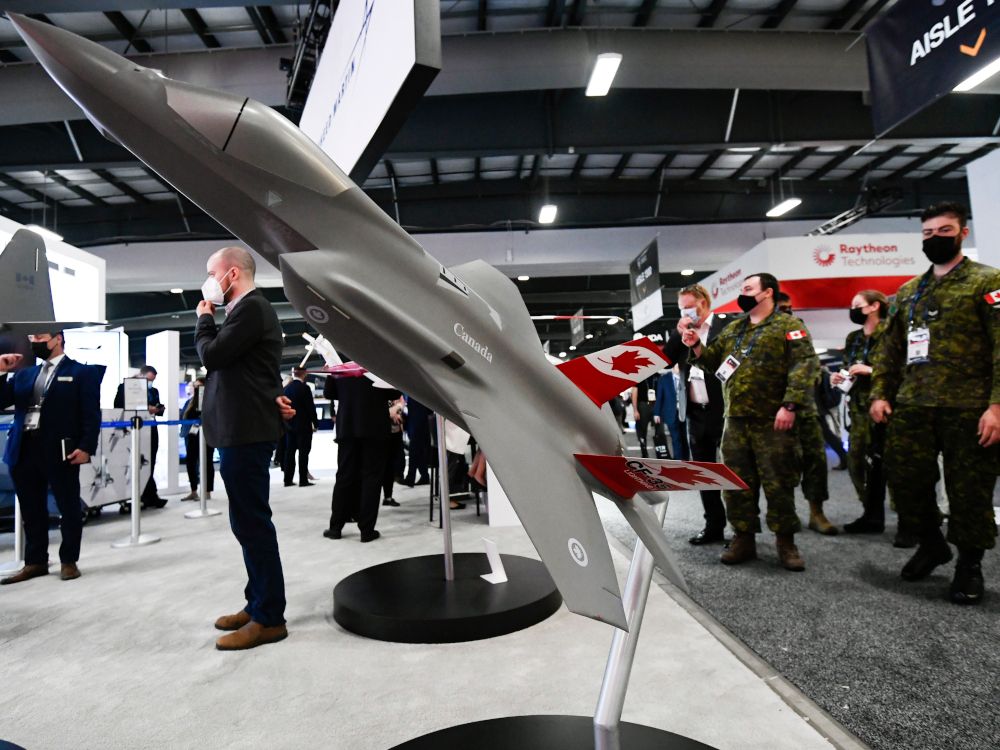
But as always, a landmine looms on the horizon: in this case, the infamous F-35 program.
On Tuesday, Auditor-General Karen Hogan
. Canada’s planned fleet of 88 F-35 jets is now projected to cost nearly 50 per cent more. It has ballooned from $19 billion in 2022 to a staggering $27.7 billion in 2025, and that’s before factoring in infrastructure upgrades, weapons and inflation. Hogan’s audit was brutal: the Department of National Defence relied on outdated cost estimates, ignored improved data, and has no coherent contingency plan in place. Infrastructure to house the jets is running three years behind schedule, with some bases not expected to open until 2031. The RCAF is also short on qualified pilots — something it knew back in 2018, but which for the previous government was presumably not a priority.
Canada needs stealth fighters. We don’t, however, need another lake of red ink. Instead of sticking with 88 F-35s at
$27 billion-plus for the fleet
, Canada should look at Sweden’s Gripen, Boeing’s Super Hornet, or a mix of planes. If Carney approves the F-35 as-is, that failure will become the focus, instead of his ambitious plans to rearm. While Defence Minister David McGuinty
hasn’t committed to a review of the project
, saying only that he’d ensure that the auditor general’s recommendations will be “fully integrated” into his department. But he should, especially now that Canada is also building stronger ties with Europe, be considering where some of these planes could be sourced.
The reality of modern warfare is also changing, pivoting from planes to drones and battlefields to cyberspace. While the proposed spending spree would drop money on both, the trend to smarter spending versus splashing out of big shiny toys could help keep costs down. Ukraine has made significant use of three hundred dollar drones, recently taking out $100 billion dollar Russian bombers in a
.
That’s the kind of smart thinking Canada’s government should copy as it rebuilds our military for the future — one that looks increasingly grim.
National Post

