



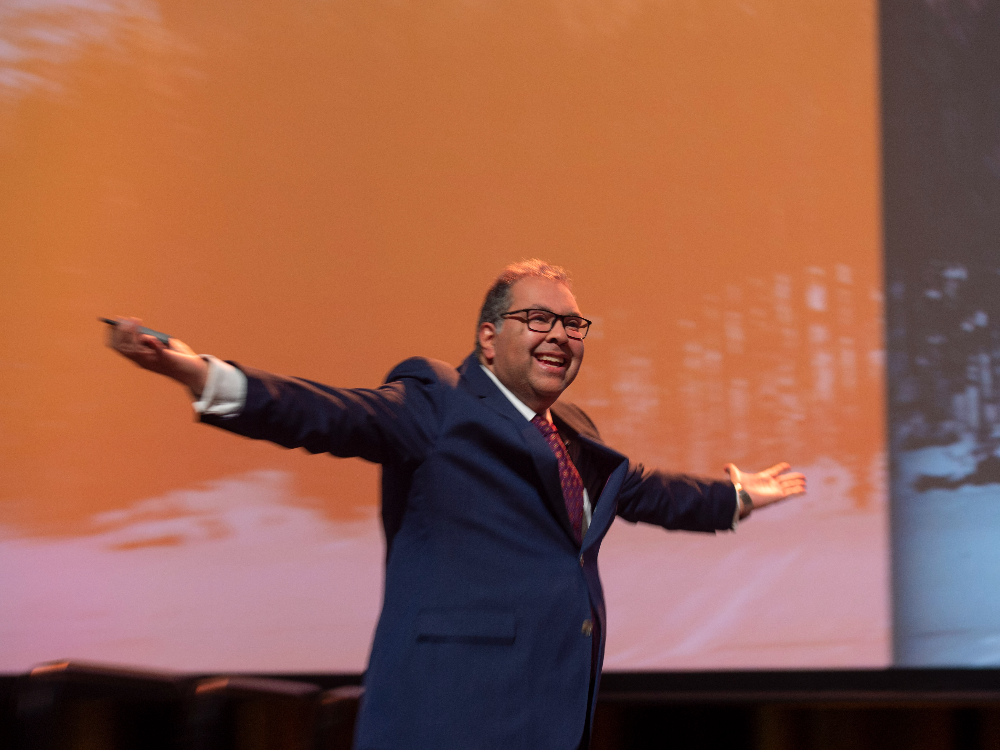
It did not receive much notice in Central Canada, and if it had, it might have been seen as bad news for the beleaguered federal New Democrats. But the Alberta NDP’s recent decision to uncouple somewhat from the federal NDP might actually help drag
the national party’s proverbial Maserati out of the proverbial ditch
where Jagmeet Singh left it in a cloud of steam.
As schisms go, it’s not what you would call violent: Delegates to the
Alberta NDP convention in May voted to end the practice
by which taking out a membership in the provincial party automatically came with membership in the federal party. Henceforth, provincial party members can “opt out” of buying into the totalled Maserati.
It could well just be symbolic
.But symbolism can matter. The NDP has been unusual in this “one party” approach. Provincial parties called “Liberal” aren’t necessarily affiliated with the federal Liberals (Quebec’s are not and British Columbia’s were not, notably) and nor are parties called “Conservative” or “Progressive Conservative” necessarily part of the same hive mind, never mind the conservative Saskatchewan Party or Alberta’s United Conservative Party.
The federal NDP are often described by their detractors as fringe or unbendingly “ideological.” But they have a plenty big enough tent: Under the orange canvas you could find blue-collar workers, Big Labour, university campuses, the idle progressive urban rich, the urban working class, farmers, North-of-60ers, and, for a while, even Quebec nationalists.
For all its radical elements, since its Jack Layton-led era at least, the federal party has usually been capable of sorting out these differences and keeping support at a reasonable level. But at this point there just aren’t enough people left under the big tent anymore. On April 28 the campers broke hard and en masse for the parties that might wind up governing, and NDP stalwarts were left congratulating themselves on holding a balance of power with just seven measly seats and no official-party status.
The way you get people under your big tent isn’t to give them everything they want all the time. Conservatives accept (if grudgingly) that the power within their movement oscillates between (very simplistically speaking) old-guard Tories and more Reform party-influenced people. Less grudgingly, because their party exists for no purpose other than to wield power, Liberals accept that they’ll have centre-left/nihilist leaders like Justin Trudeau and dead-centre or even centre-right leaders like Jean Chrétien and Paul Martin.
Mark Carney cuts the ultimate Laurentian-elite figure, but he did grow up in Edmonton, which is a bit risqué from a Liberal standpoint. Before Carney, the party’s leaders had grown up (in this order) in Montreal, Toronto, Quebec City, Ottawa, Shawinigan, Ottawa, Montreal, Hamilton … you get the picture.
The federal NDP have been stuck in Central Canada mode for nearly as long: Jagmeet Singh is from Toronto; his predecessor Tom Mulcair is from Montreal, and for all his perspicacity never really made much sense as party leader; Layton before that cut his political teeth in Toronto, yet somehow his upbringing in the arch-anglophone Montreal suburb of Hudson
played to his advantage in francophone Quebec
. That’s not something the party will ever be able to replicate. No one is quite sure how it happened the first time.
It’s an interesting fact that only one person, the little-remembered John Thompson, has ever served both as a provincial premier (Nova Scotia) and as prime minister (he was Canada’s fourth, dying in office quite spectacularly of a heart attack at Windsor Castle in 1894). But there’s no reason a premier couldn’t or shouldn’t become PM, and the NDP — more than any other nationwide party, probably — should want to break that streak.
Say what you will about British Columbia NDP premier David Eby, or former Alberta NDP premier Rachel Notley or her successor Naheed Nenshi, or Saskatchewan opposition leader Carla Beck (whose NDP hold 27 seats to the Saskatchewan Party’s 34), or Manitoba NDP Premier Wab Kinew, but they’re all heavy hitters compared to the low-energy types that find themselves leading the Ontario and federal parties.
There is clearly an expectation of winning in certain provincial capitals that does not exist among New Democrats at Queen’s Park or on Parliament Hill — which is especially odd considering the provincial and federal parties so freely trade strategists and staffers. To pick just one prominent example: Montreal-born-and-bred Brian Topp, who ran for the party leadership against Mulcair after Layton’s death, was Notley’s chief of staff in Edmonton, and had previously been Saskatchewan NDP Premier Roy Romanow’s deputy chief of staff in Regina.
Lately he has been reduced to crowing
about how great the federal NDP’s supply-and-confidence deal was with the Trudeau Liberals. It’s just weird. Maybe what the party needs is a proper, public civil war.
In any event, if federal New Democrats want to be relevant again other than mathematically — never mind want to govern — they would do well to stop pretending they have anything much in common with their successful provincial comrades in Victoria, Edmonton, Regina and Winnipeg. And their comrades in those provincial capitals would do well to separate themselves from decades of wretched failure by the federal party — even if only symbolically. They’re just not playing in the same league. In practice, they simply aren’t the single party they claim to be.
The provincial parties, some of them anyway, are interested in governing. The federal party … isn’t.
National Post
cselley@postmedia.com
Get more
deep-dive
National Post political coverage and analysis in your inbox with the Political Hack newsletter, where Ottawa bureau chief Stuart Thomson and political analyst Tasha Kheiriddin get at what’s really going on behind the scenes on Parliament Hill every Wednesday and Friday, exclusively for subscribers.
Sign up here.

