



First Reading is a Canadian politics newsletter curated by the National Post’s own Tristin Hopper. To get an early version sent directly to your inbox, sign up here.
TOP STORY
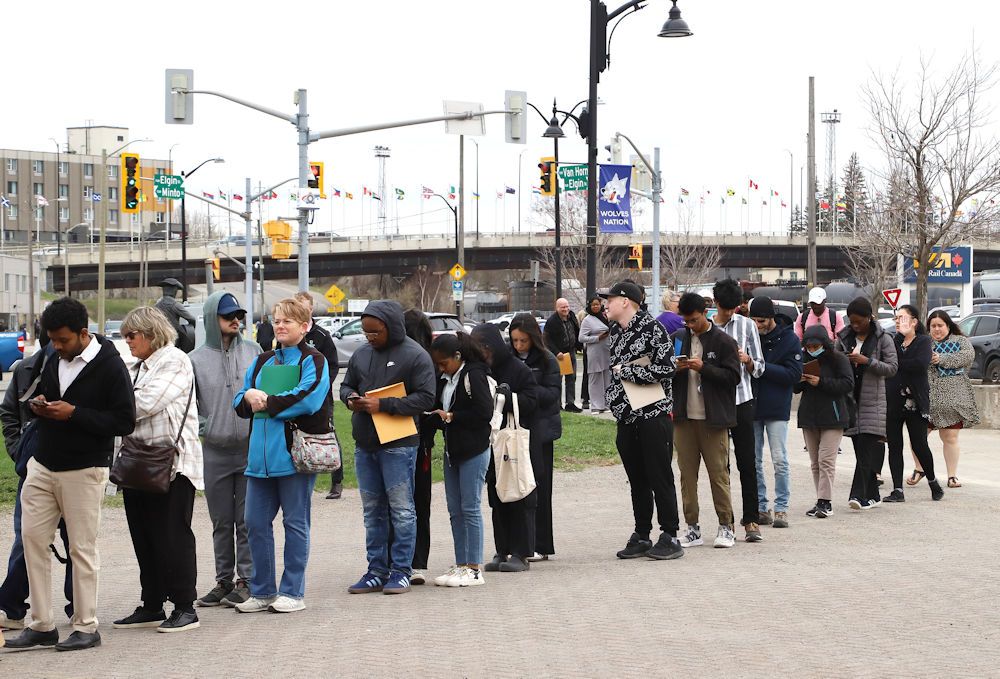
Canada’s youth are staring down the worst summer jobs market in two decades; the latest sign of a Canadian economy whose shortcomings are disproportionately hammering the young.
According to new data published by the job site Indeed, summer job listings are down 22 per cent as compared to this time last year.
“Postings were down 32 per cent for summer camp roles, while other jobs like painters, lifeguards, and customer service representatives also fell from the same point in 2024,” says an
analysis by Indeed economist Brendan Bernard
.
Canadian jobs numbers have been lacklustre for several years at this point, with the true extent of the decline often patched up by a record expansion of the civil service
In February, for example, Canada technically experienced a net gain in jobs, but it was due entirely to government hires. That month, the private sector lost 16,400
, while the public sector
.
And that’s all set to get worse, driven in part by ongoing trade uncertainties between the United States and Canada. This week, TD Bank’s chief economist Beata Caranci forecast that Canada
in 2025, with the likely loss of another 100,000 private sector jobs.
Since at least the COVID pandemic, the Canadian economy has been an inordinately hard row for anyone under 30.
In a
the non-profit King’s Trust Canada outlined what it called a “crisis” of youth unemployment. “One in every four unemployed persons in Canada is under the age of 25,” it wrote, noting that the gap between adult and youth unemployment was hitting all-time highs.
Last summer, of the 4.6 million Canadians aged between 15 and 24,
, meaning they had tried and failed to find work. This was more than double the national unemployment rate of 6.4 per cent.
Added to this is that young Canadians are also at the sharp end of the housing unaffordability crisis.
At the exact same time that they’re finding it harder to get work, young people are disproportionately shouldering the impacts of skyrocketing rents and home prices.
As far back as 2021,
of Canadians aged 25 to 29 were renters, with the cohort increasingly unable to afford any kind of home ownership. In one
particularly illuminating Ipsos poll
from August, 89 per cent of respondents under the age of 34 reported agreeing with the sentiment that “owning a home in Canada is now only for the rich.”
As to why youth unemployment is getting hit hardest, one easy answer is that Canada has admitted record levels of low-skilled migrant workers, most notably via the temporary foreign worker program.
According to Indeed’s analysis of the 2025 summer job market, “growth in youth employment has fallen far short of rapid population growth over the past two years.”
In 2024, for instance, the federal government approved the intake of 191,630 temporary foreign workers, more than double the 83,995 approved in 2018, according to a recent analysis of Immigration, Refugees and Citizenship Canada (IRCC) data done by the
Metropolis Institute and the Association for Canadian Studies.
Analysts have long warned that the scale and speed of the increase was serving to depress wages and distort the Canadian labour shortage.
In late 2023, former Bank of Canada governor David Dodge warned in a report that Canada had opened up a “large and rising inflow of workers with lower skills.” “The last thing we want is a bunch of low-productivity businesses hanging on because we provide them cheap labour,” Dodge
said in an interview at the time
.
Last September, University of Waterloo labour economist Mikal Skuterud
that the notion of “labour shortages” requiring foreign workers was a “self-serving narrative mostly coming from corporate Canada.”
King’s Trust Canada also made the connection between migrant workers and youth unemployment, noting that the uptake in temporary foreign workers had been most conspicuous in sectors most likely to hire young Canadians.
Between 2016 and 2023, the rate of TFWs working in restaurants increased by 634 per cent, while those working in the retail sector increased by 456 per cent.
Starting in October, the federal government began to dial back immigration numbers, even admitting that they’d let in unsustainable rates of newcomers.
“We could have acted quicker and turned off the taps faster,” then prime minister Justin Trudeau said at the time.
But temporary foreign workers have remained the one immigration stream noticeably untouched by the changes, the analysis by the Metropolis Institute shows.
In the first quarter of 2025, Canada admitted 44,675 temporary foreign workers — which is actually slightly higher than the 42,730 admitted during the first quarter of 2024.
The fact that Canada’s worsening economic gloom is disproportionately being absorbed by the young may explain the simultaneous phenomenon of young Canadians becoming increasingly conservative in their leanings.
One trend that came to define the 2025 federal election was that the Conservatives found one of their strongest bases among voters under 35, while Liberal support was dominated by the over-55 set.
Jamil Jivani, one of the Conservative MPs re-elected on April 28, this week launched a petition to end the temporary foreign worker program outright, citing it as a contributor to youth unemployment.
“In Ontario, Tim Hortons hired at least 714 temporary foreign workers in 2023, up from just 58 in 2019,” Jivani
. “This surge has increased competition for entry-level jobs, making it harder for young Canadians to find work.”
IN OTHER NEWS

The final results of a judicial recount in the Newfoundland riding of Terra Nova-The Peninsulas was released Friday, showing that it was won by the Conservatives
. The win ensures that Prime Minister Mark Carney will remain at the helm of a minority government. The Terra Nova-The Peninsulas win puts his caucus at 169 seats, three short of a majority. It also means that the various recounts resulting from the 2025 federal election have redound to the equal benefit of the Liberals and Conservatives. Of four judicial recounts resulting from the 45th general election, two were won by Liberals, and two by Conservatives.
Get all of these insights and more into your inbox by signing up for the First Reading newsletter.

