



Could the Energy East pipeline project, which was abandoned by TC Energy nearly eight years ago, come back from the dead? There have certainly been some positive signs.
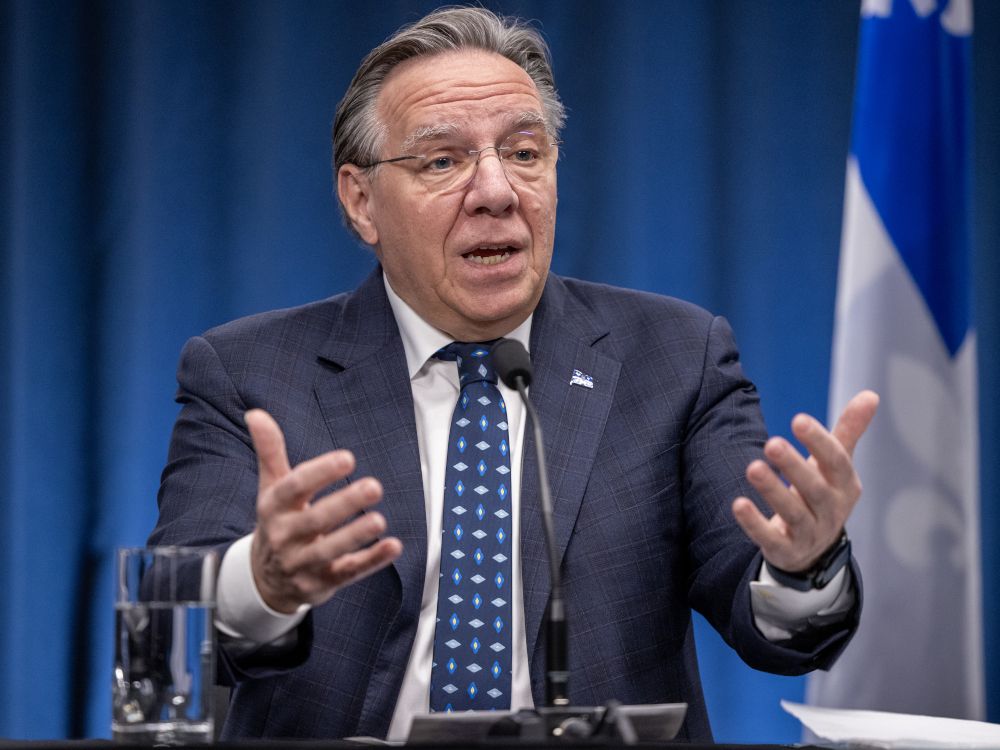
During the recent election campaign, Prime Minister Mark Carney, pledged to build “energy corridors” for both conventional and clean energy. And last week, Quebec Premier François Legault, who rejected the idea of an west-east pipeline for Alberta’s “dirty energy” in 2018, said that U.S. President Donald Trump’s election had changed many Quebecers’ minds about the project.
“Quebecers say it’s not true that Trump will control the oil we produce in Alberta,”
. “So can we export it to Europe via Quebec rather than be stuck with Trump? There’s an opening, I feel things are moving.” He added that it may now be possible to gain social license for such a project. Indeed, a
found that 59 per cent of Quebecers wanted the Energy East project to be revived.
I have been in favour of the Energy East project since its inception. As an editorial writer, I defended it in La Presse. I did the same when I became a senator. My position has not changed, but the business environment has. Moreover, Quebecers’ support for the project, as expressed in public opinion surveys, remains very fragile.
Presently, no companies have stepped up to propose another west-east pipeline. This may change, but many factors will cause pipeline companies to hesitate. According to the
(IEA), global demand for oil will stop growing in 2030 — a mere five years from now. As demand cools off, the IEA predicts that surplus supply will grow to “unprecedented” levels.
Of course, similar projections regarding “peak oil” have been proven wrong before. Still, with this much uncertainty, what company would launch a massive infrastructure project that, a decade ago, was projected to cost over $15 billion?
Legault’s change of heart is certainly good news. But note that the project he is speculating about is very different from the original Energy East. The premier is talking about a pipeline that would run through Quebec’s sparsely populated north to the Port of Sept-Îles, 900-kilometres north-east of Montreal, from where oil would be exported.
Energy East crossed the province’s densely populated south, through the Montreal and Quebec City regions and onward to New Brunswick for export purposes. Presumably, there would be fewer objections from Quebecers if the pipeline crossed regions with fewer people, as Legault proposes. But agreements with the concerned Indigenous nations would be required, and their support is doubtful.
There are several reasons why Energy East was opposed by a majority of Quebecers. From the very start, environment activists fought the project and TC Energy was left alone in countering them. Few politicians — federal, provincial or municipal — were willing to defend it.
Furthermore, TC Energy made crucial mistakes in the early planning of the endeavour, mistakes that made Quebecers distrustful. Indeed, TC Energy did not sufficiently consider the fact that Quebecers are not familiar with the oil industry’s infrastructure.
Although they consume their share of gas for transportation, they have been told for decades that most of Quebec’s energy is clean, which has become a matter of national pride. Selling the construction of a giant oil pipeline in the province was always going to be a challenge.
Trump’s election may have changed a lot of things, but I suspect that if one were to dig into Quebecers’ minds deeper than a poll can, one would find a fair level of skepticism about the oil industry. It would not take much to have that view resurface. This would probably happen the moment a concrete proposal is put on the table, when people realize that the future pipeline would pass through their neighbourhoods.
I wish I could say that Quebecers are ready to accept a new Energy East-style project as a show of solidarity with western-Canadians. But this is simply not the case. Many Quebecers are convinced that fighting climate change requires ending the production of oil, especially from the oilsands.
They also fear the risk of leaks, a concern that arguments based on mathematical probabilities usually fail to overcome. It is true that Ottawa has jurisdiction over inter-provincial pipelines and therefore could choose to simply ignore Quebecers’ objections. However, forcing a pipeline down peoples’ throats is not a wise approach, and the political cost for Mark Carney’s government would be extremely high.
For all those reasons, Energy East’s resurrection will probably, and unfortunately, remain nothing more than a dream in a few politicians’ minds.
National Post
André Pratte is a former senator and editor-in-chief of La Presse. He currently works as a communications consultant and is a doctoral student at the Université du Québec à Montréal.

