



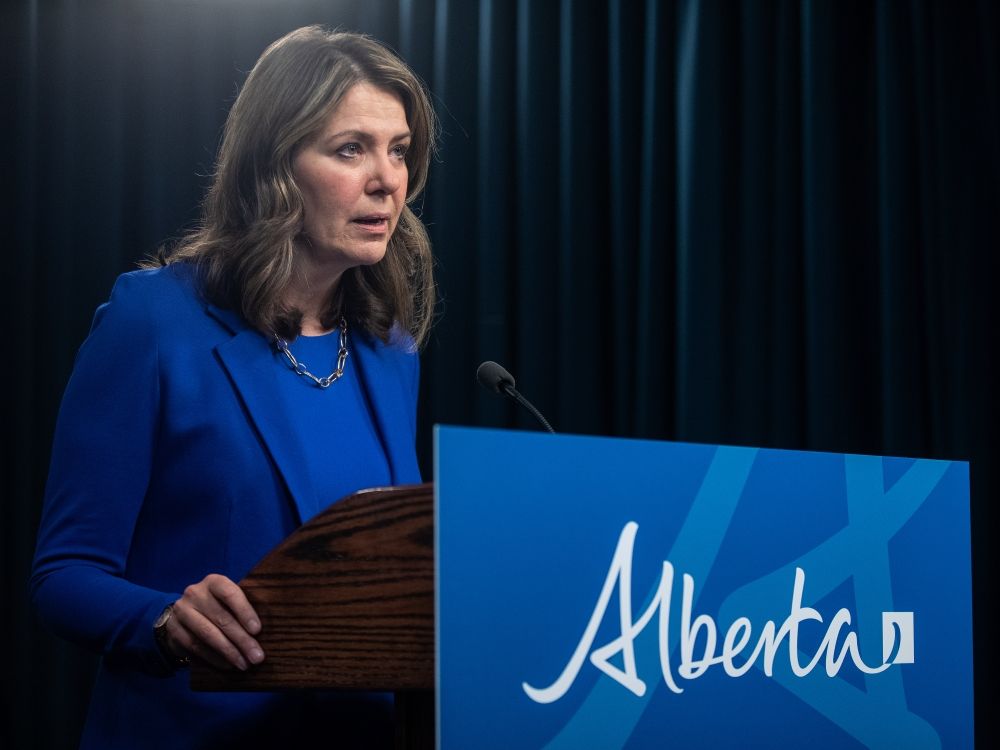
If more provinces stood up for themselves when the feds started encroaching, we’d be a lot better off as a country. That in mind, it was good to see Alberta announce on Thursday that it would be
the federal Clean Electricity Regulations, which became law in December.
The
aim to net-zeroify the entire Canadian grid by 2050, banning carbon emissions by new units with at least 25 MW of electrical generation capacity over a preset “technology-neutral annual emissions limit” by 2035; the ban will also cover existing units by 2050 at the latest. It’s
to cost the country $40 billion from now until 2050 — and it’s justified because magic math in Ottawa pegs the benefits to society in that time will be worth $55 billion.
Aside from spelling disaster in Alberta (and other provinces, to a lesser extent), there’s a pesky little document that could stand in its way: the Constitution. In 1867, it was
that legislating on the “development, conservation and management of sites and facilities … for the generation and production of electrical energy” was exclusively the job of provincial legislatures.
On that basis alone, the Clean Electricity Regulations should have set off alarm bells in premiers’ offices across the country. Premier Danielle Smith saw that plain and clear.
“Section 92 of the Constitution … enumerates our exclusive jurisdiction,” she said Thursday, speaking at a news conference. “That’s the word (used) in the Constitution: ‘exclusive’ jurisdiction over resource development and the development of electricity — and there’s a reason for that. It’s because every province has different endowments and different abilities to generate electricity. That is why it has been assigned to the provinces to make these decisions.”
Like Smith, the feds are well aware that Alberta is a fossil-fuel rich province that relies on natural gas for most of its power and does not have an abundance of dammable rivers. This was explained in the regulatory impact analysis
that was released alongside the official, final version of the Clean Electricity Regulations.
“Notably, Alberta, Saskatchewan, Nova Scotia, and to some extent, New Brunswick and Ontario, rely more on unabated emitting generation than the national average. Accordingly, these provinces are expected to experience the biggest shift in generation sources as a result of the Regulations.” In other words, “You guys better get ready to lay out a whole lot of solar panels.”
As for who will feel the most pain, take a wild guess: “Ontario and Alberta are modelled to take on nearly 70 per cent of the total costs net of cost-savings accounted for in the (cost benefit analysis), largely driven by incremental capital costs for new electricity system capacity.”
Before the regulations were finalized, Alberta did its best to
concerns with the real-life effects of the proposed framework. For example, the draft regulations proposed to cap power generation at peaker plants, which run at peak times to ensure blackouts don’t happen, at 450 hours per year, which would limit these facilities to using only five per cent of their capacity. Alberta protested, and the time limits were removed — but even so, the
of the regulations will cap these facilities to operating at a maximum of 20 per cent capacity. In the end, it means Ottawa is still strangling the provinces’ ability to manage their grids at peak times.
For another example, look at how the regulations treat emergency management. The first draft actually required the federal government to sign off on allowing exemptions to the rules in cases of local emergency — which exposed anyone who needed to break the rules to the risk of jail. Alberta objected, and now the final rules allow emissions in emergency circumstances (which must meet federal criteria) to be exempt from the overall emissions cap for 30 days (extensions would be allowed, but only with federal approval) — with an added requirement that any use of this provision must come with a detailed justification.
So, instead of getting rid of this leash that limited a province’s emergency response, Ottawa merely lengthened it while trudging into the zone of provincial emergency management. And criminal penalties for those who step outside the federally drawn lines are
.
“We have zero large-scale natural gas plants being proposed,” Smith told the news conference. “That tells me something about the level of uncertainty that natural gas plants have, because remember, this is written as (a) criminal violation if you do not meet the target by 2035.”
“What CEO is going to, by 2035, building with today’s technology, be able to guarantee a 95 per cent abatement on their CO2 within 10 years, with technology that doesn’t exist, on the risk of going to jail? I’m going to tell you there are zero,” she added.
It’s unclear how this will go in the courts. The feds will no doubt point to the top court’s 2021
on greenhouse gas pricing, which opened up new bubbles of federal jurisdiction within what was otherwise provincial domain if the intent was to reduce greenhouse gas emissions. A majority of the court figured that climate change was such a dire and existential threat that it was entitled to greenlight one very specific policy tool to deal with it: former prime minister Justin Trudeau’s carbon tax.
In reality, climate change turned out to be not as cataclysmic as originally thought, because the Liberals set the carbon tax to zero in March.
Meanwhile, it’s also been demonstrated that playing the environment card doesn’t always work. Major provisions in the federal government’s overzealous Impact Assessment Act were declared unconstitutional after a different court challenge by Alberta; the law cast its net so wide that it unlawfully pulled provincial projects into the onerous federal review process. (This law has since been revised, but unsatisfactorily, so it’s off to the courts again).
Smith is doing the right thing by fighting out these incursions in court. Just like how lawns need to be edged, the naturally expanding bureaucratic hulk of federal jurisdiction needs to be checked. If Alberta ends up winning — and it’s very possible it does — it would be a victory for not just the province’s grid, but for every province that believes in preserving the Constitution’s division of powers.
National Post