


It seems unlikely Canada has ever experienced so many people putting so much effort into an election without settling much. If anything, the country faces more unanswered questions today than it did when the campaign began.
Not settling issues is becoming a Canadian standard. We’ve had eight elections since 2004, six of them ending in minority governments. Only Stephen Harper and Justin Trudeau managed majorities, and neither could convince voters to give them another. Maybe we’re just chronically dissatisfied. Or maybe we’re less than enthused by what the parties have offered up in the way of leadership.
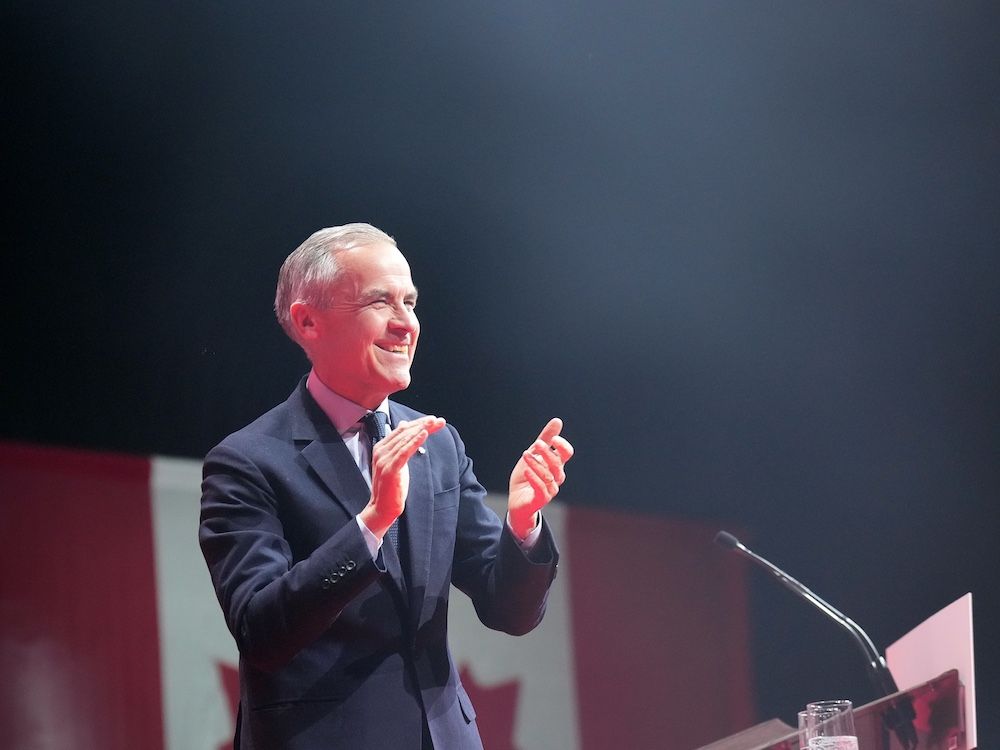
Prime Minister Mark Carney doesn’t have a majority but he also doesn’t have much opposition either. Pierre Poilievre and Jagmeet Singh both lost their seats. Singh resigned, Poilievre is hanging on to see what develops, but will have much explaining to do in the Conservative post mortem. Yves-François Blanchet found the constricted little world he inhabits in Quebec reduced even further, reduced to just 22 seats and slightly more than a quarter of the vote in the only province he cares about. Elizabeth May proved once again that Canada’s Green Party consists of Elizabeth May. Maybe they should quit kidding and name it after her, and relieve themselves of the embarrassment.
None of them will want another election soon. Of all the leaders, Carney has the clearest to-do list ahead of him: seek to wrangle some semblance of sense from the rampaging horror show that is the current U.S. administration, while trying to keep the country afloat in the meantime. It won’t be easy, but at least he knows what’s expected.
Not so the others. The New Democratic Party stumbles from the contest uncertain as to why it exists, and whether it should keep trying. Singh devoted two years to propping up a government that was on en route to self-destruction, and saw his career evaporate as a result. The seven remnants who now make up the Ottawa caucus could supply Carney with the votes he needs to push through an agenda, but do they want to repeat the same mistake so soon?
New Democrats have to ask them themselves what they’re in it for. Acting as an ongoing safety valve for Liberals in need could persuade many of those who fled to the Liberals to make a home of it full-time. The alternative is to coalesce as a leftist front, accepting their status as a movement rather than a party, with no pretense of ever running a government. It’s never been clear which they prefer, going back to the party’s birth half a century ago as a mouthpiece for labour unions and what was then known as democratic socialism.
Conservatives don’t have to worry about their existence, but they do have to accept that the world has changed and their strategies must change with it. Voters did not accept Carney as “just like Justin” and may not ever. The smooth post-Trudeau transition, in fact, suggests Liberal voters were never overly fussed with the party or its policies, no matter the depth of damage they wrought on the economy, but were simply fed up with the leader, and hope Carney will prove smarter and more competent. Should Poilievre remain as leader — no sure thing, though his 41 per cent share of the vote beats every Tory leader since Brian Mulroney — he can’t simply continue attacking the past.
If Conservatives choose to replace him they can’t hope to retain his obdurate approach, or keep treating the party’s centrists as defeated rivals from an earlier era. The politics of resentment might have worked against Justin Trudeau, had he stayed, but Canada is not Justin Trudeau, as even Liberals came to understand.
Carney now has to show which of the two versions of himself is the one we’ll be seeing, the hard-nosed banker or a big-spending, heavy-borrowing example of Liberal carbon paper. His development as a politician included quick learning skills when it came to avoiding clear answers to repeated questions and refusing to clarify the math behind his spending promises, even though we know he’s skilled at numbers. His resume suggests there’s more to the man than he showed us, but he’ll need to demonstrate that quickly with actions in place of words.
His priorities must include the matter of western discontent, which has moved past simple disaffection and is well into estrangement. How much longer can Liberals get away with treating two western provinces as an electoral graveyard, something to whistle their way past on the way to British Columbia, without endangering Confederation itself?
It took Alberta Premier Danielle Smith about a heartbeat to transmit this message to Monday’s victor. “Albertans are proud Canadians that want this nation to be strong, prosperous, and united, but we will no longer tolerate having our industries threatened and our resources landlocked by Ottawa,” she said after offering Carney the required congratulations.
“A large majority of Albertans are deeply frustrated that the same government that overtly attacked our provincial economy almost unabated for the past 10 years has been returned to government.”
Eastern Canadians tend to discount western alienation in a way they’d never treat Quebec’s ceaseless complaints, perhaps because many have no memory of the surge in anger caused by assaults from Ottawa in the 1970s and 1980s, or the rise of Reform and steady sense of estrangement in its wake. It may be comforting to view Smith as some sort of MAGA-ist crank; it’s more pertinent to ask why Albertans would put a crank in power unless their patience with Liberal indifference, and Canadians’ complicity in it, was at an end.
Lester Pearson never managed a majority in his five years as prime minister yet accomplished more than most of his successors who did. Health care, a pension plan, student loans, not to mention the auto pact and the magnificence of Expo ’67. It’s not necessary to have a majority, or to turn politics into a perpetual war game, to provide good government. Our current crop of politicians, Liberal and Conservative alike, have the opportunity to prove that.
National Post