



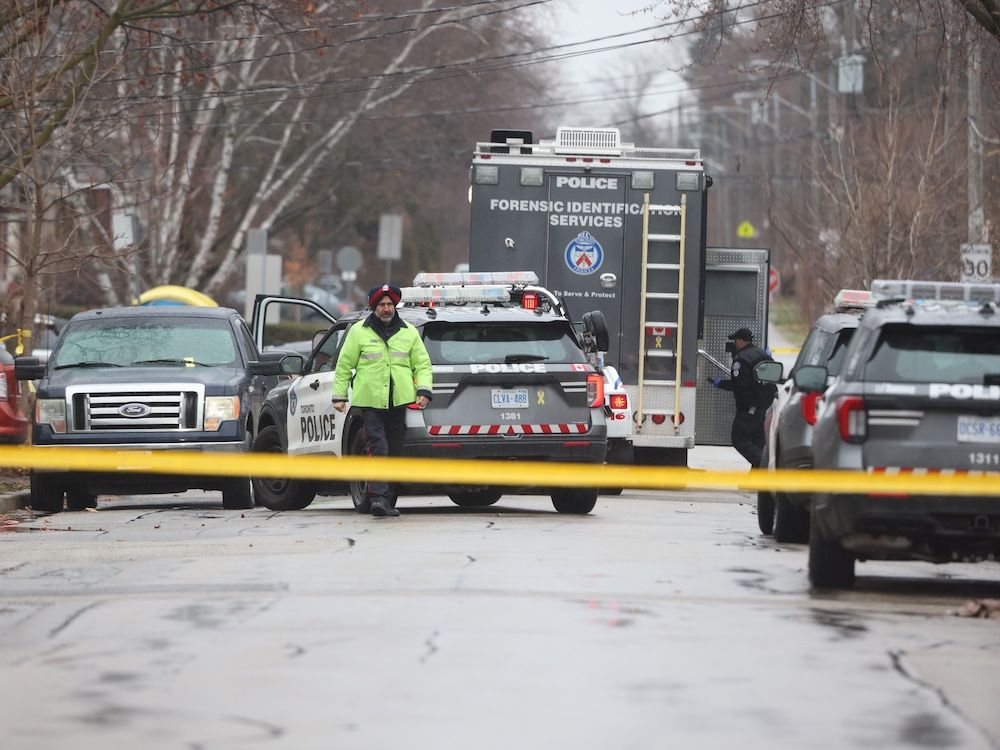
Canadians are exasperated with the
and
that has swept through their cities over the past decade. While the Liberals have promised to fix these issues should they be reelected, it is clear from
that they aren’t taking this file seriously.
The Trudeau government’s failures here cannot be understated. The country is
and over
have lost their lives to opioids since 2016. Organized gangs are running amok and violent crime
to levels unseen since the pre-Harper era, reversing what had previously been a
.
It is clear that Canada’s lax justice system is largely to blame for this. Bail has been granted
to dangerous predators, and, when convictions are secured, our judiciary often imposes
scandalously inadequate punishments
that neither deter anti-social behaviour nor isolate violent offenders from the rest of society. This, in turn, has undermined law enforcement more generally, because there is little point in arresting criminals in a
system.
Why is our justice system so broken? You can blame the Liberals’ passage of
in 2019, which greatly loosened bail conditions and mandated that arrested individuals be released as soon as possible. Then there was
in 2022, which removed mandatory minimum sentences for drug traffickers and imposed greater use of house arrest in lieu of incarceration.
Concurrently, the Liberals negligently
allowed illicit drugs and chemical precursors
(which are used to make fentanyl) to enter our borders and ports almost unabated. Worse yet, they embraced unscientific harm reduction experiments — such as
and
— to the near-total exclusion of drug prevention and treatment, only to
once it became undeniable that these policies actually
exacerbate addiction and crime
.
If Liberal Leader Mark Carney is elected next week, will he rectify his party’s mistakes? Probably not.
With respect to crime, his platform inexplicably spotlights gun control and proposes extending Trudeau’s gun buyback program. The impact of these policies will
almost certainly be negligible
since criminals predominantly use firearms smuggled from the United States and legal gun owners rarely commit crimes. Academic experts and police leaders have also
, now floundering in its fifth year, as ineffective and wasteful.
Trudeau championed these policies for a decade while failing to curb violent crime, so why does Carney expect to see different results?
The Liberals further want individuals who are charged with violent or gang-related car thefts, home invasions and human trafficking to face a “
” during bail hearings — meaning that they must prove why they should be released into the public, instead of the Crown proving why they should be detained.
However, reverse onus is
for many of these crimes, and expanding its use does nothing to address the dysfunctional bail framework that arose thanks to Bill C-75. Absent wider reforms, judges will still be encouraged to grant the most lenient bail conditions possible and to coddle defendants from disadvantaged backgrounds. Because of these norms, dangerous criminals are already being
regardless if reverse onus is in play — so it is hard to see how this constitutes a real solution.
For repeat car thieves and home invaders specifically, Carney wants sentencing judges to emphasize
, which should naturally lead to harsher punishments. This is a positive step forward, but the scope here is oddly limited (why not apply this to other offenses?) and it is uncertain what new sentencing ranges would emerge afterwards. Ergo, this proposal is too weak and unpredictable to sufficiently address an urgent problem.
The real solution would be mandatory minimums, which only the Conservatives
, so far.
Carney wants to permit consecutive sentencing for serious and violent offenders, which is great. Yet, stacking long sentences atop each other means that some offenders could face life without parole, which the Supreme Court
in 2022. He would thus probably have to invoke the Charter of Rights and Freedoms’ notwithstanding clause to fulfill his promise, mirroring what Conservative leader Pierre Poilievre has promised to do with his
own consecutive sentencing proposals
.
But Carney
criticized Poilievre’s openness
to using the clause, in this specific context no less, as a “dangerous step” and “
.” Is he unaware of the constitutional implications of his own policies, or is he being hypocritical or disingenuous?
The platform also calls for investing in the
Public Prosecution Services of Canada
so that it can better tackle organized crime and drug trafficking. That’s another good move, but, unfortunately, bolstering prosecutorial capacity is moot without serious sentencing and bail reform.
Carney wants to train 1,000 border officers, armed with new scanners and other resources, to target suspicious shipments entering the country. He also wants to hire 1,000 RCMP officers to fight modern threats (i.e. cybercrime, foreign interference, drug trafficking) while making it easier to search Canada Post mail for fentanyl and other contraband. These are great ideas! But why didn’t the Liberals do this years ago? Can we trust that they will act with urgency?
Beyond crime, Carney’s platform says almost nothing about drugs. Safer supply? Decriminalization? Supervised consumption sites? All conspicuously omitted. There is $500 million promised for drug treatment, without further details. That’s inexcusable. After decades of Liberal mismanagement, Canadians deserve, and
, more specificity.
National Post

