



First Reading is a Canadian politics newsletter that throughout the 2025 election will be a daily digest of campaign goings-on, all curated by the National Post’s own Tristin Hopper. To get an early version sent directly to your inbox, sign up here.
TOP STORY
On Wednesday, Conservative leader Pierre Poilievre promised that if elected prime minister, he would pass a “three strikes and you’re out” law targeting recidivist offenders.
After three convictions for “serious” offences, an offender would be slapped with a mandatory 10-year prison term and an automatic designation as a dangerous offender. “The only way for these repeat serious criminals to obtain their freedom will be through spotless behaviour and clean drug tests during a lengthy minimum prison sentence,” reads a Conservative Party fact sheet.
It’s the Tories’ proposed solution to a nationwide rise in crime that is being committed by a surprisingly small number of chronic offenders who keep receiving bail or early release.
In one 2022 letter, mayors from B.C.’s 13 largest cities complained to their provincial government that their public safety budgets were being drained by as few as 200 “super-prolific” offenders who were allowed to commit crimes “without consequence.”
Just last month, when Halton Regional Police broke up a major auto theft ring, they noted that three out of eight suspects arrested in the bust were “on prior forms of release for similar criminal offences.”
But any policy to keep chronic offenders in custody for longer wouldn’t just be reflected in terms of unstolen bikes or unbroken car windows. The type of offender that would be caught by a “three strikes” law is also behind many of the more shocking Canadian crimes in recent years.
Below, a not-at-all comprehensive list of tragedies from just the last few years that would likely have never happened if their perpetrators had been subject to a “three strikes” law.
A Saskatchewan community spared a notorious mass-stabbing
In September 2022, 32-year-old Myles Sanderson went from house to house on Saskatchewan’s James Smith Cree Nation, stabbing anyone he could find. He would end up murdering 11 and wounding 17 in what remains one of Canada’s deadliest spree killings.

Sanderson would have been known to many of his victims as a career criminal with a long history of violent and erratic behaviour. At the time he became a spree killer, Sanderson had 59 convictions.
An Edmonton massacre prevented
A 2014 massacre in Edmonton remains one of the worst mass-shootings in Canadian history, but it largely avoided national attention given that it was an act of domestic violence. Phu Lam, 53, fatally shot eight people at two addresses, including two children. Most of the victims were his wife and her family.
Police noted that Lam had a criminal record dating back to 1987, and had been previously been arrested for domestic violence and sexual assault. Just two years before she was murdered, Phu Lam’s wife would obtain an Emergency Protection Order against her husband, alleging that he had threatened to kill her and her entire family.

An alleged serial killer never able to target her first victim
Under a three-strikes law, Canada would have produced at least one fewer alleged serial killer. In October, Sabrina Kauldhar, 30, was arrested and charged with three murders committed earlier that month. She’s accused of committing the homicides over just three days; one victim she’s alleged to have known, with the other two being random. And given the lack of any motive or provocation for the murders, police described the crimes as serial killings.
For nine years before her arrest for murder, Kauldhar racked up at least three convictions, including one for a random violent attack. In a 2018 instance for which she was convicted of assault, Kauldhar began suddenly punching two fellow riders aboard a transit bus in Waterloo, Ont., because they were “looking at her funny.”
A 16-year-old boy not randomly murdered in a TTC station
In March 2023, 16-year-old Gabriel Magalhaes was sitting with a friend on a bench in a TTC station when a man approached him without provocation and plunged a knife in his chest.

As Magalhaes lay dying after being rushed to hospital, the assailant, Jordan O’Brien-Tobin, sent a text to friends reading “I just stabbed someone random.” If O’Brien-Tobin had been subject to a three-strikes law, he would have qualified six times over. At the time he murdered Magalhaes, he had 18 convictions for assault, and more than 100 convictions for failing to comply with court orders.
At least one police officer never murdered on duty
Between 2022 and 2023, Canada experienced its highest-ever rate of police officers being murdered on duty. In a country that typically saw one killing of a law enforcement officer every year, eight were killed over the course of just seven months.
One of the most notable of these was Const. Grzegorz Pierzchala, who was shot just after Christmas in 2022 by an alleged assailant who had been freed on bail only a few months prior. That alleged assailant, Randall Mackenzie, had a long history of firearms convictions, and had been given bail for a domestic violence charge.
A 15-year-old girl not abducted and killed
This never became a national story, but it was a huge deal in Northern Alberta in 2020 when 15-year-old Roderica Ribbonleg went missing from her hometown of John D’Or Prairie, only for her murdered body to be found several days later by a community search team.

A fellow community member, 37-year-old Jason Tallcree, would be convicted of the abduction, sexual assault and beating death of Ribbonleg. At the time he killed Ribbonleg, Tallcree had a criminal record stretching back 17 years, including multiple convictions for sexual assault and forcible confinement, with one of his victims being just 11 years old.
An 85-year-old woman never strangled in her home by an invader
In the summer of 2020, career criminal Richard Willis slipped through the basement window of a home in Dartmouth, N.S., strangled the surprised 85-year-old homeowner with a pair of jeans and proceeded to steal what he could.
In court, it would emerge that Willis, 66, had a criminal record stretching back 46 years – and that in these decades of crimes he had shown a preference for victimizing elderly women. In a similar attack committed 19 years prior in Winnipeg, Willis had brutally beaten an 82-year-old woman in a home invasion, although his victim in that case survived.
A Halifax woman and her father never murdered by an “intimate partner”
Recidivism is quite high for those convicted of an offence of domestic violence, making domestic abusers a cohort of offenders that would be disproportionately affected by any kind of three strikes law. According to a 2001 study by the Department of Justice, 34 per cent of men convicted of domestic violence go on to be convicted of additional violent crimes.
One particularly tragic example of a recidivist offender allegedly murdering his intimate partner happened just a few months ago. On New Year’s Eve in Halifax, Corelee Smith, 40, was shot to death alongside her father. Their accused killer was Smith’s boyfriend, Matthew Costain, whom courts had been describing as a “repeat offender” as early as 2014. Among his string of offences was armed robbery and multiple convictions for illegal firearms.
Multiple Canadians not killed in random street attacks
The last few years have featured a conspicuous uptick of “stranger attacks,” in which Canadians in urban areas are stabbed or assaulted without provocation, often in broad daylight.
Two of the most notable fatal stranger attacks that have involved alleged assailants would have fallen well within the rubric of a three strikes law.
Retired CBC producer Douglas “Michael” Finlay died after he was pushed to the ground in a 2023 Toronto stranger attacker. His convicted killer, Robert Cropearedwolf, had 65 convictions on his record at the time of the crime.
Last September in Vancouver, a 70-year-old man was killed and another victim had his hand cut off in a random stabbing spree. The accused in both stabbings, Brendan Colin McBride, had a history of erratic violent assaults, with the most recent having occurred just one year before the fatal stabbing spree.
A mother and child never stabbed to death outside an Edmonton school
Edmonton woman Carolann Robillard, 35, was picking up her 11-year-old child Jayden from school in May 2023 when both were brutally stabbed to death in a completely random daylight attack outside Crawford Plains School. Jayden’s eight-year-old sister escaped, but witnessed the murder of both her mother and older sister.
Their murderer, Muorater Mashar, would have been caught by a three strikes law several times over. He had a lengthy history of convictions for violent attacks as well as assaults on random children — to the point where police would declare that he had only been free to kill Robillard and her daughter because of a “failed” system.
Just nine years before the Edmonton killings, Mashar stabbed a man in the back at a Winnipeg bus stop, severing the victim’s spinal cord and puncturing his heart – a crime for which Mashar only received a four-year sentence. As with virtually all incarcerated offenders in Canada, he was given early release.
A 30-year-old Surrey woman not fatally ambushed in her home by a stranger
Last June, 30-year-old Tori Dunn, the owner of Surrey, B.C.’s Dunn Right Landscaping, was attacked and killed in her home by a random home invader.
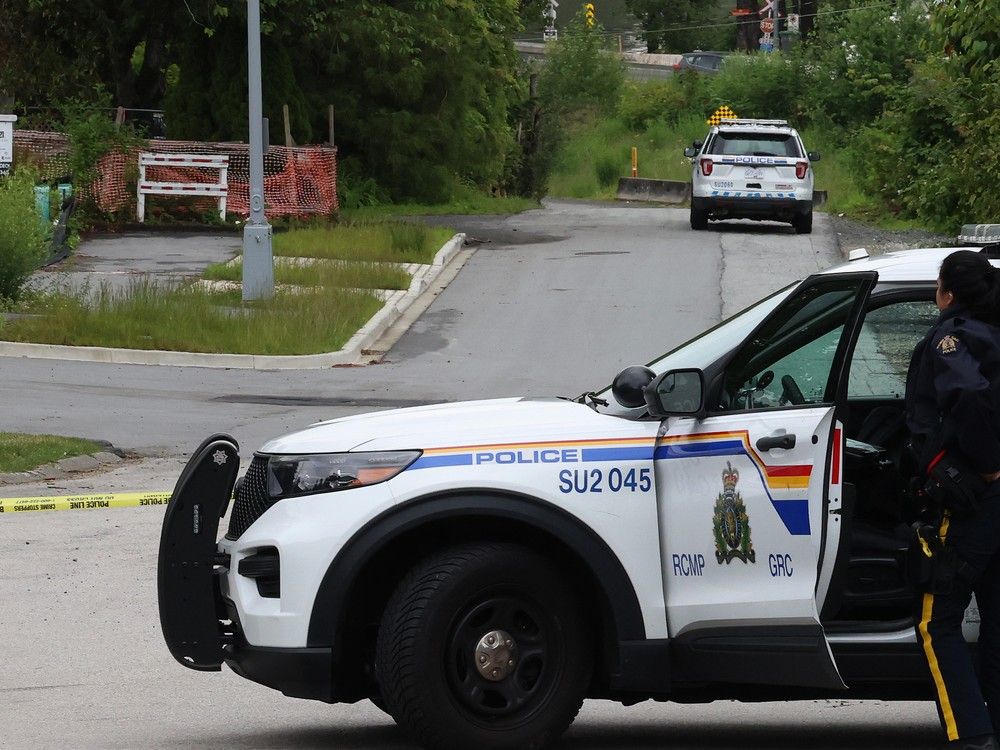
The accused killer, 40-year-old Adam Troy Mann, has a lengthy history of similar attacks, including a 2003 incident in which he stabbed a woman after a disagreement, causing her lifelong health problems. Not only had he been deemed a “high risk for future violence” upon his most recent release from jail, but he was on bail for a subsequent robbery charge at the time of Dunn’s murder.
This particular case has been brought up by Poilievre in connection to his pledges to crack down on violent crime. In July, he spoke to the Dunn family, who have become campaigners for sentencing and bail reform, and would write in a social media post, “Tori Dunn should still be alive today. Keep violent repeat offenders behind bars. Bring home safe streets.”
Trudeau’s wacko catch-and-release laws have resulted in the senseless murder of a young woman committed by a violent repeat offender who was released on probation just weeks prior.
Tori Dunn should still be alive today.
Keep violent repeat offenders behind bars. Bring home safe… pic.twitter.com/RVXOTuG41X
— Pierre Poilievre (@PierrePoilievre) July 10, 2024
Get all of these insights and more into your inbox by signing up for the First Reading newsletter here.

